
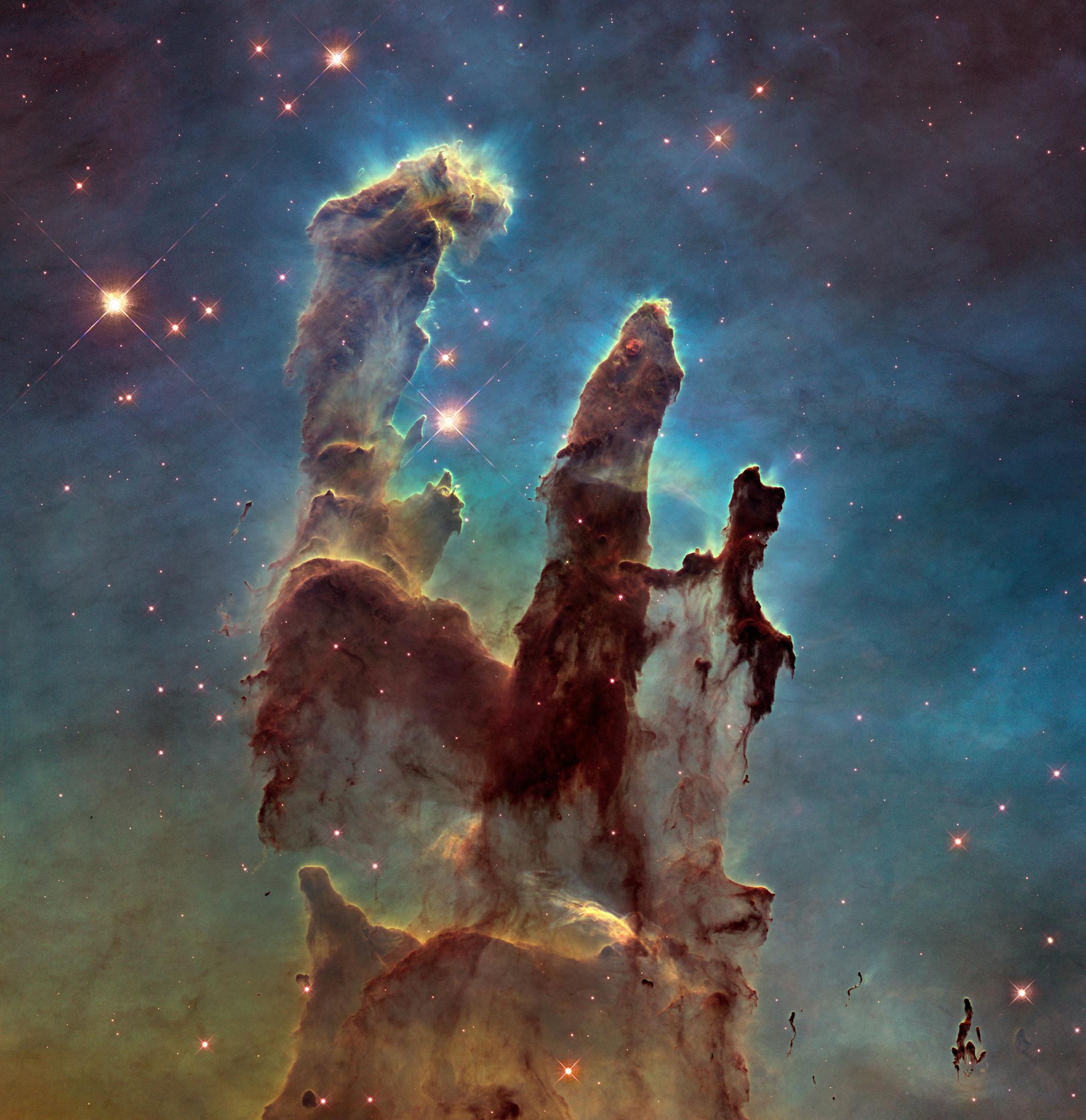
Hubble Telescope celebrates "Pillars of Creation'

Los Angeles Times
January 16, 2015 at 5:31AM
The NASA/ESA Hubble Space Telescope has revisited one of its most iconic and popular images: the Eagle Nebula’s Pillars of Creation. This image shows the pillars as seen in visible light, capturing the multi-coloured glow of gas clouds, wispy tendrils of dark cosmic dust, and the rust-coloured elephants’ trunks of the nebula’s famous pillars. The dust and gas in the pillars is seared by the intense radiation from young stars and eroded by
“The ghostly bluish haze around the dense edges of the pillars is material getting heated up and evaporating away into space,” said researcher Paul Scowen. (The Minnesota Star Tribune)

One of the most famous images in astronomy is known as the "Pillars of Creation," but a new version of it reveals that it could also be called "Pillars of Destruction."

The images depict three towering columns of gas and dust in the Eagle Nebula, a stellar nursery about 6,500 light-years away from Earth. The shadowy pillars are backlit by a cluster of young, massive stars — an environment similar to the one that probably gave rise to the sun, astronomers believe.

The first image was captured by NASA's Hubble Space Telescope back in 1995. It became such a sensation that it appeared on a 33-cent stamp, among other places.

One of the first people to see it was Arizona State University researcher Paul Scowen, who develops instruments to study the formation of stars and planets. Hubble turns 25 this year, and Scowen marked the occasion by taking a fresh picture of the Eagle Nebula (also known as M16).

The new image is a sharper view that combines visible light and near-infrared light. The pillars are what remain of a huge gas cloud that has had sections blown away by ionizing stellar winds, Scowen said.

"These pillars represent a very dynamic, active process."

Los Angeles Times
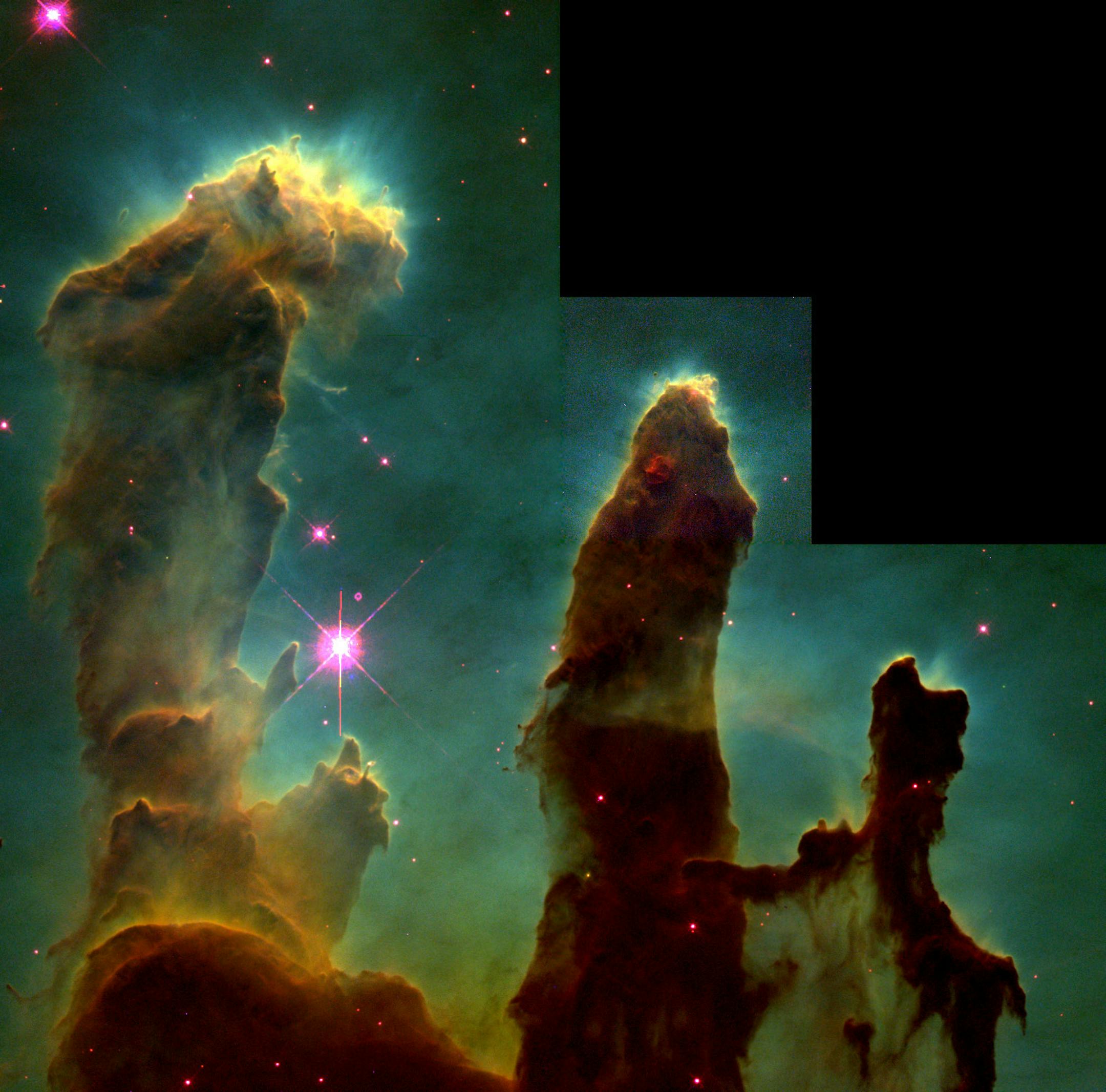
Undersea coral? Enchanted castles? Space serpents? These eerie, dark pillar-like structures are actually columns of cool interstellar hydrogen gas and dust that are also incubators for new stars. The pillars protrude from the interior wall of a dark molecular cloud like stalagmites from the floor of a cavern. These columns that resemble stalagmites protruding from the floor of a cavern columns are in fact cool interstellar hydrogen gas and dust that act as incubators for new stars. Inside them a
incubators for new stars: These pillar-like structures are columns of interstellar hydrogen gas and dust that are also incubators for new stars. This first image was captured by the Hubble Space Telescope in 1995 and re-created, at top, to honor Hubble’s birthday this year. (The Minnesota Star Tribune)
about the writer

about the writer

More from No Section

See More
FILE -- A rent deposit slot at an apartment complex in Tucker, Ga., on July 21, 2020. As an eviction crisis has seemed increasingly likely this summer, everyone in the housing market has made the same plea to Washington: Send money — lots of it — that would keep renters in their homes and landlords afloat. (Melissa Golden/The New York Times) ORG XMIT: XNYT58
Melissa Golden/The New York Times

It’s too soon to tell how much the immigration crackdown is to blame.