

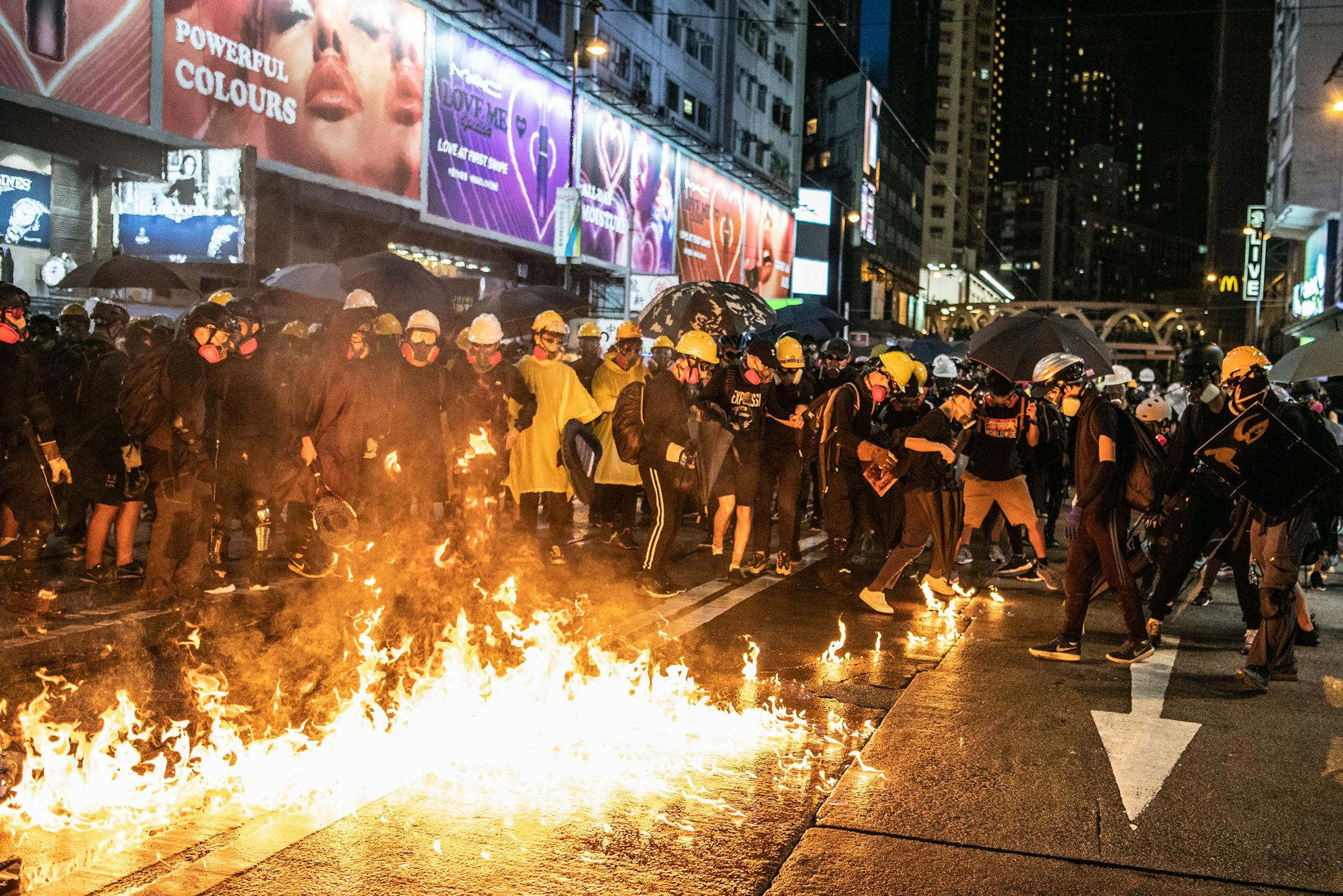
Watching the continuing protests in Hong Kong, now in their fourth month, brings back vivid memories of another, distant era when, for visitors like me, the then-Crown Colony was a fascinating, tantalizing mixture of East and West.
It was more than half a century ago, in January 1967, when I stopped in Hong Kong en route to Bangkok for my initial assignment in the Foreign Service. I'd never ventured outside the United States before and was bowled over by the sights, sounds and smells of this small, teeming island group off the tip of mainland China.
The British still ruled Hong Kong then, and would for another three decades; their influence was not only in the language — nearly everyone I encountered seemed to speak the Queen's English — but also in a free press, august banks, a thriving economy, respected courts and competent administration.
Most of the residents (about 4 million then, 7 million today) were ethnic Chinese. They brought the untold richness of China's ancient civilization. Take cuisine, for example. Having dinner at a famed Chinese restaurant with a Foreign Service classmate and other friends, we were each invited to select a dish from the extensive menu. When I came up with nothing more imaginative than sweet and sour pork — the one Chinese cafe in my hometown had a basic menu — others quickly provided the guidance I clearly needed. (I did better on future visits).
Hong Kong then was also one of world's best shopping emporiums, offering great bargains in everything from TVs, radios and cameras to tailor-made suits, shirts and shoes. The saying was that you could go broke saving money in Hong Kong. For the American and British sailors whose ships made frequent port calls, there were convenient Navy post offices to ship it all home.
The banks were among the most prestigious in the world. In 1968, my future wife, Linda, then a college student, went to one of them to transfer money from her hometown bank in Foley, Minn. The Chinese tellers conferred in a backroom, returning to say, "State Bank of Foley very small bank." Still, the transaction went through.
From the commanding heights of the Victoria Peak area, where most of the British establishment lived, the view of the city and its storied harbor was breathtaking. Life was good. A novel about a British judge who made his home in the colony was titled "Old FILTH," with the acronym standing for, "Failed in London, Try Hong Kong." Many did; some thrived.
Dropping by a half-dozen times from the late '60s to the early '80s from my posts in Thailand and Vietnam, I saw Hong Kong as a great place to visit. It was exotic but also peaceful, prosperous and well-run. No doubt it felt quite different to the Chinese majority, who got to share in few of the riches and were ruled by an imperial power half a world away.


