

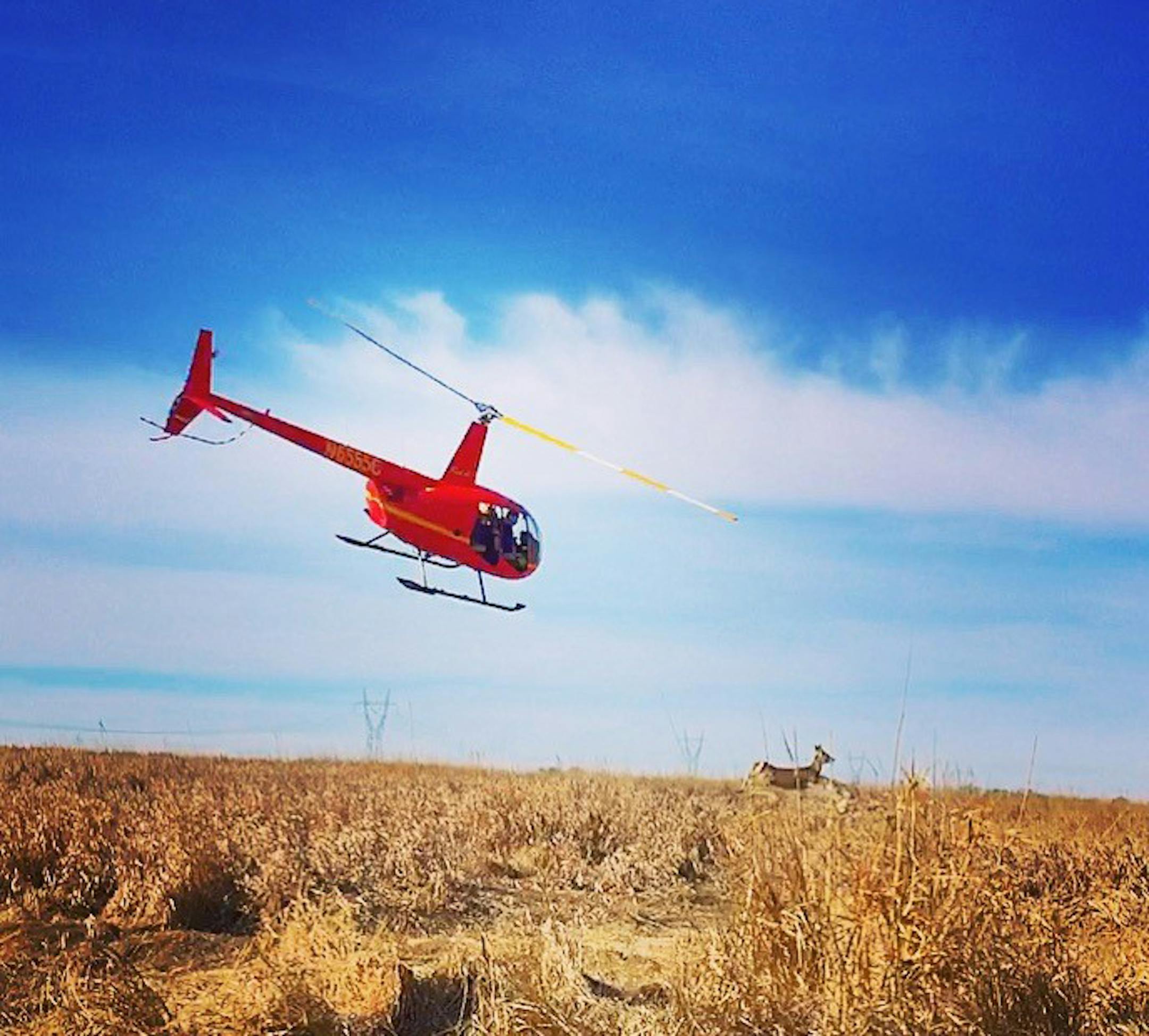
An Idaho helicopter crew trained to net big-game animals for wildlife research is aloft in southeastern Minnesota this week on a mission to capture 115 whitetail deer for the Department of Natural Resources.
Paired with ground workers who release the deer after collaring them with GPS devices, Hells Canyon Helicopters is creating the framework for a study that will map deer movements to understand where chronic wasting disease (CWD) could spread. The $450,000 research project will last for more than two years to sharpen the DNR's ability to fight the state's largest outbreak ever of CWD.
"We're trying to determine potential prion disease pathways,'' said Lou Cornicelli, DNR wildlife research manager.
As of Tuesday afternoon, at least 32 deer had been fitted with battery-powered Lotek LiteTrack expandable GPS collars. Cornicelli said the capture work is behind schedule in part because a Hells Canyon helicopter crashed in late January out west, killing one of three crew members.
The 19-year-old man who died, Benjamin M. Poirier, was on assignment to capture mule deer in the Blue Mountains for the Washington Department of Fish & Wildlife. Two weeks later in Utah, another flight company experienced a crash when an elk jumped into the tail rotor of a low-flying helicopter. No crew members were killed.
"It's dangerous work,'' Cornicelli said. "That's what kind of gets lost on a lot of people.''
The Minnesota contract with Hells Canyon included the capture of 19 whitetails in northern Minnesota for a separate GPS tracking study. In that research, headed by Glenn DelGiudice of the DNR, the agency is trying to understand more precisely where the animals go in winter for food and cover.
Ideally, highly accurate location data will allow the DNR to draw up "prescriptions'' of habitat needs that can be shared with forest managers, DelGiudice said. The information — especially critical for severe winters — would boost the state's deer management efforts, he said.


