

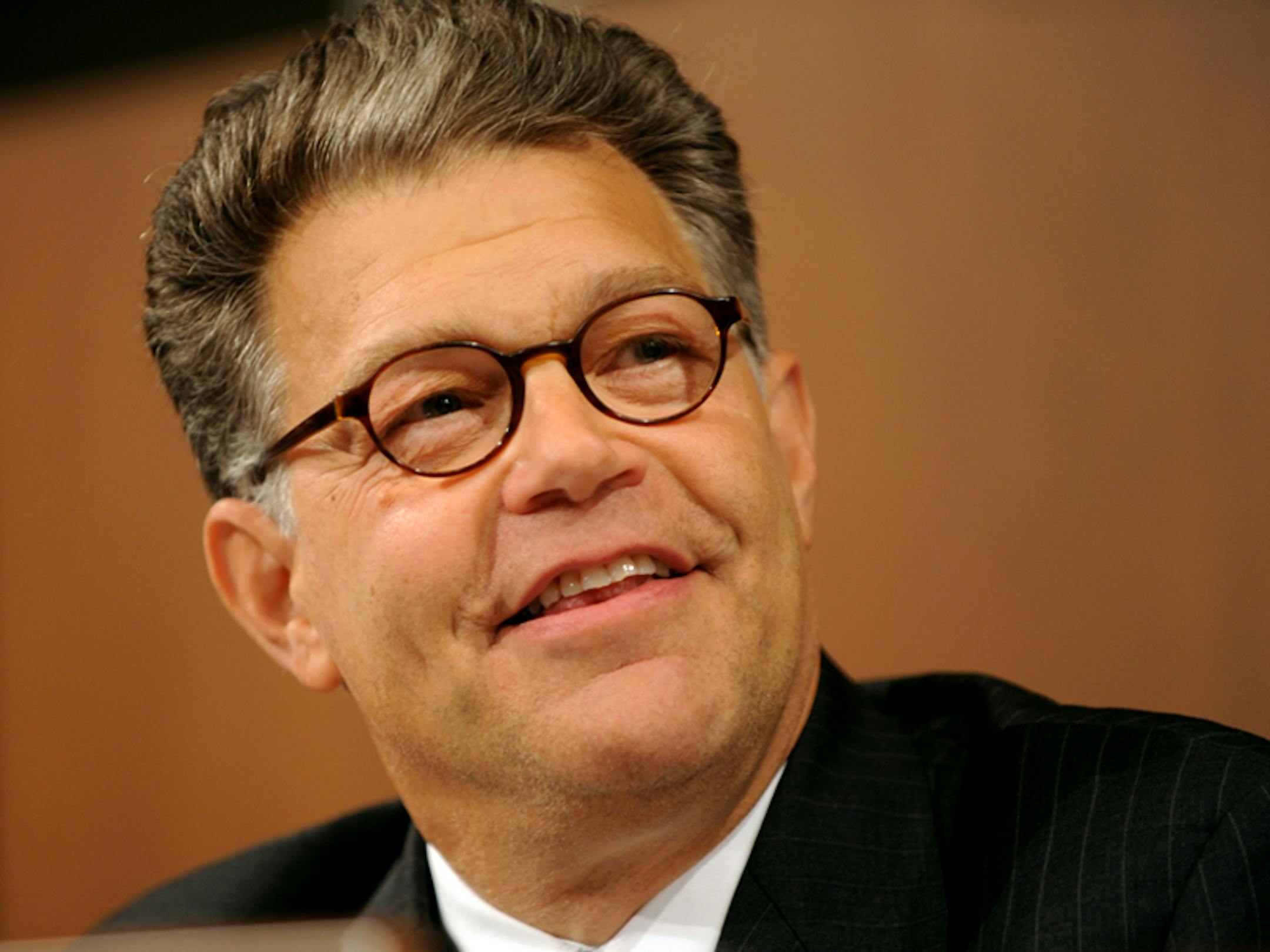
WASHINGTON – Sen. Al Franken of Minnesota took aim Thursday at a government-run, Internet-based identification system that employers would be forced to use to ensure the legal status of workers under proposed immigration reforms.
Franken likened the system to a car that breaks down too often. "The system isn't ready for prime time," the Democrat told reporters in a press call.
U.S. Citizenship and Immigration Services operates the so-called E-Verify system. It compares information provided by job applicants with databases compiled by the Department of Homeland Security and the Social Security Administration to let employers quickly know if the applicant has the right to work in the United States.
The system is supposed to guard against the hiring of undocumented immigrants. But Franken said E-Verify's rate of mistakes — about 1 in 140 false positives — is too high to impose on small businesses, especially the Minnesota dairy farms that rely on immigrant labor.
Dairy farmer Pat Lunemann, president of the Minnesota Milk Producers Association, said denying jobs to legal workers because of malfunctions in the identity verification process opens farmers up to lawsuits. Participating with Franken on the press call, Lunemann advocated a complete exemption from E-Verify for small businesses.
That could be a hard sell as the Senate and House debate the country's first comprehensive immigration reform in many years. The presence of millions of illegal immigrants in the country has been an economic and emotional flashpoint in reform discussions.
"The people who oppose E-Verify lost the battle," said immigration expert Katherine Fennelly of the University of Minnesota's Humphrey School of Public Affairs. "There is a strong sentiment to have employment verification" as part of any deal to provide undocumented workers with a path to citizenship.
Confirming legal status when hiring farm workers is now optional, said Chuck Schwartau, an agricultural educator with the University of Minnesota Extension. But Schwartau has warned the farmers he counsels that a mandatory ID system is almost inevitable.
![At Dakota Hills Middle School in Eagan, Senator Al Franken met privately at the school with several Minnesota educators, child advocates, and school-safety officials to discuss ongoing efforts to improve school safety. Since coming to the Senate, Sen. Franken has pressed for measures to increase the number of school counselors, psychologists and social workers, and to prevent school bullying.. ] rtsong-taatarii@startribune.com ORG XMIT: MIN1301071556341114](https://arc.stimg.co/startribunemedia/AWTF2PHF2ZP4IMUVMZ2OAFJUEI.jpg?&w=1080)



