

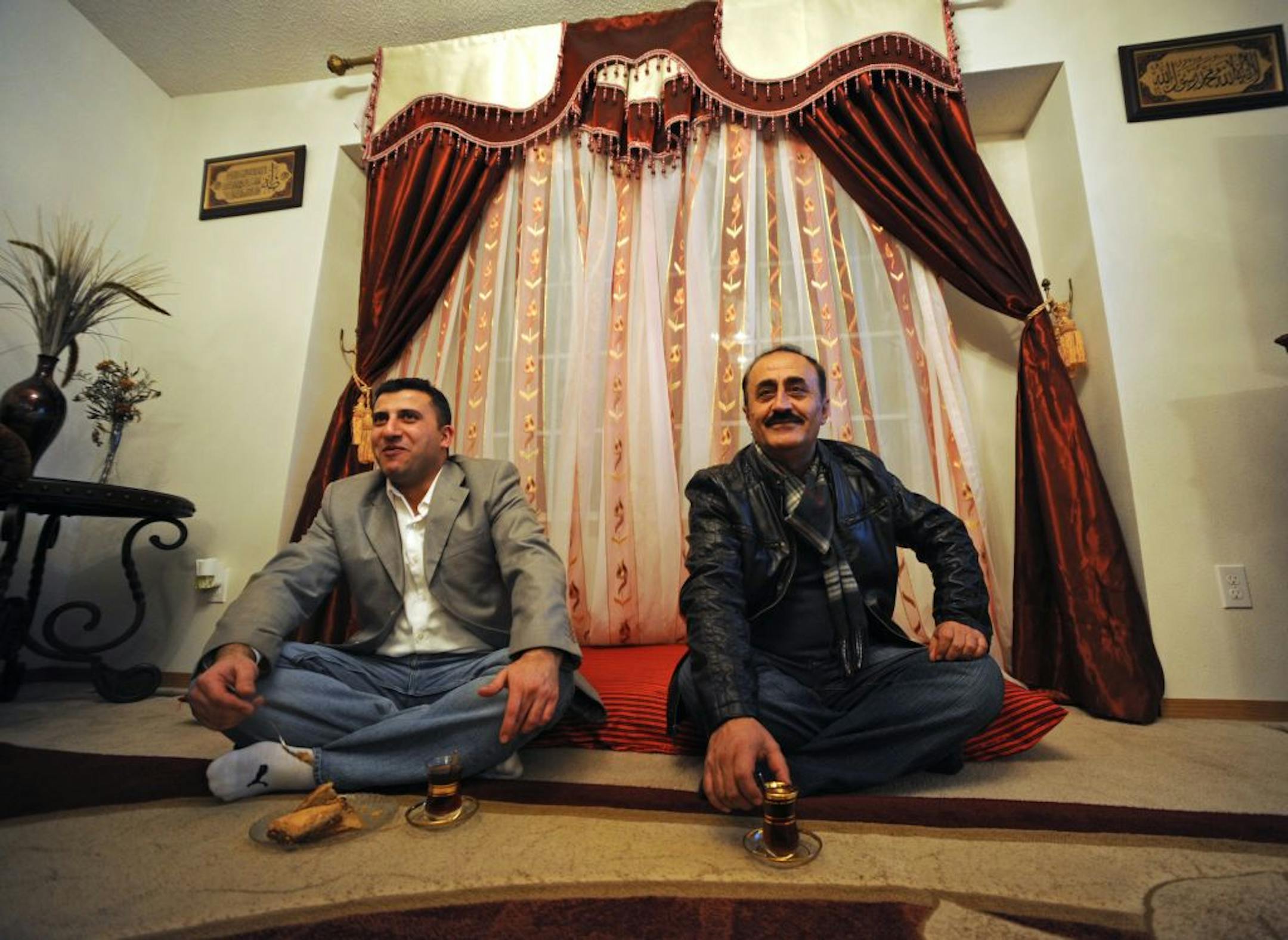
MOORHEAD, MINN.
The top TV news story on a recent night was a pickup truck falling through the ice at Big Cormorant Lake and warnings from the station's "Stormteam" of a coming cold snap. But at the home of Newzad Brifki, the big-screen TV was on Kurdsat, a Kurdish satellite network reporting on the recent airstrike on the border of Turkey that had killed 35 Kurdish civilians.
The dolma, a stuffed cabbage dish, and the samoon, an Iraqi flat bread, had been cleared from the kitchen table and the talk in the living room got down to the nascent Kurdish community here on the prairie.
"There is a saying in Kurdistan, 'We have no friends but the mountains,'" Brifki said. "But we had the Americans. Now that the Americans have withdrawn, we don't know what will happen next."
Although exact numbers may be in dispute, the 1,100 or so Kurds in the Fargo-Moorhead area are by far the greatest number in the Upper Midwest. With North Dakota having the lowest unemployment rate in the country, employers like Drayton Foods, which produces frozen dough, and the window manufacturer Cardinal Glass have provided spots on assembly lines for the newly arrived who might struggle with the language but are willing to work.
Like the influx of Hmong refugees from Laos to St. Paul in the 1980s and '90s, and immigrants fleeing to Minneapolis from the civil unrest of Somalia more recently, the Kurdish community here seems to be part Midwest social experiment, part embodiment of the American Dream.
Decidedly pro-American, many arrived in the 1990s, fleeing the regime in Iraq of Saddam Hussein, and coming to Fargo-Moorhead through refugee programs largely funded through such religious organizations as Lutheran Social Service.
But with the departure of U.S. military forces in Iraq and instability of Iraq's political future, there are new arrivals by the week. Like their Iraqi counterparts of Arab descent, many Kurds worked with the American military and have secured special visas that gave them high priority in getting out of the country, their names and faces making them targets for possible reprisals in their homeland.


