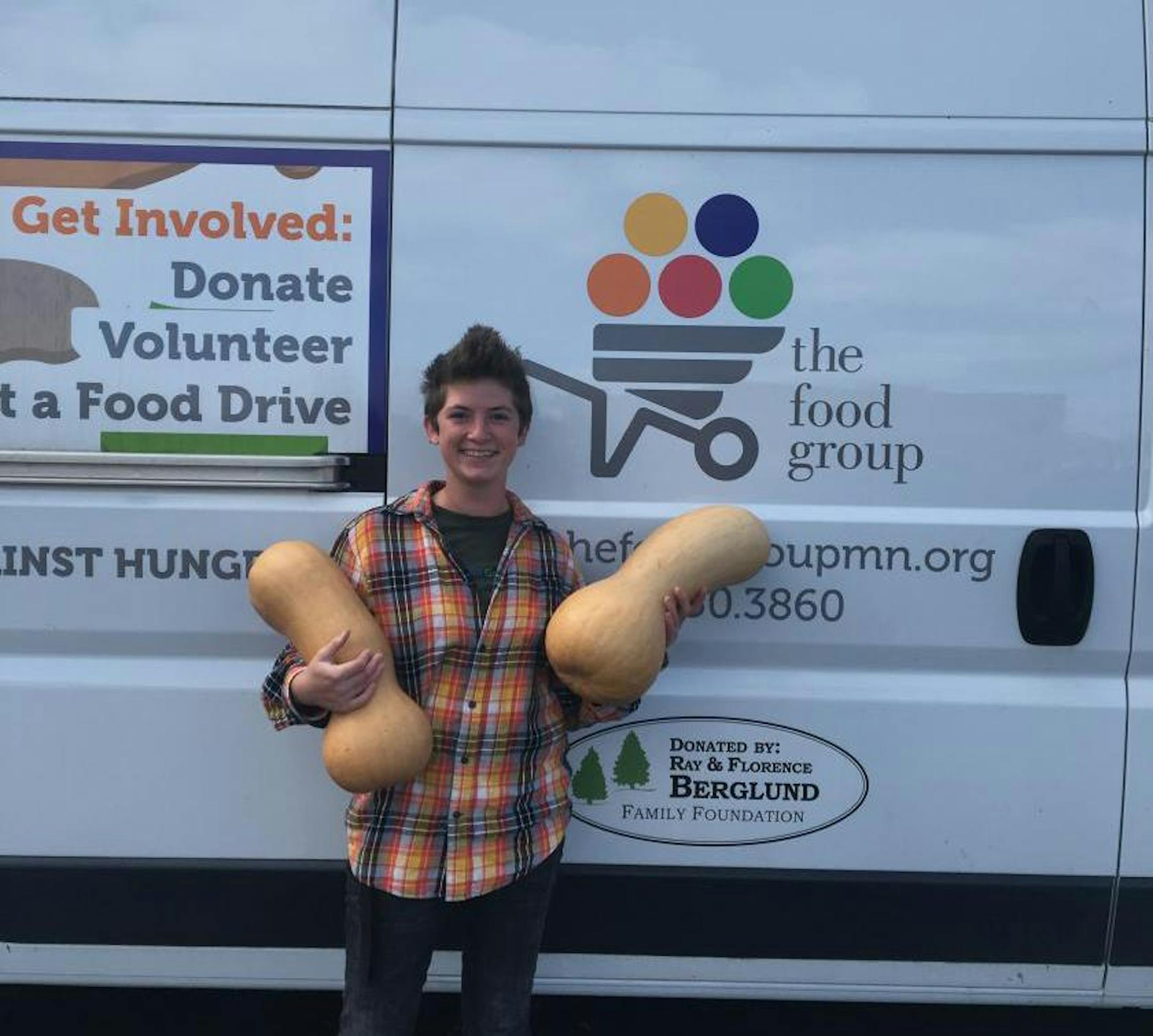
Chief Executive Lori Kratchmer of the Food Group points to Sal Daggett as evidence of how Minnesota's biggest supplier of free to low-cost food to nearly 250 hunger-relief agencies and programs evolves as an innovative supplier of nutritious food that makes the connections between nutrition, environment and health.
Daggett, a field biologist who grew up on a small Wisconsin farm, serves Food Group as a member of GreenCorps, part of the AmeriCorps community service program, through the Minnesota Pollution Control Agency.
Daggett, who helped harvest 15,000-plus pounds of produce last fall, has worked with volunteers on community gardens, developed Food Group's own 1.5 acre "farm" at its New Hope headquarters and distribution center, captured excess produce from local farms and orchards, and expanded the number of partnerships with local growers.
"The 15,068 pounds that I [helped] harvest are a fraction of the total amount of local produce made available to hunger relief agencies," she said, ticking off the environmental and health benefits of growing and sourcing locally. "Tens of thousands of pounds are obtained through other programs such as produce rescue at the Minneapolis Farmer's Market, the Fruits of the City backyard fruit-tree gleaning program, and 'giving gardens' maintained by community groups. In 2016, the produce programs made available 138,151 pounds of fresh, healthy local fruits and vegetables to food-insecure households."
Food Group (formerly Emergency Foodshelf Network) was founded in 1976 as a supplier to a dozen Hennepin County food shelves.
It has grown into a $10 million revenue wholesaler and distributor of food, nutrition education and health programs for tens of thousands of indigent elderly, working-poor adults and children. Most of the funds come from individuals, businesses, foundations and earned revenue.
Volunteer hours virtually match the time put in by 22 staff members.
Kratchmer, who joined Food Group six years ago after working as a merchandiser for Target and a total of 22 years in business, makes the connection between improved diets, performance, better health and lower medical costs. A better diet and exercise means healthier people, better-performing students, a stronger workforce and a more productive economy.