

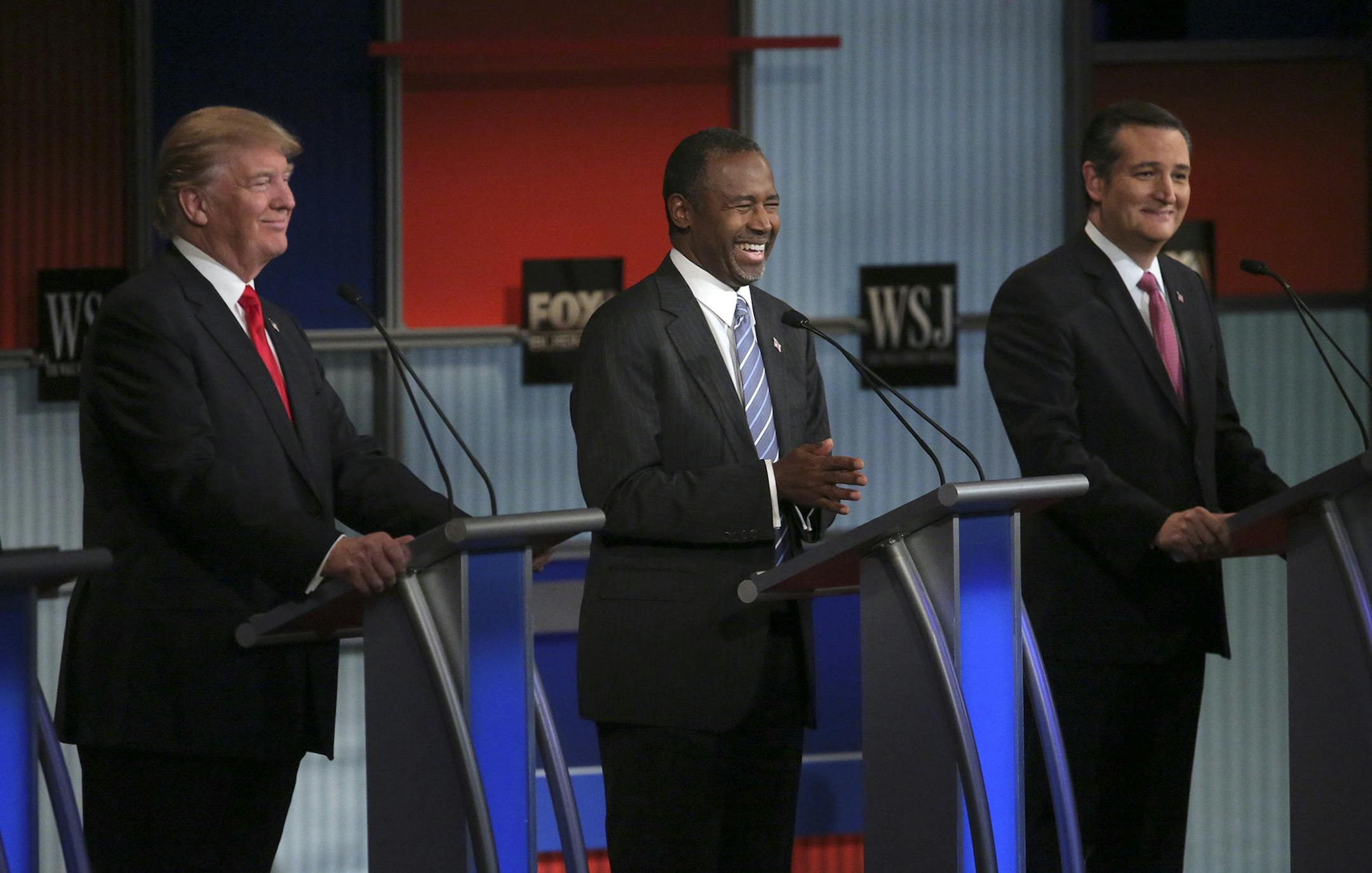
It's a recurring theme in U.S. history: Populist presidential candidates giving voice to an electorate fed up with Washington and politics as usual. Yet the politicians wearing the label — the Republicans Ben Carson, Donald Trump and, to a lesser extent, Ted Cruz; and Bernie Sanders for the Democrats — share few common characteristics beyond their self-definition as insurgents and outsiders.
Nonetheless, history tells us that populism is more than a catchall phrase to describe any politician who claims to buck the system or be a megaphone for the popular mood. Rather, the term designates a recognizable political force with shared features across time, circumstances and ideology.
The phrase gained currency in the Gilded Age, when a rural movement known as the Farmers' Alliance morphed into the People's Party, which challenged the two established parties in an era of rampant inequality, devastating financial crises and a pervasive belief that the game was rigged against ordinary Americans shut out of elite circles.
Sound familiar? The Populists of the end of the 19th century (the only ones to merit a capital P) were very different from those of today, but their particular style of politics, and the vein of anger they tapped, suggests that Trump, Sanders and other insurgent candidates are tuned into discontent that takes familiar, even predictable forms.
Here are five things that make a populist a populist.
1) Anger
The ranks of the Populists comprised small-town businessmen and rural people who rebelled against the power of urban elites, big banks and big business. As they struggled to survive the rise of industrialization and the changes wrought by the increasing role of finance in the 1880s and 1890s, they sought an outlet for their anger. While the Populist orator Mary Lease may or may not have told farmers that they should "raise less corn and more hell," the story speaks to a larger truth: This was a movement fueled by rage.
Trump and Sanders offer their followers unvarnished, raw emotion rather than technocratic prowess and expertise. They don't present a blueprint for the nation's future beyond restoring American greatness, in Trump's case, and reversing economic inequality in Sanders'.
Cruz routinely condemns what he calls the "Washington cartel" and its grip on the levers of power.


