

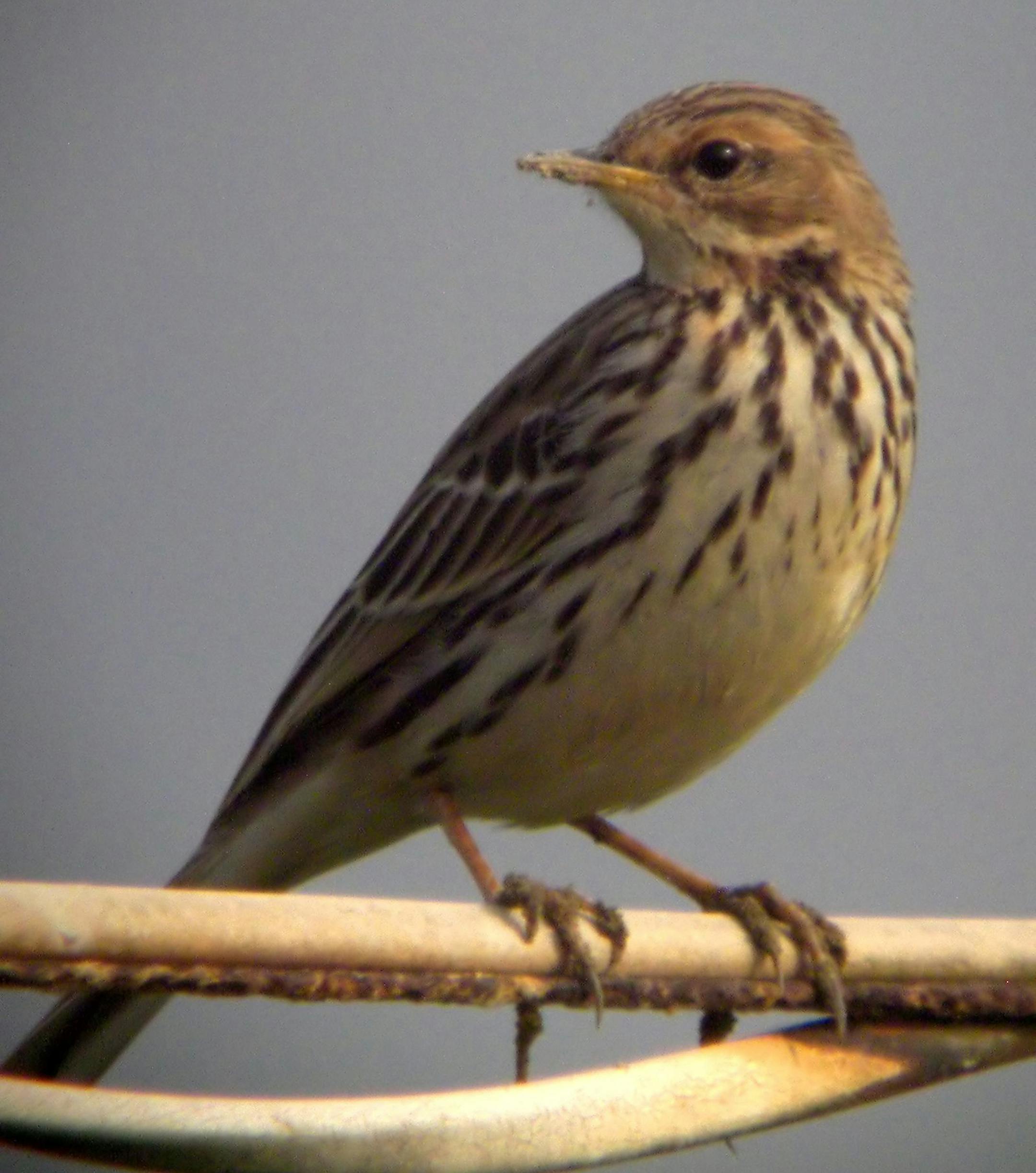
It was May 1987 and I was sitting in a native graveyard just outside of Gambell, a native village on St. Lawrence Island, in the Bering Sea. It was in the low 40s at best.
It isn't dark there in May, which was a good thing, because I was trying to get a decent look at a red-throated pipit.
The bird can resemble a small robin, but it is nowhere near as sociable. Bird guides describe it as "secretive" and, in North America, its only accessible breeding grounds are where I was sitting.
The rest of the group I came here with was back at the rented house we shared, probably well into dinner, and I was cold and hungry. They were all top-gun birders who had seen the bird before, or saw it well enough earlier in the day when I was at an area called "The Point" staring at icebergs floating by. Still, the pipit would be a "lifer" for me, and I was not leaving until I saw it well.
While the pipit nests in this area, the one or two pairs that come to Gambell don't stay in one place for more than a few seconds before they jet up and land 100 feet away, hidden by the rocks. And coffins.
In the past, the native islanders, the Yupik people who might be ancestors of Eskimos, would place the body of the deceased in a simple coffin and just set it in the rocks. I guess the earth was often too frozen to dig a grave. The weather, animals and birds soon reduced both the coffin and the body to weathered splinters.
So after trying to catch up with the pipits for an hour or so, I decided to just pick a rock, sit down and wait them out. I could see pretty much all of Gambell (population about 600). Lake Troutman was still frozen. I can see a place called the Red House where we are staying and the near-and-far bone yards where generations of hunters buried walrus carcasses and which were now getting dug up in search of what's called "petrified ivory." If Sarah Palin ever visited Gambell, she would be able to see Russia from our house — the Chukchi Peninsula is about 30 miles away.
There are no wires and no roads, just paths cut through the Gambell gravel, as it's called, by the occasional four-wheeler, often going up to a spring to get fresh water. I saw the communal bath house and the "supermarket," which was surprisingly modern but had so little on its shelves that our group had to fly in with all of our food for our stay. I saw, too, the airstrip where, God willing, Bering Air would land and fly us to Nome in four days.


