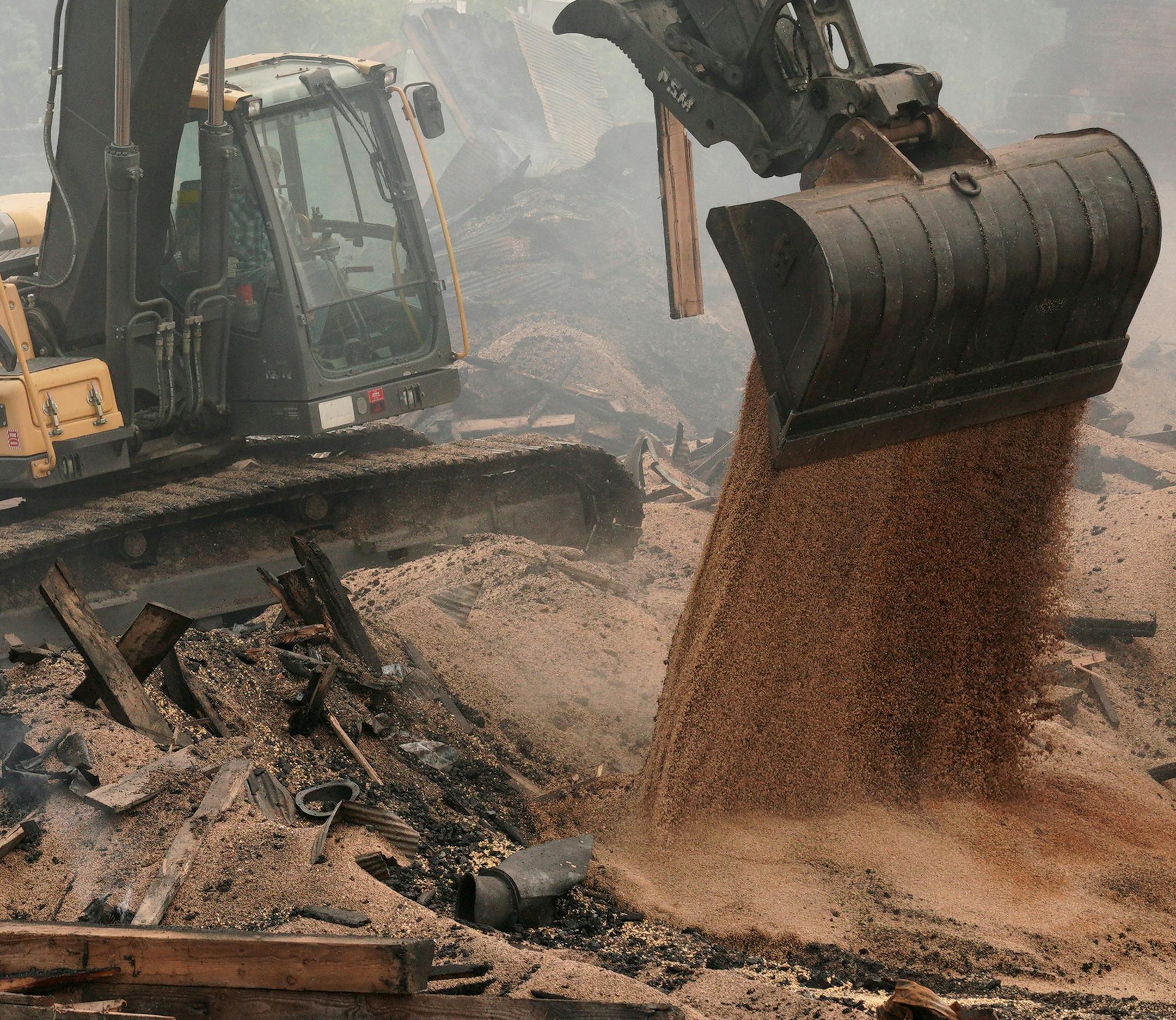
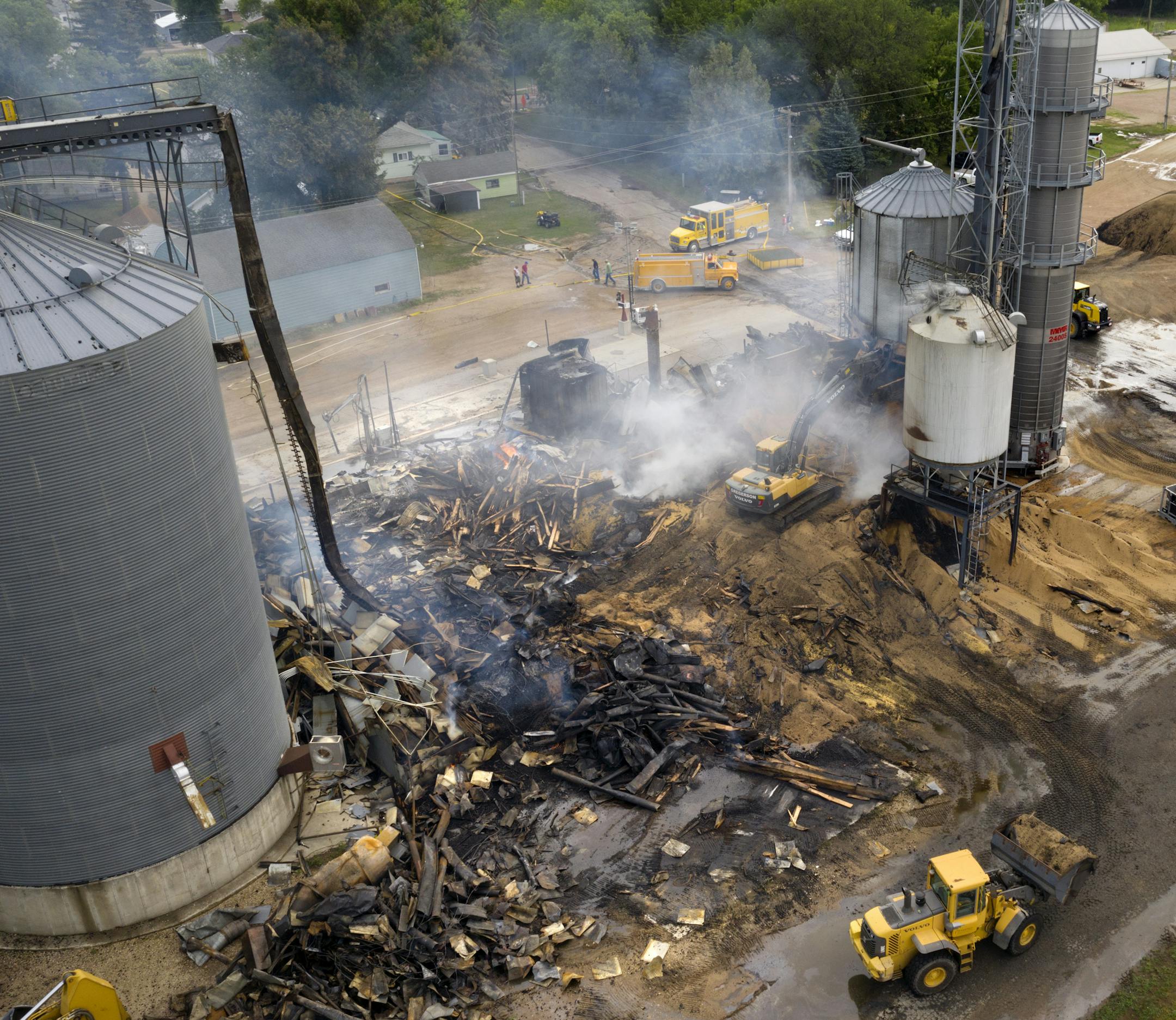
CLINTON, MINN. – All day Sunday, Dave Alberts watched as the grain elevator that has towered over this western Minnesota prairie town for decades burned.
He saw firefighters from a dozen small-town departments race in amid sweltering summer heat with hopes of dousing the blaze and area farmers drop daily chores and field work to haul in extra water. Gawkers crowded in, too, drawn by the flames and billowing smoke that could be seen for miles.
"There were more people in town yesterday than ever before," said Alberts, a Clinton native and retired president of the local bank.
By Monday, with the fire still smoldering, the talk of the town of about 400 people near the South Dakota border had shifted from containing the massive blaze and evacuating surrounding neighborhoods in case of explosion to a painful long-term question:
Would Wheaton Dumont Co-Op Elevator, which runs the grain elevator that stood here for 70-some years, rebuild it? And if not, what would it mean for the future of Clinton, where so much depends on farmers hauling their grain to town?
"There's a lot of nervous people, everyone worried about everyone else," said Mayor Greg Basta. "They're a big elevator company. They're going to take care of what they gotta do. But what happens long term here? Do they rebuild or not rebuild? We're kind of at their mercy."
"We can't afford to lose them," said Bill Thyne, now the bank president. "We have such limited business out here in rural Minnesota. Each and every one is really important."
America's small towns exist on a razor's edge. Whereas a business closing can cause a stir in a big city, it can become an existential crisis in a place like Clinton.