

I'm back from a two-week canoe-fishing trip in northern Ontario, where the bugs and fish were biting and moose were around every bend of the river we paddled. Here's some news:
Duck hunters buy federal duck stamps. They have to, of course, to legally hunt.
But sales are down in recent years, possibly reflecting a decine in the duck population and a decline in the number of hunters.
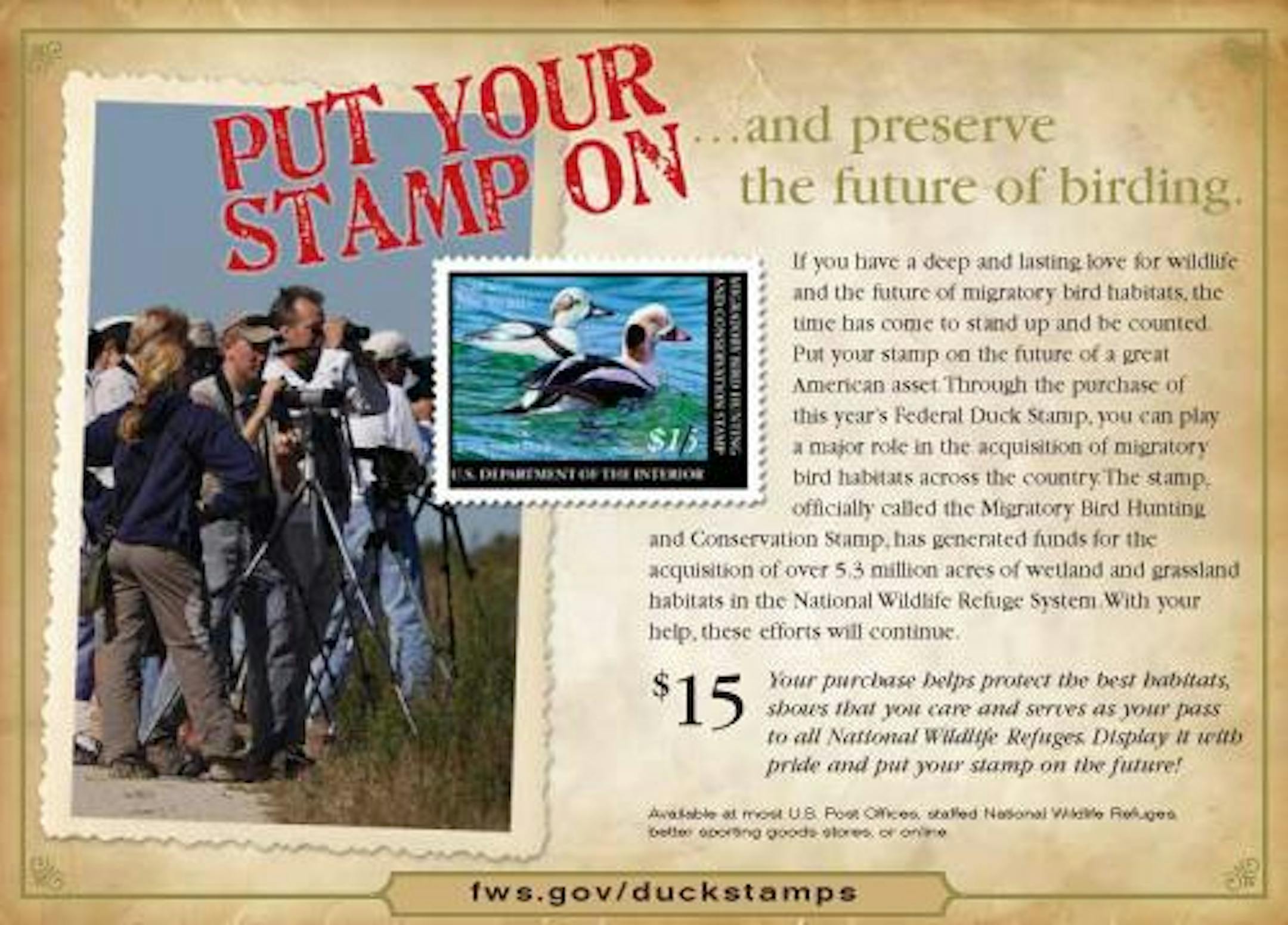
Now a volunteer group of Duck Stamp supporters is encouraging hunters and others – including birders – who enjoy the wildlife benefits from the stamps sales to buy them. The group has developed a series of public service announcements and ads -- like the one shown above -- to promote the $15 stamps.
Sales were 1.44 million in 2006-07 – the most recent year figures are available. That's the lowest since 1993-94. They have been trending down since 2000-01, when 1.69 million stamps were sold.
Since 1934, the sales have generated more than $750 million, which has been used to help purchase or lease over 5.3 million acres of waterfowl habitat in the U.S. – lands now protected in the U.S. Fish&Wildlife Service's National Wildlife Refuge System. Federal officials point out that waterfowl are'nt the only wildlife to benefit from Duck Stamp dollars. Numerous other bird, mammal, fish, reptile, and amphibian species that rely on wetland habitats have prospered. The stamps allow free access to national wildlife refuges.
Birding big business
Speaking of birding: A report released today by the U.S. Fish and Wildlife Service shows one of every five Americans watches birds – and they contributed $36 billion to the U.S. economy in 2006, the most recent year for which economic data are available. The report - Birding in the United States: A Demographic and Economic Analysis -shows that total participation in birdwatching is strong at 48 million, and remaining at a steady 20 percent of the U.S. population since 1996.


