

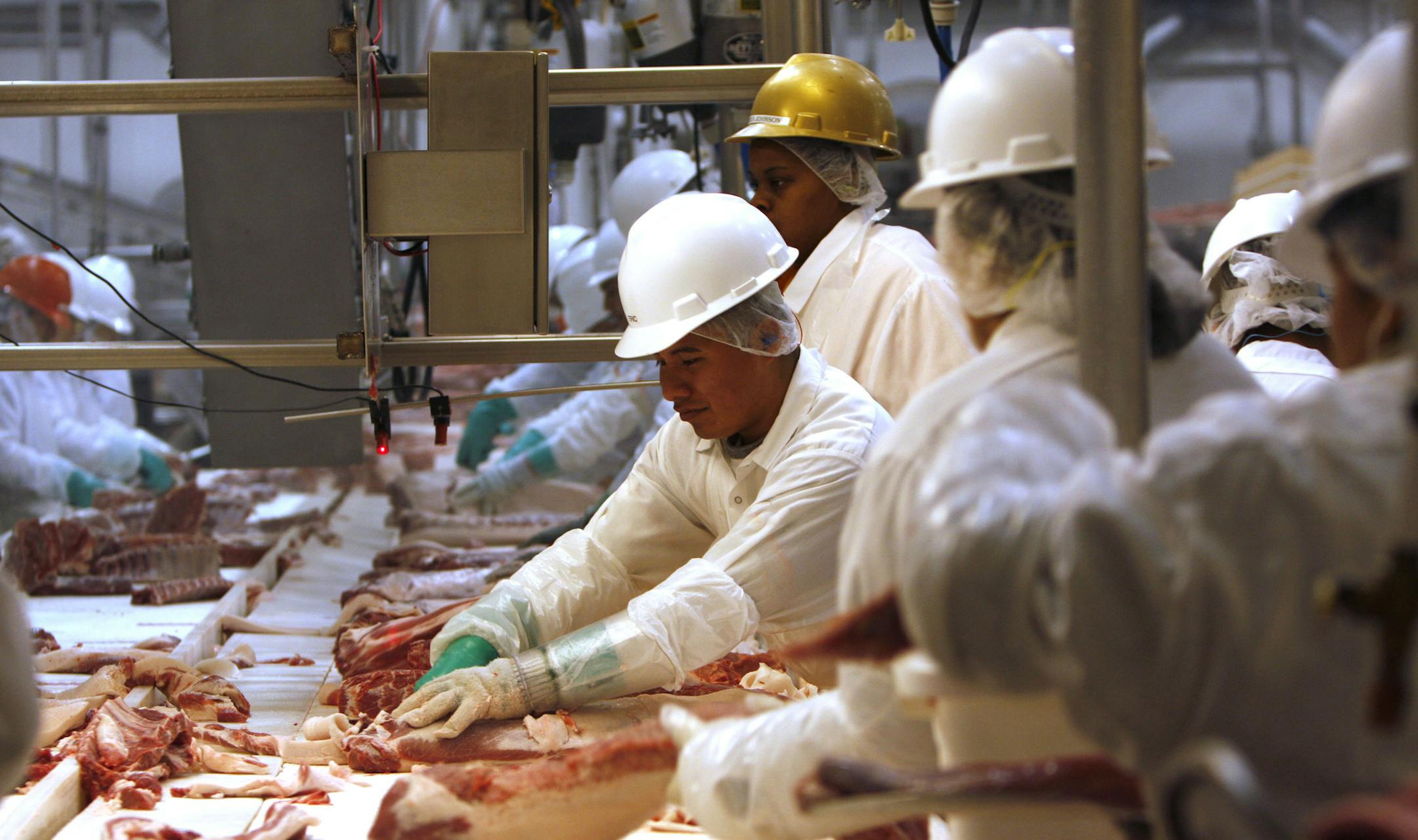
LINCOLN, Neb. – Roberto Rodriguez works at a meatpacking company in Nebraska's capital. For years, most of his colleagues were fellow Mexicans and Central Americans. These days, the men standing by his side increasingly are Middle Easterners.
"We communicate through hand signals," said Rodriguez, who came here from his native state of Zacatecas. "Working with Arabs is something I never thought I'd be doing. I thought the pipeline of Mexicans was forever."
In Lincoln, the face of immigrant labor is changing. Workers are harder to come by, and immigrant labor is no longer the exclusive domain of Mexicans and Central Americans. It's a dynamic playing out across the U.S.
By 2020, the private sector will facing a shortage of 7.5 million workers, said Ali Noorani, of the National Immigration Forum, a Washington-based think tank, citing a study by the American Action Forum, a policy institute that promotes rights for immigrants.
"We are increasingly dependent on a combination of documented and undocumented workers, refugees with temporary worker status," said Noorani.
The think tank's more conservative counterparts at the Center for Immigration Studies, which favors stronger immigration controls, argue that higher wages would lure more American workers.
So-called labor shortages, argued Mark Krikorian, executive director of the CIS, "is a sign, information for the employer that they need to change their way of doing business. They need to consider things like automation, change their recruiting strategies. Pay higher wages and offer better benefits, like free van shuttle service to pick up workers."
Some companies in the Midwest are literally rolling out the welcome mat for immigrants and refugees. Muslim prayer rooms, complete with rugs, have been installed for Middle Eastern workers. Some employers push for a more robust guest worker program to fill jobs once filled by Mexican laborers.


