

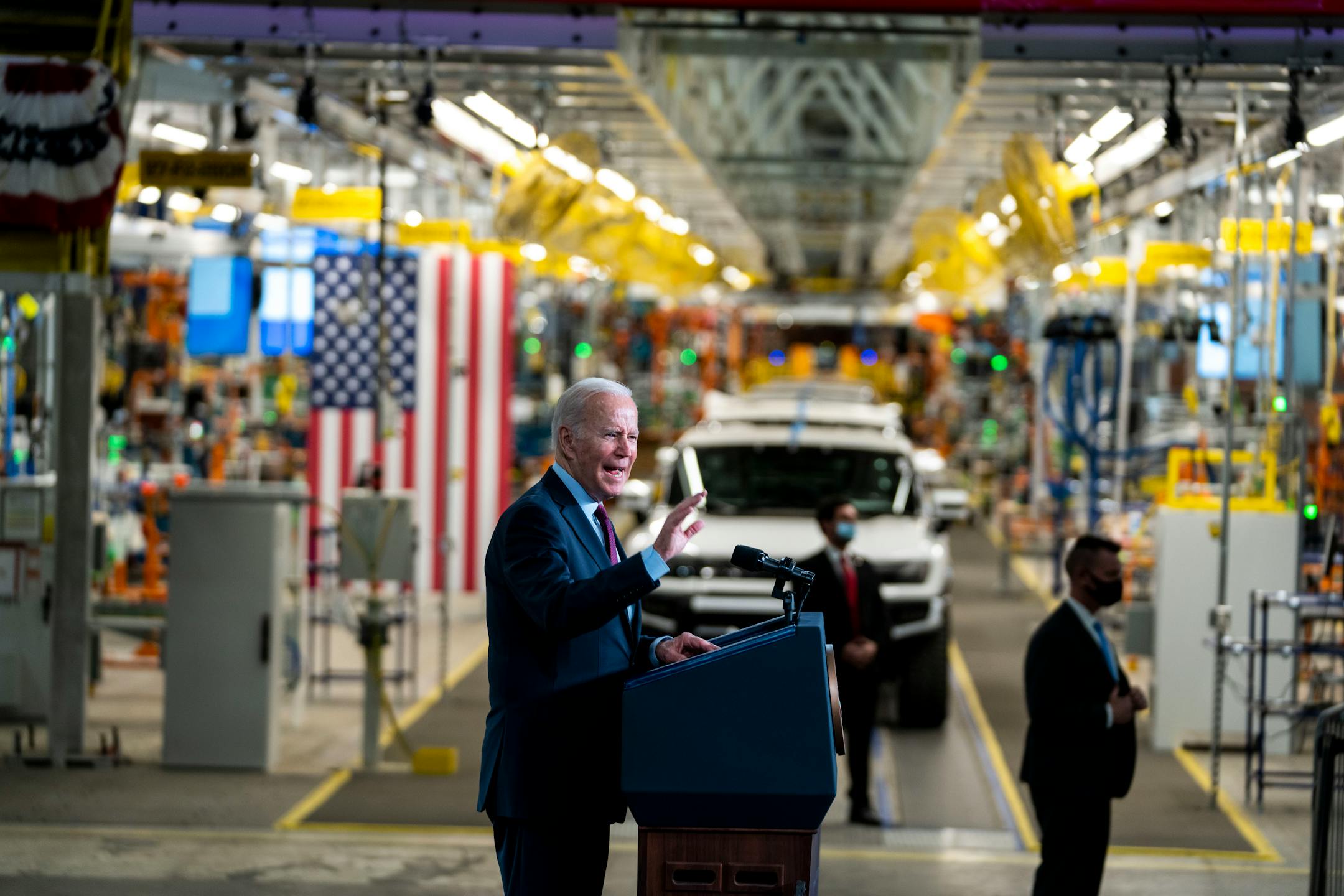
WASHINGTON – The Biden administration is planning some of the most stringent auto pollution limits in the world, designed to ensure that all-electric cars make up as much as 67% of new passenger vehicles sold in the country by 2032, according to two people familiar with the matter.
That would represent a quantum leap for the United States — where just 5.8% of vehicles sold last year were all-electric — and would exceed President Joe Biden's earlier ambitions to have all-electric cars account for half of those sold here by 2030.
It would be the federal government's most aggressive climate regulation and would propel the United States to the front of the global effort to slash greenhouse gases generated by cars, a major driver of climate change. The European Union has enacted vehicle emissions standards that are expected to phase out the sale of new gasoline-powered vehicles by 2035. Canada and Britain have proposed standards similar to the European model.
At the same time, the proposed regulation would pose a significant challenge for automakers. Nearly every major car company has invested heavily in electric vehicles, but few have committed to the levels envisioned by the Biden administration. And many have faced supply chain problems that have held up production. Even manufacturers that are enthusiastic about electric models are unsure whether consumers will buy enough of them to make up the majority of new car sales within a decade.
The action from the Environmental Protection Agency is likely to hearten climate activists, who are angry over the Biden administration's recent decision to approve an enormous oil drilling project on federal land in Alaska. Some in the administration argue that speeding up a transition to renewable energy, with most Americans driving electric vehicles, would lessen demand for oil drilled in Alaska or elsewhere.
EPA Administrator Michael Regan is expected to announce the proposed limits on tailpipe emissions Wednesday in Detroit. The requirements would be intended to ensure that electric cars represent between 54% and 60% of all new cars sold in the United States by 2030, with that figure rising to 64% to 67% of new car sales by 2032, according to the people familiar with the details, who spoke on condition of anonymity because the information had not been made public.
Rapidly speeding up the adoption of electric vehicles would require other significant changes, including the construction of millions of electric vehicle charging stations, an overhaul of electric grids to accommodate the power needs of those chargers and securing supplies of minerals and other materials needed for batteries.
The proposed regulation, which would go through a public comment period and could be altered by the government before becoming final, is sure to be met with legal challenges. It could also become an issue in the 2024 presidential campaign, as a future administration could undo or weaken it.


