

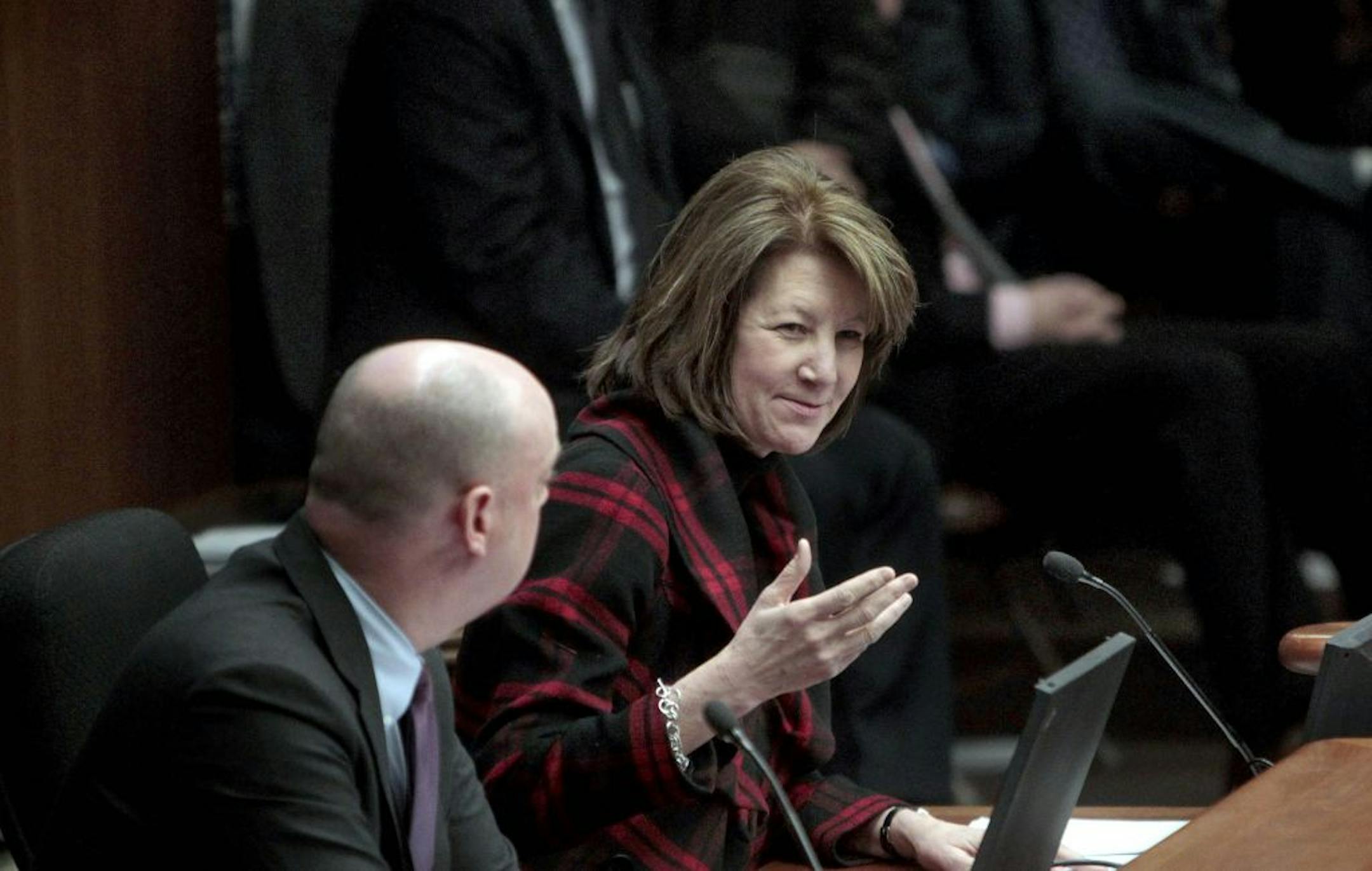
It was painful to watch Minnesota's stellar health care reputation and its Human Services commissioner, Lucinda Jesson, get pummeled on Wednesday at a congressional hearing on Medicaid oversight.
The sharp, high-profile criticism of Minnesota's medical program for the poor sent a strong message to officials in all states: They are financial stewards of federal tax dollars, not just state funds.
That responsibility is too often overlooked in a flawed Medicaid system that doesn't reward states for spending wisely on this critical safety-net program but instead gives them incentives to try to milk as many federal dollars as possible.
It's easy to look at the sprawling Medicaid program and despair that the nation will never get its deficit spending under control. Medicaid provides care for more than 50 million poor and disabled Americans.
The program will expand under the Affordable Care Act, a backdrop that helped fuel Republican criticism at the hearing. Annual spending has grown by 450 percent in 20 years, according to a new congressional report, and is expected to hit $457 billion in 2012.
The program's size and its joint federal-state funding make oversight complex. The federal government practice of matching state spending creates a horse race for states to draw down extra federal money and opens the door for practices that inappropriately increase the feds' share.
A 2004 report from the Government Accountability Office (GAO) concluded that states have used various "schemes" to claim excessive federal funds while minimizing their own contributions.
To keep Medicaid affordable, these dubious practices need to end. And if the program is to significantly expand, there can be no question about the integrity of its management at either the state or federal levels.


