

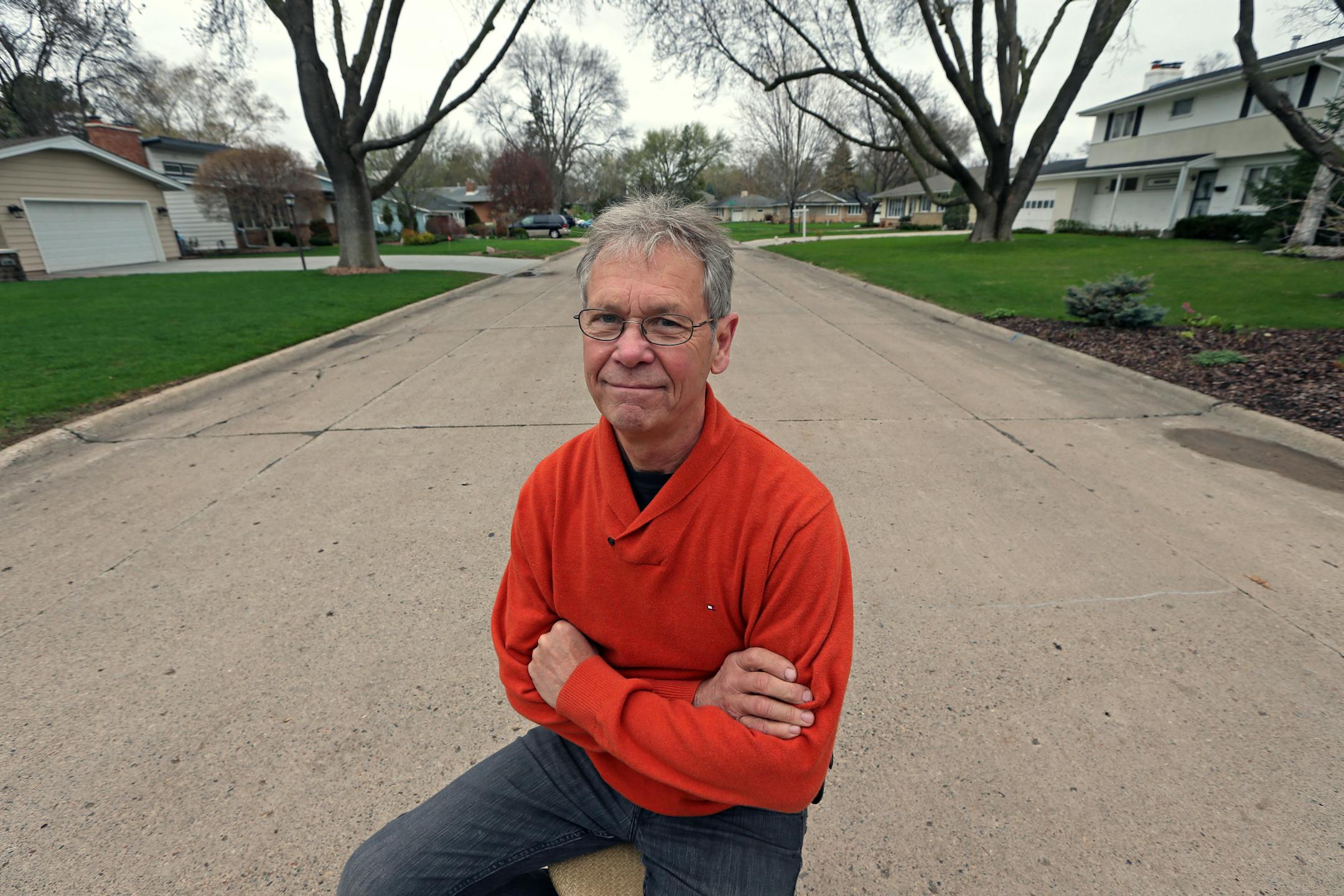
Ask some residents of Edina's Tingdale Avenue about their street, and this is what you hear: It has a tough, environmentally safe surface; residents can walk on it barefoot at the height of summer without searing their feet, and kids claim that when they fall from their bikes they are less likely to get "road rash."
Their street is concrete, soon to be replaced by asphalt. That doesn't make sense to homeowners like Judd Rietkerk.
"I think the concrete that is out here now will last longer than the new asphalt," he said. Concrete, he said, "just goes on and on."
The concrete vs. asphalt debate is an old one, and a hot enough topic that it draws a sigh from traffic engineers who are asked which is better. "Better" depends on the site, the soils and the budget.
Yet people who have concrete streets often like them. When the Edina City Council began preparing to redo roads and underground utilities in the Birchcrest neighborhood, where about 30 percent of streets are concrete, residents sent e-mails and showed up in person to praise concrete.
In April, the council decided to replace all of Birchcrest's concrete streets with asphalt. Chad Millner, Edina's director of engineering, said one of his goals this year is to develop a plan for dealing with Edina's concrete streets, which are 50 to 60 years old.
"We lean toward removing them and putting blacktop in," he said.
Asphalt's advantages
Concrete was popular decades ago when asphalt technology was in its infancy, said Curt Turgeon, the Minnesota Department of Transportation's state pavement engineer. Minnesota's early paved highways were concrete.


