

"There is no longer a Nuclear Threat from North Korea," President Donald Trump tweeted upon returning from his Singapore summit with Kim Jong-Un in June.
Yes, there is. In fact, the threat from North Korea's ballistic missile and nuclear weapons programs not only hasn't been neutralized, it's been exacerbated, according to a new report that found that even though Pyongyang may have paused weapons testing and begun dismantling one launching site, weapons work continues, including at an estimated 20 undeclared missile operating bases.
The report, from noted North Korean experts at the Center for Strategic and International Studies (CSIS), focuses on Sakkonmol, an "undeclared operational missile base for short-range ballistic missiles" that is near the Demilitarized Zone and Seoul. This base "could easily accommodate more capable medium-range ballistic missiles," continued the analysis, which is based in part on satellite imagery.
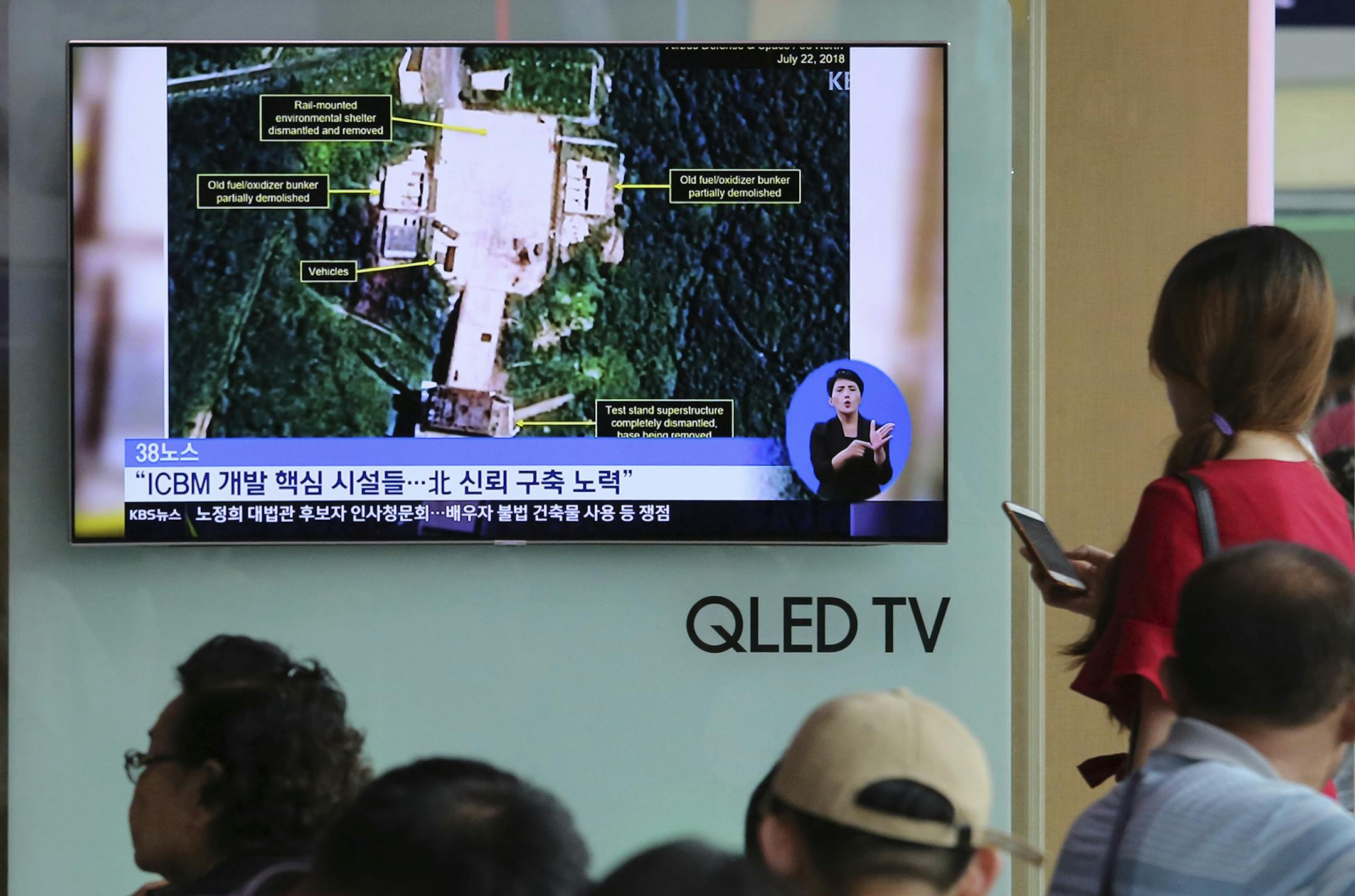
The CSIS study put the issue in a broader, and starker, context when it stated: "North Korea's decommissioning of the Sohae satellite launch facility, while garnering much media attention, obscures the military threat to U.S. forces and South Korea from this and other undeclared ballistic missile bases."
In fact, the study "shows what nuclear experts have always anticipated: that North Korea has no intention of disarming unilaterally," Mark S. Bell, an assistant professor of political science at the University of Minnesota, told an editorial writer.
Bell, a proliferation expert in his own right, added that "North Korea never agreed to disarm and in fact publicly stated that they would continue to invest in and develop their nuclear capabilities, and that's what they've continued doing."
The country has also continued to violate U.N. Security Council resolutions. But not any agreement with Trump, because there isn't anything specific beyond rhetorical statements to build a "lasting and stable peace regime on the Korean Peninsula" and to "work toward complete denuclearization" of the peninsula.
Worthy goals, and it was worthy of the president to drop his bellicosity (and antagonizing nicknames for Kim) and focus on diplomacy. But it may have been a strategic blunder to stumble into a high-profile summit that elevated Kim, solidified his sordid regime and created the appearance of progress that allowed Pyongyang to press for softening sanctions, all while not accomplishing anything concrete regarding the existential threat North Korean proliferation presents to the region and, given its rapid weapons development, even the world.


