
Despite bad weather, Twin Cities home prices rise

Twin Cities prices in January up 9.4 percent despite one of the worst winters in memory.

March 26, 2014 at 4:36AM
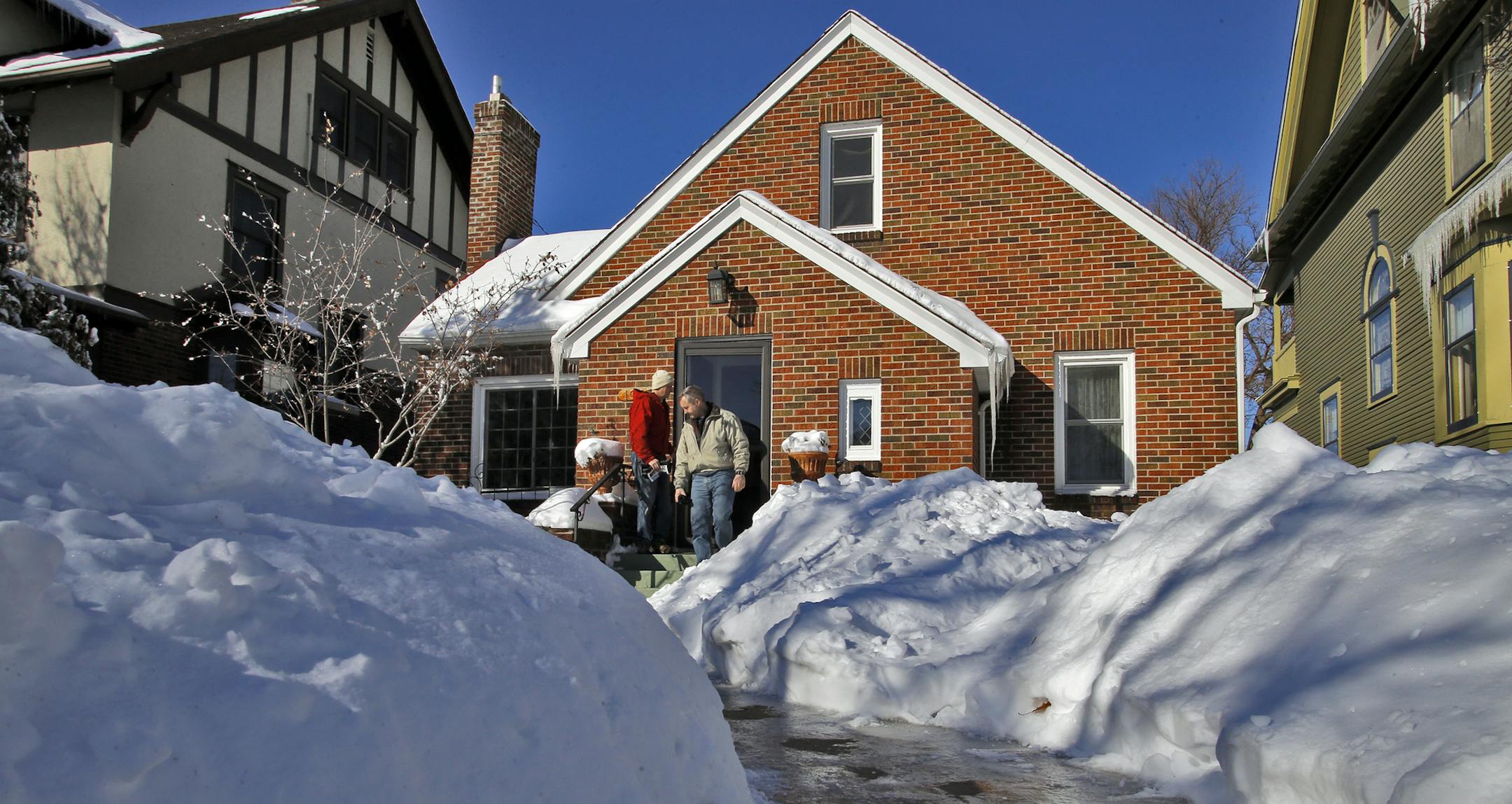
Marcy Wengler is a real estate agent in St. Paul who has found difficulty selling houses this winter due to the harsh weather conditions. She has responded by making cookies and coffee for those that endure the snow and cold to tour her sale homes. Snow was piled up around a St. Paul home that was the subject of a recent Wengler's open house. (MARLIN LEVISON/STARTRIBUNE(mlevison@startribune.com)
Harsh weather hadn’t helped sell Marcy Wengler’s listing near Grand Avenue in St. Paul last month. It was on the market 153 days after a recent price reduction from $374,900 to $350,000. (The Minnesota Star Tribune)

It was a harsh winter, but home prices are up, quelling concerns that the recovery has been derailed by snowdrifts and subzero temps.

In the Twin Cities, values jumped 9.4 percent in January from a year earlier, according to the closely watched Standard & Poor's Case-Shiller home price index.

That was a smaller increase than is typical for this time of year and four percentage points below a 20-city national composite, but economists say the deceleration is necessary to avoid another price bubble.

"It was a solid gain," said Craig Lazzara, S&P's head of index investment strategy. "You can't have 14 percent increases all year."

Across the country, all 20 metro areas tracked by the group posted annual price gains, but the increases were more muted. The 20-city composite rose 13.2 percent, with the biggest annual gain occurring in Las Vegas, where prices jumped almost 25 percent, and the smallest gain occurring in Cleveland, where prices rose 4 percent.

Bad weather has hampered home sales nationwide, with snowstorms and record-low temps making it difficult for buyers to look for homes and for Realtors to show them. This was especially true for the Twin Cities, where there were annual sales declines for four consecutive months.

"The housing recovery may have taken a breather due to the cold weather," said David Blitzer, chairman of the Index Committee at S&P Dow Jones Indices, noting that from December to January, prices in the Twin Cities dropped 0.6 percent after a similar decline from November to December.

The Case-Shiller index tracks repeat sales of the same house, which eliminates the statistical shifts that can occur when using the median or average of sales. The price index for the Twin Cities area during January was 165.5, which means that housing prices have risen just over 65 percent since January 2000.

There also has been a dramatic decline in the number of Twin Cities foreclosure sales and an increase in upper-bracket transactions, skewing the median sale price upwards. According to the Minneapolis Area Association of Realtors, the median price of all closings during February — the most recent data available — was 14 percent higher than last year. Foreclosures represented only 30 percent of those closings that month, compared with 44 percent last year.

Like other metro areas across the country, price gains in the Twin Cities have cooled compared with a string of double-digit price increases during the early months of the recovery with prices in the Twin Cities peaking last April at 14.8 percent.

That's a positive shift, economists say, because hefty price gains might lead to another real estate bubble. Those concerns have been particularly strong recently because of a shortage of listings in many areas.

Herb Tousley, director of real estate programs at the University of St. Thomas, said that the number of homes for sale continues to remain at a historic low, with just 12,131 properties for sale in the 13-county metro area. Low inventory increases competition, but also limits closings. Existing-home sales declined slightly in February and are at their lowest level since July 2012.

"We will be keeping a close eye on the inventory because the number of homes for sale will have a direct impact on the percentage of increase in median sales prices during 2014," Tousley said.

He expects slightly higher mortgage interest rates in the coming months to be another moderating factor on prices.

Jim Buchta • 612-673-7376

about the writer

about the writer

Jim Buchta

Reporter

Jim Buchta has covered real estate for the Star Tribune for several years. He also has covered energy, small business, consumer affairs and travel.

See Moreicon

More from Business

See More
card image
card image
