

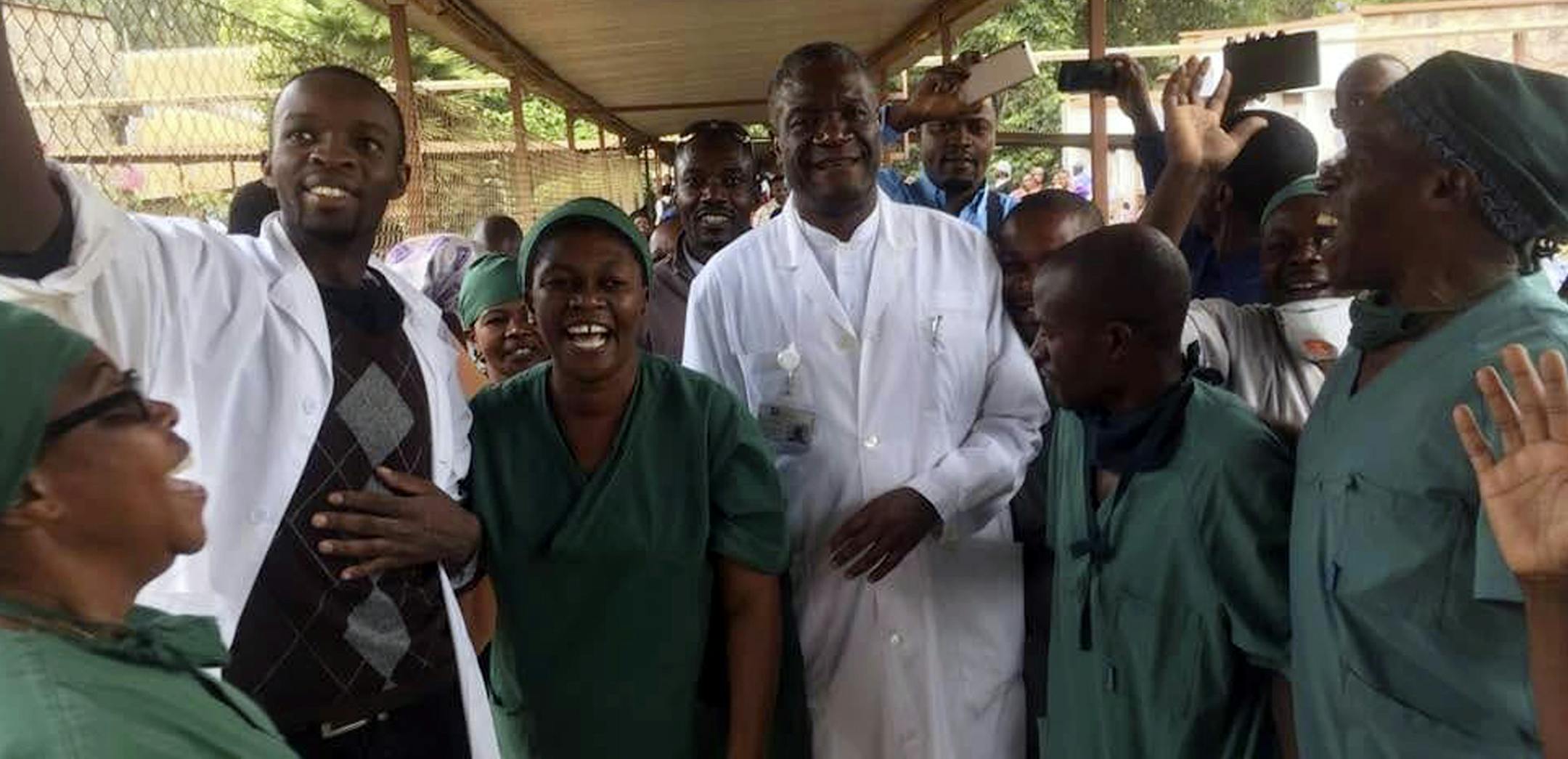
Denis Mukwege and Nadia Murad, two heroic individuals fighting to end the use of sexual violence as a weapon of war, are deserving recipients of the 2018 Nobel Peace Prize. Ideally, they can use their newfound status as laureates to galvanize a global response to this scourge.
Murad isn't just an advocate, but she was a victim, too. As a young Iraqi woman who is part of the Yazidi minority, she was targeted by the Islamic State. Abducted, sold as a sex slave and brutally abused by members of the nihilistic terror group, Murad eventually escaped and instead of being silenced, as often happens in these heinous cases, she "has shown uncommon courage in recounting her own sufferings and speaking up on behalf of victims," stated the Norwegian Nobel Committee.
Mukwege faced danger himself, including an assassination attempt because of his mission of treating and advocating for victims of sexual violence in the Democratic Republic of the Congo, which has been called the "rape capital of the world." A doctor who was in surgery when he heard he won the Peace Prize, Mukwege has treated thousands of victims in the ceaseless, senseless Congolese conflict. Mukwege, the committee stated, is the most "unifying symbol, both nationally and internationally, of the struggle to end sexual violence in war and armed conflicts."
While the Peace Prize will shine light on the plight of Yazidi and Congolese women, the pernicious practice is global. Good data is difficult to compile, Susannah Sirkin, director of international policy and partnerships for Physicians for Human Rights told an editorial writer, but "what we know is that rape in war and during mass displacement following armed conflict continues with impunity."
Mukwege and Murad are "defenders of human dignity," U.N. Secretary-General Antonio Guterres said of the laureates, whose awards come amid a worldwide reckoning of the treatment of women. "It's sort of the tenor of the times," Joe Underhill, director of the Nobel Peace Prize Forum Minneapolis, told an editorial writer. "Almost inevitably as a result of this they will be getting more international support that will help build their movement." That's the hope of Sirkin, too, who said via e-mail: "They are both incredibly courageous and eloquent witnesses to these crimes, who will now have a powerful additional platform as a result of this prize to shake the world out of its complacency and remind governments and the public that these crimes cannot be 'normalized.' "
The Peace Prize gives this issue an unprecedented platform, just as it has in previous years. Commenting before the laureates were announced, Kare Aas, Norway's ambassador to the United States, told an editorial writer that "the importance of the prize is increasing year by year" and that it gives recipients "the recognition and sometimes the necessary protection to continue their good work and mobilize others."
That protection and mobilization are indeed necessary to end the use of sexual violence in conflict. The world should listen to, and act upon, what these two heroes say.


