

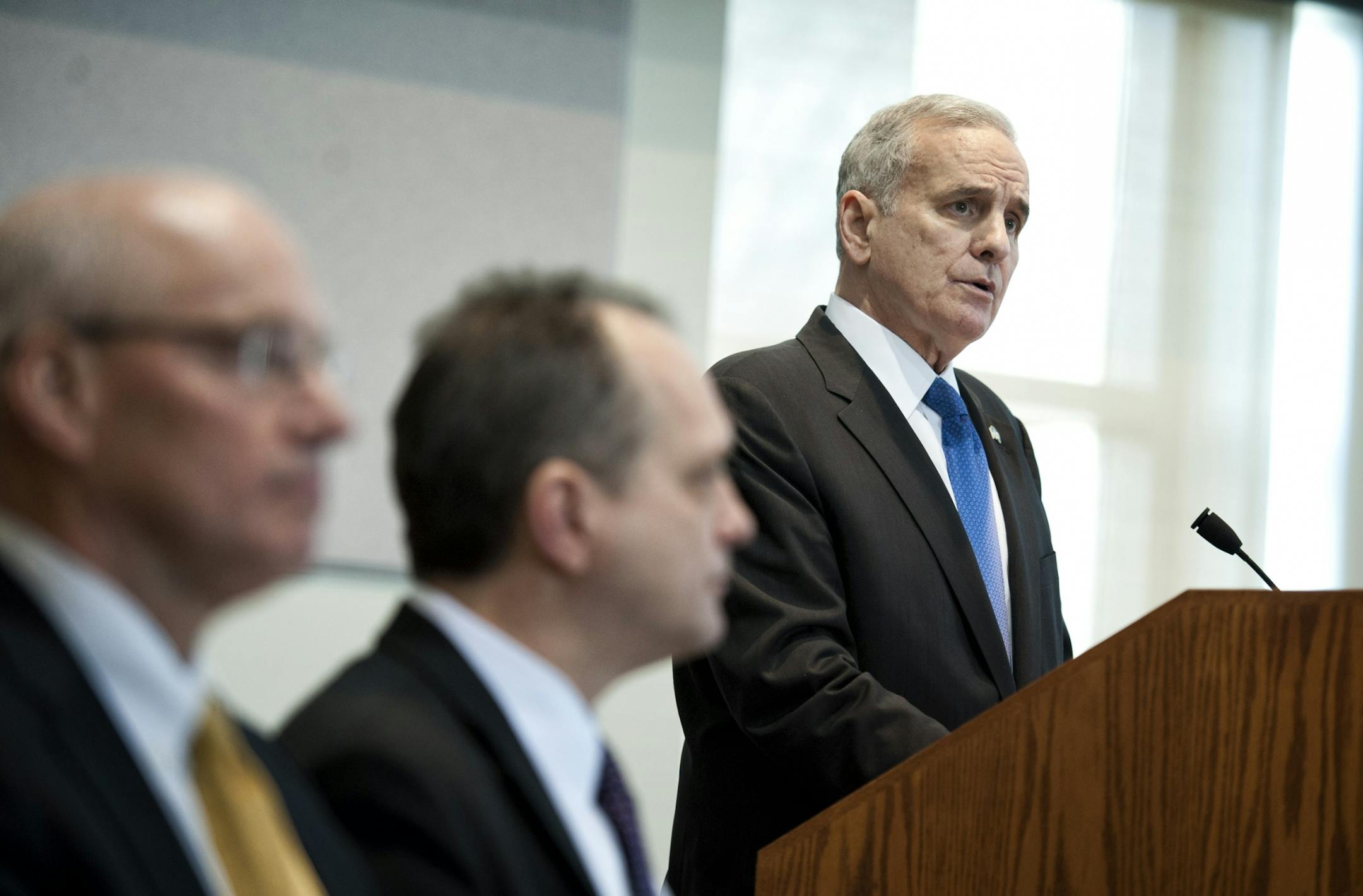
Gov. Mark Dayton on Tuesday proposed upending Minnesota's budget system by charging more income tax on those making more than $150,000 a year and lowering and broadening the sales tax, while giving the state a boosted early childhood education program and increased spending on higher education in exchange.
Dayton will have a DFL-controlled Legislature to work with as tries to convince the state his ideas are right but it will still be a heavy haul. Some lawmakers and interest groups will rally for greater investments in cherished programs, while others will upbraid the governor for pushing taxes that they believe could harm businesses.
"I expect that significant tax reform will be very difficult to achieve in this legislative session. My proposal starts with two strikes against it. First it will face powerful opposition from many of those individuals and businesses, who benefit under the existing system. Second, it carries the added burden of making up a one billion deficit," the governor will say, according to his prepared remarks.
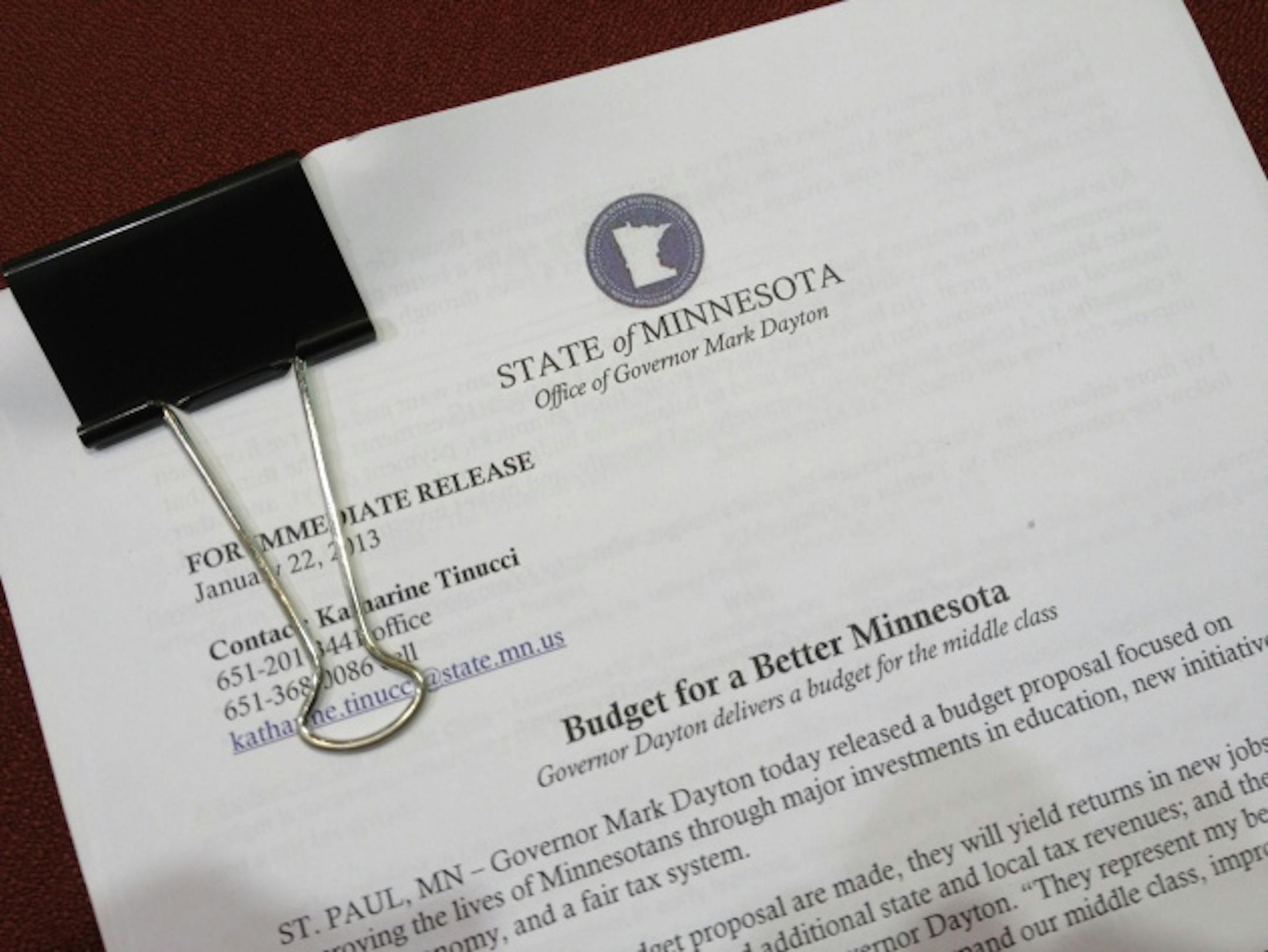
The Governor's proposal would give homeowners a rebate for the first $500 of property tax they pay this year, cut the corporate tax rate to 8.4 percent (from 9.8 percent) and freeze property taxes on business. At the same time, he proposed collecting sales tax on online sales, known as the Amazon tax, increasing the taxes on tobacco and charging, for the first time, sales taxes on clothing worth more than $100 per item.
His proposal would drop the sales tax rate from 6.875 percent to 5.5 percent.
For decades, groups that have studied the state's sales tax have said it is too high and at the same time, too narrow, missing out on applying the tax on goods that are taxed on other states. Former Gov. Jesse Ventura, like Dayton, proposed changing that. Democrats and Republicans objected to Ventura's plan, eventually killing it.
Dayton, who campaigned pledging to "tax the rich," is proposing to raise the top level income tax to 9.85 percent from 7.85 percent on married couples earning more than $250,000 a year and single people earning more than $150,000 a year. About 53,000 Minnesotans would be charged the higher rates for income above those limits if the Legislature approves his budget.
The Democratic governor also backed a new local sales tax increase in the seven county metro area to pay for a Southwest light rail line and pay for more bus and rail systems across the region.


