

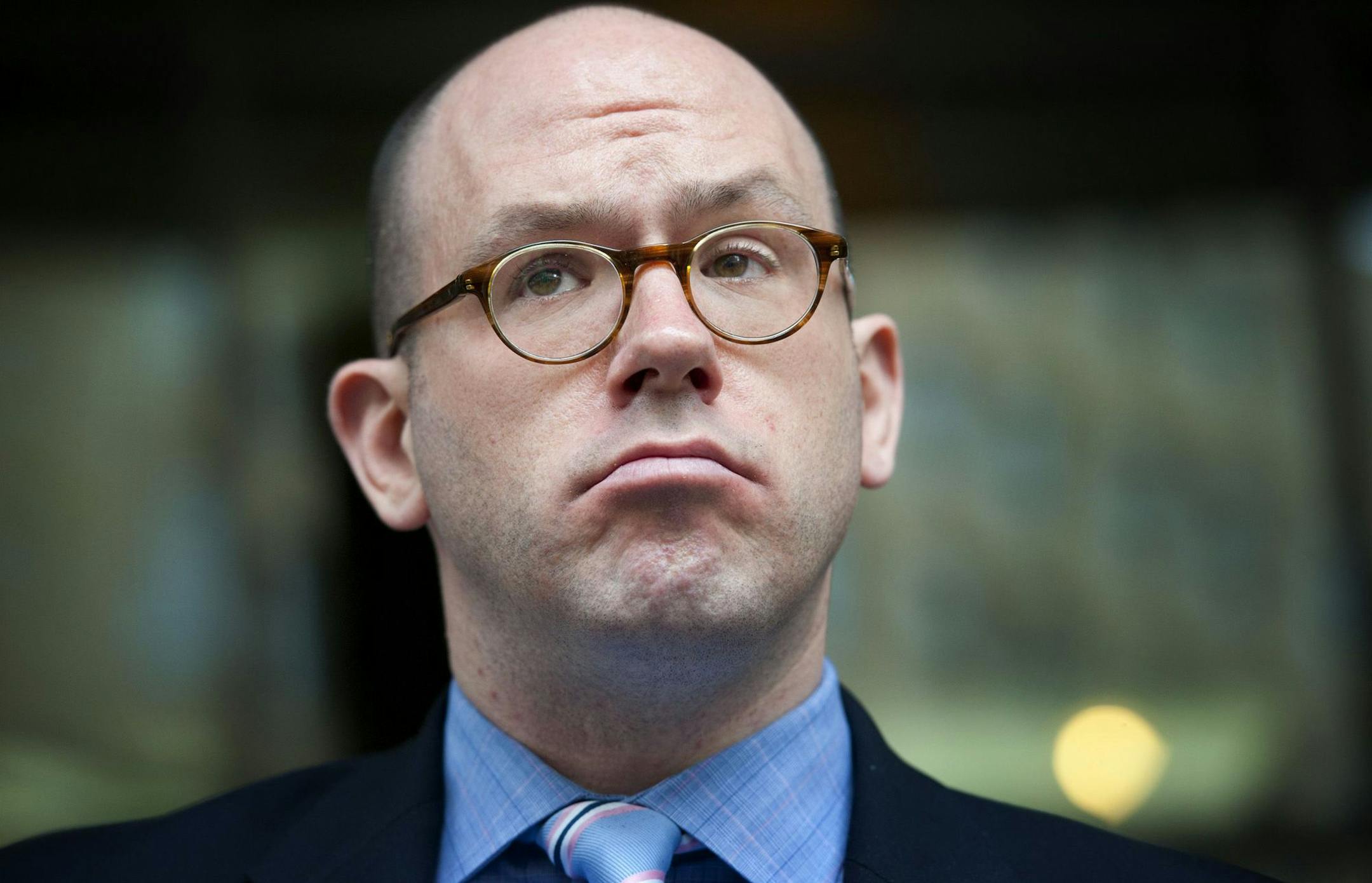
Details of the ex-Senate employee Michael Brodkorb's suit against the Minnesota Senate may be kept away from public scrutiny, according to a protective order issued this week by the magistrate judge in the case.
Brodkorb, former communications director for Senate Republicans, is suing over his 2011 firing, which came in the wake of his affair with his boss, then-Senate Majority Leader Amy Koch. Brodkorb says he was treated differently from current and former female legislative staffers who were allowed to continue working after similar workplace affairs. The Senate counters that he was an "at will" employee who could be let go at any time.
The case heads to trial next summer.
Chief Magistrate Judge Arthur Boylan granted the protective order, which allows both parties to designate as confidential documents or other information produced during discovery.
Brodkorb and Senate officials had proposed different versions of such an order, but Brodkorb said Friday that the order issued by Boylan is too sweeping. He claims the Senate asked to keep issues confidential only when its attorney learned Brodkorb had recorded his meetings with Senate officials.
On Friday, Brodkorb attorney Greg Walsh revealed that his client has "hundreds of pages of documents, including audiotapes from meetings between Mr. Brodkorb and representatives of the Minnesota Senate, which we believe support Mr. Brodkorb's claim that he was wrongfully terminated."
Brodkorb, a former Republican operative and opposition researcher, said he began recording his meetings with senators and high level staff in December 2011, when he met with the Senate chief of staff and secretary at the Moose Country restaurant in Mendota Heights and was told he was fired. He said he recorded that meeting and subsequent meetings, "to ensure that there was an accurate, public record of the nature of the meetings and what was being said."
Before Brodkorb disclosed the existence of the recordings, Dayle Nolan, attorney for the Minnesota Senate, said that protective orders are not unusual and the form this one took is not unique.


