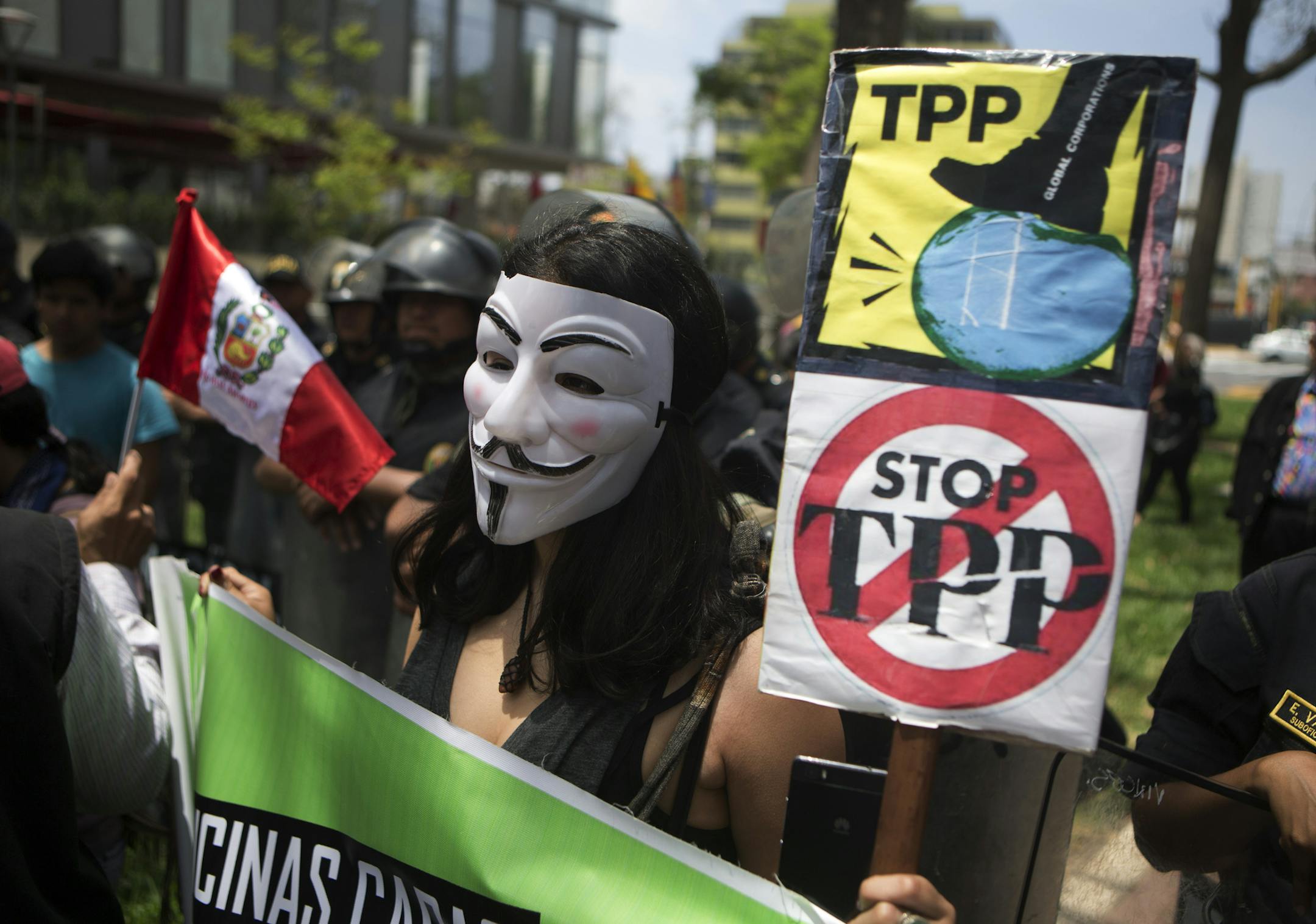
Depending on who is talking, the Trans-Pacific Partnership (TPP) is either the world's most ambitious trade deal or the most dangerous. But these days a simpler description suffices: it is dead.
With Donald Trump's victory, the U.S. has abandoned TPP, in effect killing the trade pact that was a decade in the works and nearly complete.
The consequences are far-reaching. TPP's collapse removes the main economic plank of President Obama's "pivot" to Asia. It leaves a gaping hole in the architecture of Asian commerce. And it adds to the strong headwinds that are buffeting global trade.
The chances that the United States would ratify TPP had already been dwindling because of growing opposition. With the triumph of Trump, who has called TPP a "terrible deal," even a faint hope vanished.
On the basis of size alone, TPP would have been important, the largest regional trade deal in history. It encompassed 12 Pacific countries, including the U.S., Japan and Canada. Together, they account for two-fifths of the world economy. But what made it all the more significant was its strategic intent. Notably absent from the membership was China. Economically, this made little sense. Studies indicated that including China, the world's biggest exporter, would have substantially expanded the benefits of TPP. But the U.S. wanted to show that it could set Asia's economic agenda. China might eventually have been invited to join TPP, but only after the U.S. had written "the rules of the road," as its negotiators liked to say.
TPP emphasized stronger safeguards for intellectual property, the environment and labor rights (detractors felt it went too far on the first and not far enough on the other two). Matthew Goodman of the Center for Strategic and International Studies, a think tank, considers its collapse a "body blow" to U.S. economic policy in Asia.
It is also a blow to the global economy. Over the years, rich countries have cut tariffs to the point where the main obstacles to commerce now lie in regulations that discriminate against foreign companies. TPP took aim at barriers hidden in government-procurement guidelines and investment restrictions. It would have raised the bar for future trade deals, said Jayant Menon of the Asian Development Bank: "That's where the biggest loss lies."
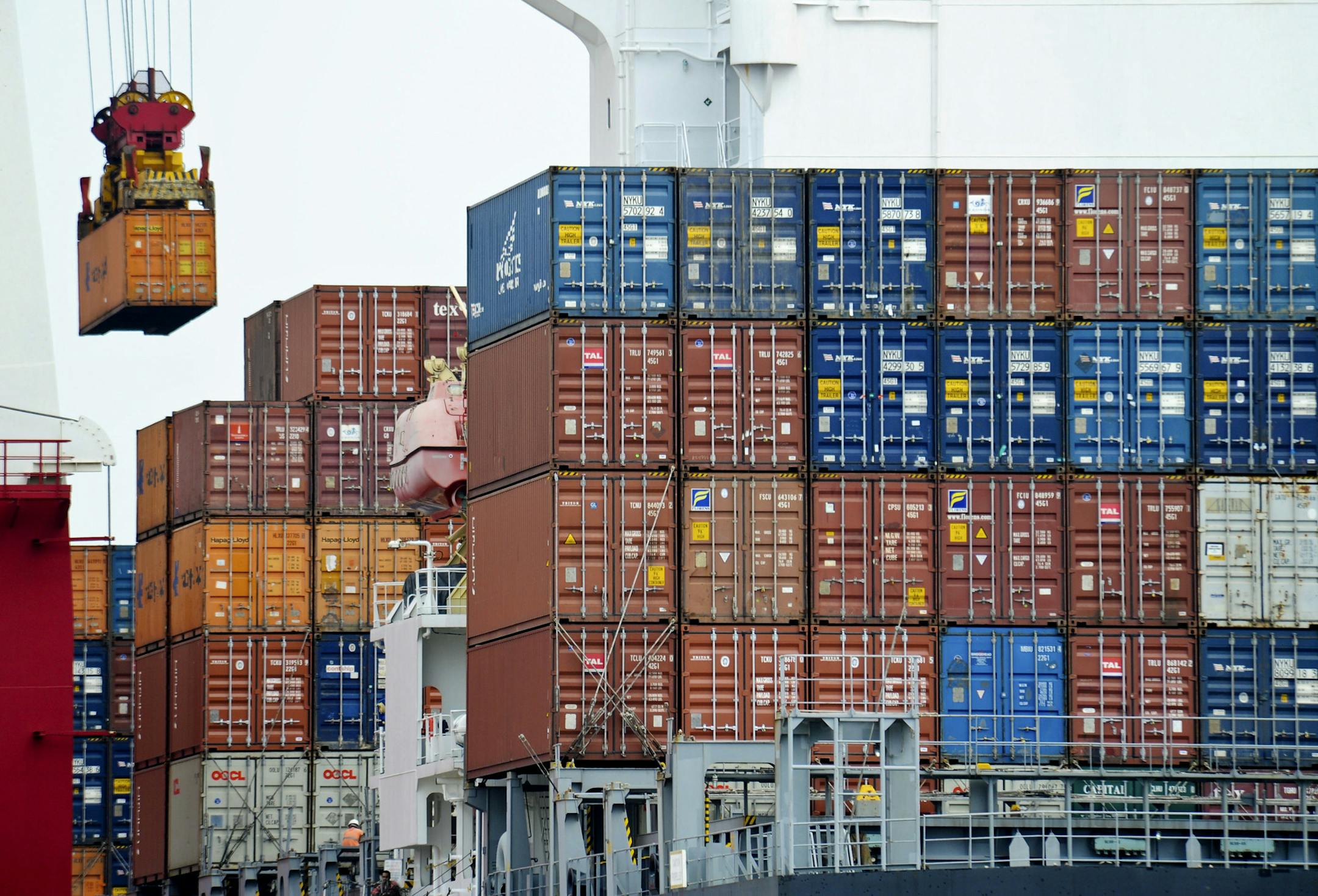
Global trade is on track to expand more slowly than world GDP this year for the first time in 15 years, said the World Trade Organization. In Asia, exports are set to grow just 0.3 percent this year in volume terms, well below the 8 percent average of the past 20 years. For poorer countries, exports have long been the most reliable way to kick-start development. That route now looks less accessible. If Trump keeps his threat to slap fearsome tariffs on Chinese goods, the fallout could easily tip global trade into outright contraction.