

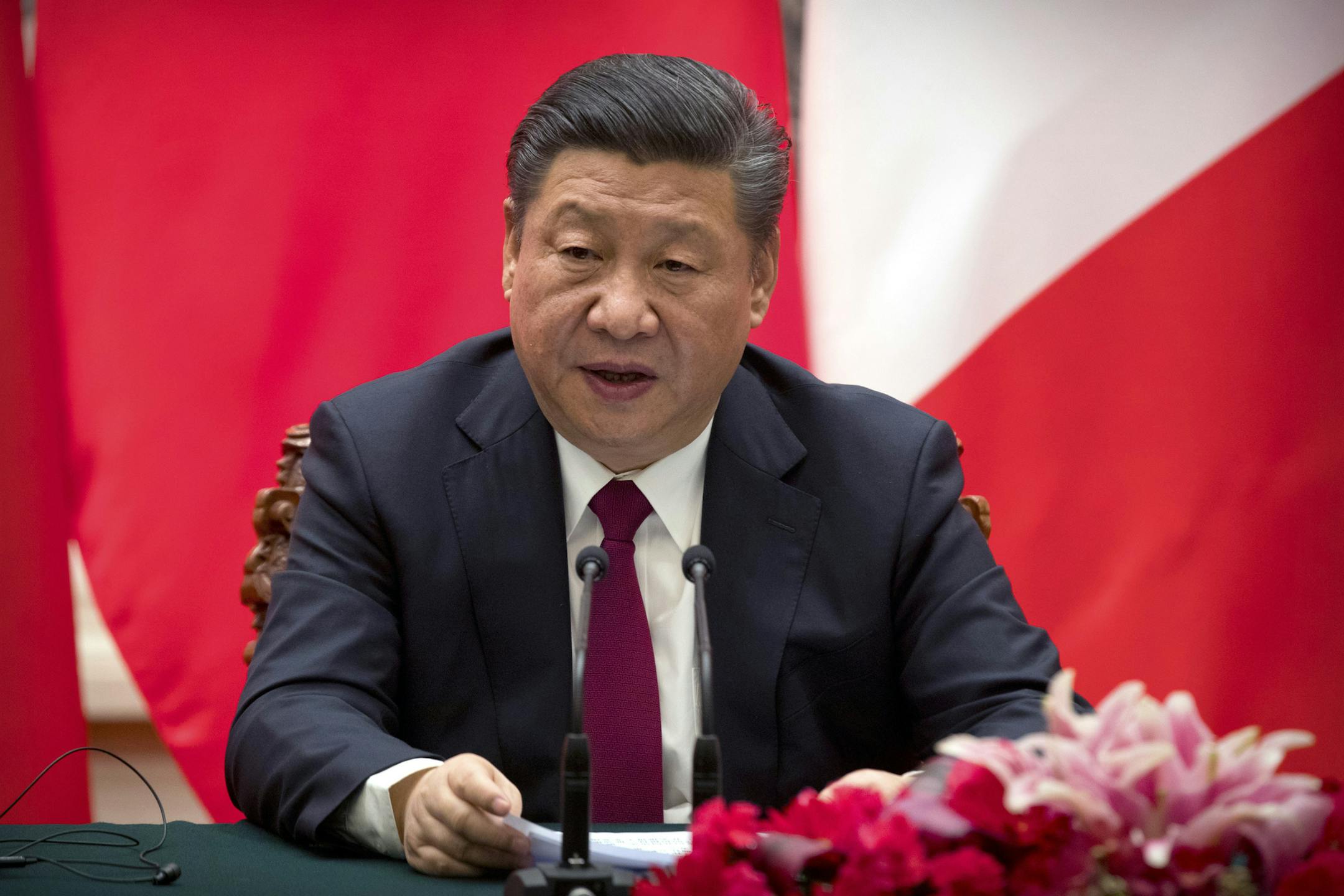
China could never be mistaken for a democracy. But the nation appears poised to take an even more authoritarian turn after the announcement that the ruling Communist Party is likely to lift limits on presidential terms, a move meant to keep Chinese President Xi Jinping in power indefinitely.
The shift from the previous two-term limit reflects the elevation of Xi to the most powerful Chinese leader since Mao.
Xi's position will soon even be constitutionally enshrined as the "Xi Jinping Thought on Socialism with Chinese Characteristics for a New Era," which codifies policies on the nation, the party and Xi himself.
Such a cult of personality combined with unchecked power is never a good notion for any nation, and it poses risks beyond China's borders. Most profoundly, it's bad news for the Chinese people because it snuffs out even a hint of the natural democratic aspirations that have already been so brutally repressed. It's also likely to increase, not reduce or eliminate, internal political turmoil.
The Chinese "will regret this move," Douglas Paal, vice president for studies at the Carnegie Endowment for International Peace, told an editorial writer. "It is not caused by popular acclaim; it is a power grab by the top." And this power grab, Paal added, will grip Chinese elites in internal struggles that may eventually destabilize China.
That, in turn, could further destabilize a region contending with China's territorial aggression in the East and South China Seas, as well as the U.S.-Sino relationship that's already fraught because of China's rapid rise as a geopolitical power.
Previous presidents would likely publicly rebuke the power grab. But speaking on behalf of the Trump administration, press secretary Sarah Sanders said on Monday that it's "a decision for China to make about what's best for their country."
Indeed it is. But President Donald Trump should also speak out about the country's slide into deeper authoritarianism and the broader illiberal drift worldwide, including with allied NATO countries such as Turkey, Hungary, and other Eastern and Central European nations.


