

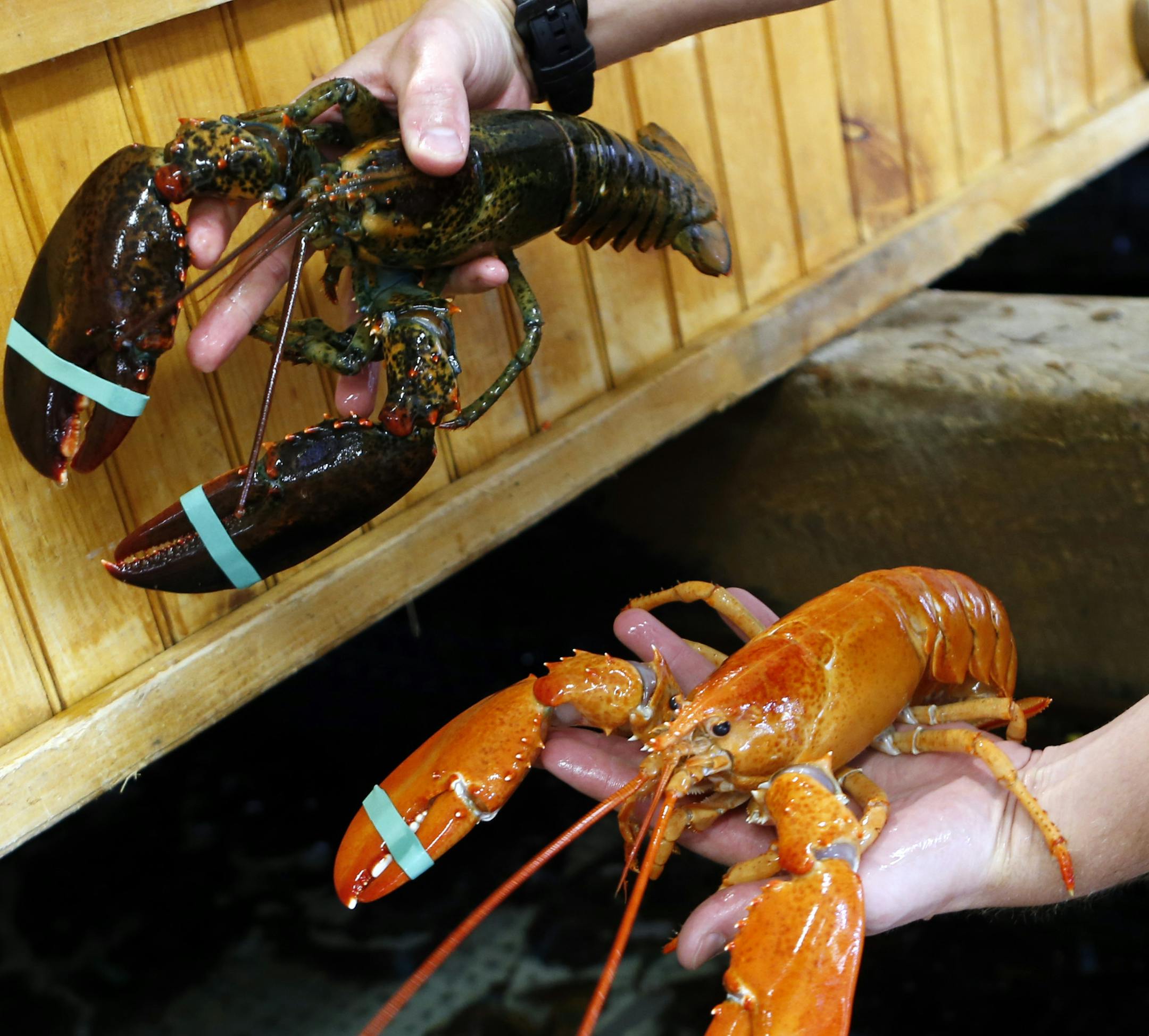
Every Sunday for the past seven months, about 60,000 live North American lobsters packed in wet newspapers and Styrofoam coolers make the 18-hour flight to Asia in a Korean Airlines cargo plane.
The 7,500-mile trip from Nova Scotia to Shanghai via South Korea has become a weekly routine because of a surge in demand from China, where lobsters caught in North Atlantic waters are at least one-third the cost of other supplies. As a result, exports have skyrocketed from Canada and the U.S., the world's top producers, and U.S. prices are the highest ever.
With no industry of its own, China had relied mostly on Australian imports to satisfy growing demand from its expanding middle class. When that catch began shrinking, and a 2012 glut in the Gulf of Maine sent prices plunging in the U.S., it became more attractive for the world's most-populous nation to buy from halfway around the world.
"When the domestic market collapsed, we looked farther and farther" for buyers, said Stephanie Nadeau, who shipped 2.5 million pounds last year by air to China for the Lobster Co. in Arundel, Maine. "I never sold a lobster to China until 2010. It was the really low price and the dealer's desperation here because we had high catches and a godawful economy."
U.S. exports to China rose to 18.9 million pounds last year, up 22-fold from 2009, according to the U.S. government.
Shipments already are up 12 percent in 2015. Chinese importers shopping on Alibaba.com can buy live Canadian lobsters prized for their tail meat and big claws for $6 to $10 a pound, compared with $20 to $33 for Australia's Southern rock lobsters — a different species that doesn't have claws.
Growing Asian demand provided a new outlet for U.S. producers who saw prices drop after their catches expanded by 66 percent in the decade through 2013 to 68,000 tons.
Asian buyers want their lobsters live. To survive the long trip, they should arrive within 48 hours of being removed from water tanks, exporters say. "You don't get paid for dead lobsters," Nadeau said. She added more refrigerated trucks and a storehouse in Canada with a tank to ensure stable supplies all year round, including during the busy Chinese New Year.


