

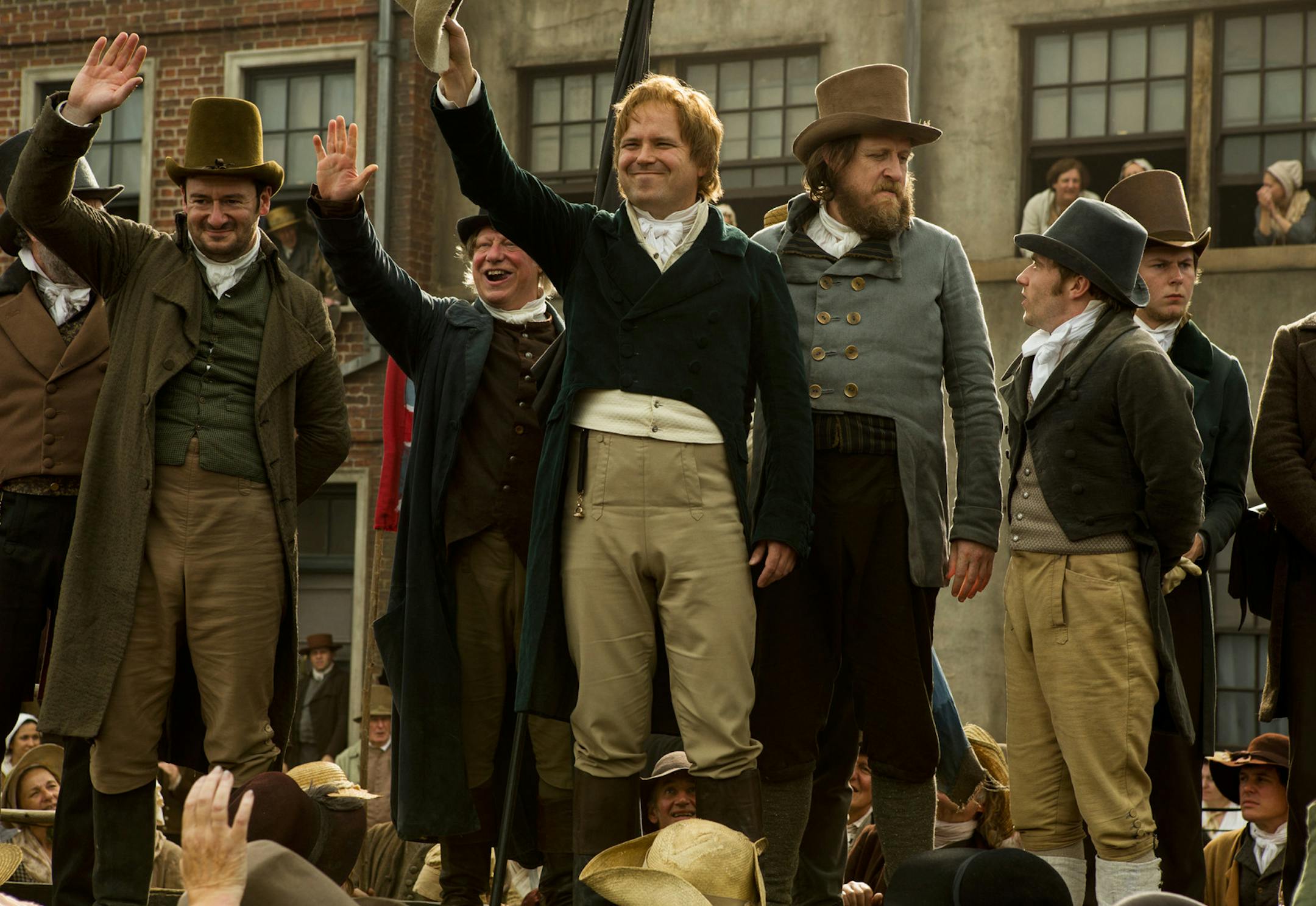
When British filmmaker Mike Leigh started work on his period political drama "Peterloo" five years ago, he made a firm decision to avoid superimposing modern-day political references onto the 200-year-old story.
But he overlooked one possibility: that political developments might impose themselves on his movie.
"From 2016 onward, in both the States and the U.K., there were events that resonate with the story," he said. "I didn't have to put in any contemporary analogies because people were going to be looking for them, anyway."
Set in 1819, the film focuses on an effort by the British ruling elite to keep the working class — which was exploding in numbers because of the Industrial Revolution — in a subservient position by denying them the vote, levying taxes and imposing stiff import tariffs on basic necessities like the grain needed to make bread.
Tensions finally reached the breaking point during a massive protest in Manchester, held in St. Peter's Field. Just four years after the Battle of Waterloo, it was labeled Peterloo by people who were adding the suffix "loo" to confrontations the same way we now append "gate" to scandals.
An estimated 60,000 people rallied to demand the right to vote. Armed soldiers were unleashed on the protesters, who were dressed in their Sunday finery and had been told not to bring anything even resembling a weapon to avoid the impression they were looking for a fight. They were helpless to defend themselves against the soldiers, who showed no mercy, cutting down the elderly, women and even children indiscriminately.
It's a famous moment in British history. Although it's largely unknown in the United States, Leigh said, viewers on this side of the Atlantic will have their own parallel reference points, including the 1965 attack in Selma, Ala., on demonstrators demanding voting rights for blacks.
"The Americans have Selma, the Irish have Bloody Sunday," he said of a 1972 protest in which soldiers opened fire on civil rights marchers. Many democracies have an event like it in their histories, he said.


