

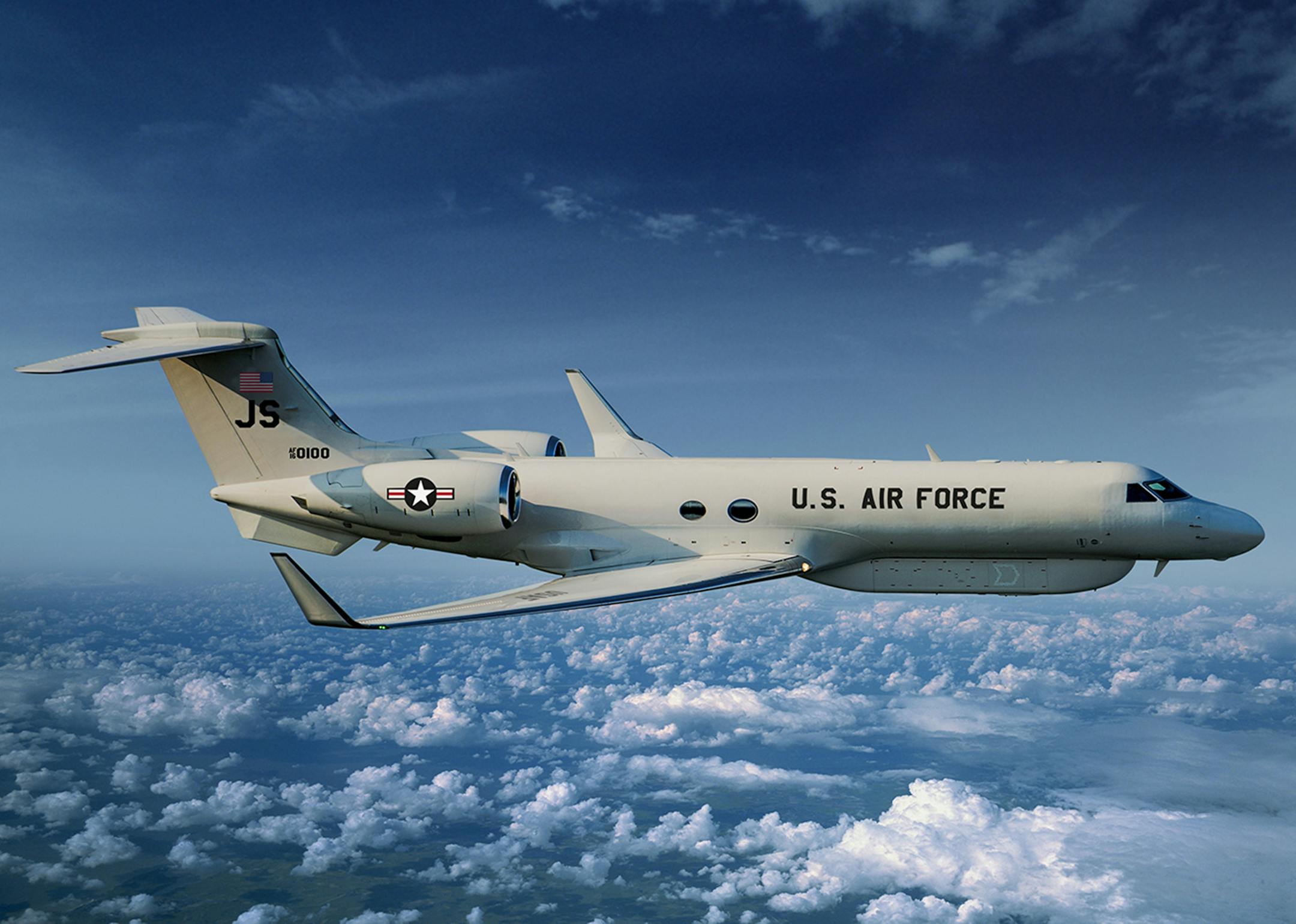
For a vital aircraft that will fly above distant battlefields, the Air Force will choose between Goliath and two Davids.
One is a jet originally designed to carry around 135 passengers, the two others built to carry fewer than 20 people.
With a $6.9 billion deal on the line, a militarized version of Boeing's 737 jet is going up against the Gulfstream G550 and the Bombardier Global 6000 high-end business jets for a special-mission contract to be awarded as early as this fall.
The 17 JSTARS — or Joint Surveillance Target Attack Radar System — jets at issue will be stuffed with high-tech military radar and computer-analysis equipment. The current JSTARS fleet is now active in strikes on the Islamic State of Iraq and Syria.
Chicago-based Boeing hopes a JSTARS win would incline the Air Force to choose the 737 to replace more than 100 different types of special-mission aircraft in its inventory — contracts that are lucrative far beyond the mere number of 737s involved.
But the competition from Savannah, Ga.-based Gulfstream and Canada's Bombardier is formidable.
For special missions, air forces around the world are increasingly selecting business jets that fly higher, faster and farther than airliners.
The U.S. Air Force initially chose the Gulfstream for a separate electronic-jamming plane code-named Compass Call, although Boeing in May formally challenged that process.


