

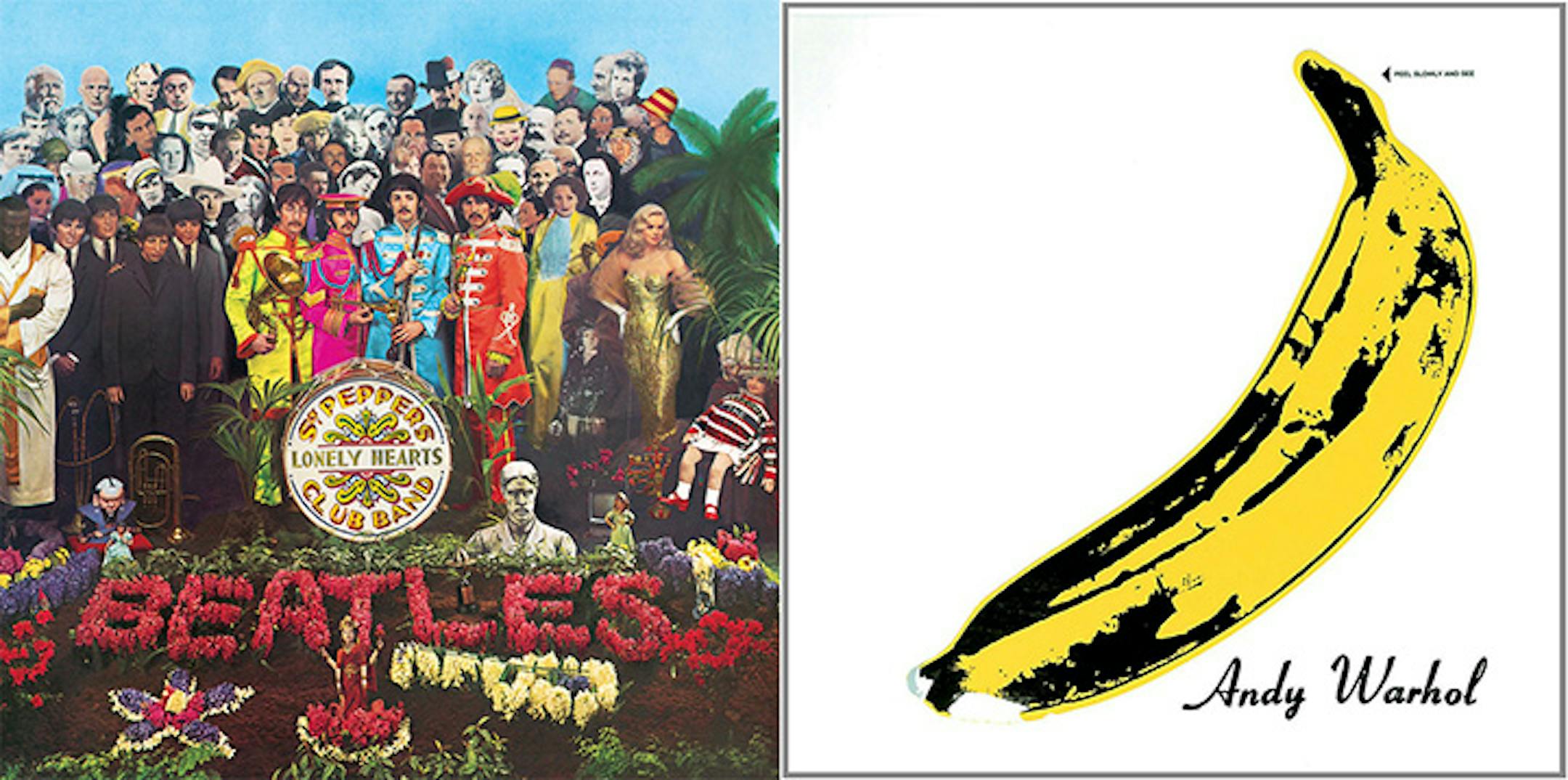
What a difference a half-century can make, especially when considering the impact of two landmark albums released only a few months apart 50 years ago. That they are even being considered in the same sentence today would've seemed preposterous in 1967. And the same is true now, except the albums have traded positions.
In the months leading up to the release of "Sgt. Pepper's Lonely Hearts Club Band," the Beatles knew that every word and sound they were recording would be scrutinized and likely celebrated, and they set their sights on the center of a youth culture that hung not just on their every song, but the way they dressed and styled their hair, what they said and how they said it.
The mainstream media were primed, as well. Publications such as Time magazine and the New York Times praised the grown-up sophistication of "Sgt. Pepper" when it was released June 1, 1967, hailing it as a "decisive moment in Western Civilization" and comparing its artistic reach to that of George Gershwin and T.S. Eliot. Years later, critic Langdon Winner amplified the hype in "The Rolling Stone Illustrated History of Rock 'n' Roll" — "The closest Western Civilization has come to unity since the Congress of Vienna in 1815 was the week the 'Sgt. Pepper' album was released."
The Velvet Underground, on the other hand, clearly knew that with its debut, "The Velvet Underground and Nico," released March 12, 1967, it was making an album that failed almost every test of pop culture currency. Band members were seen as vile pornographers by those who superficially scanned and demeaned their risqué subject matter: drugs, decadence, "deviant" sex. Their record was banned from some stores, ignored by radio programmers and shunned by some publications that refused to run ads announcing its arrival.
The record sank off the charts the same week that "Sgt. Pepper" ushered in the "Summer of Love." Years later, the Velvets' John Cale shrugged when asked if the band was disappointed by the response. "There was a theory of stubbornness at work within the band," he said. "We didn't care what anyone thought."
Now the "Summer of Love" feels like an artifact, and the Velvets' vision of a landscape in which primitive rock 'n' roll merged with literary and avant-garde aesthetics feels fresher than ever.
"Sgt. Pepper" was clearly a product of its era, a work that followed up two superior Beatles albums, "Rubber Soul" and, especially, "Revolver." The studio experimentation that so dazzled contemporaries in 1967 was in full bloom a year earlier on "Revolver," thanks to such visionary pieces of music as "Tomorrow Never Knows." And the songwriting was extraordinary — the melancholy beauty of "Here, There and Everywhere," the violent cool of "Taxman," the jangling pop perfection of "And Your Bird Can Sing."
While "Sgt. Pepper" offered the groundbreaking "A Day in the Life" and the psychedelic visions of "Lucy in the Sky With Diamonds," much of the rest comes off as slight and overly clever and self-conscious. Songs such as the dance hall homage "When I'm 64" or the mash note to a meter maid, "Lovely Rita," sound of a piece with the bubble gum of British contemporaries such as Herman's Hermits or Gerry and the Pacemakers rather than of the group that released the double-sided single "Strawberry Fields"/"Penny Lane" only months earlier.


