

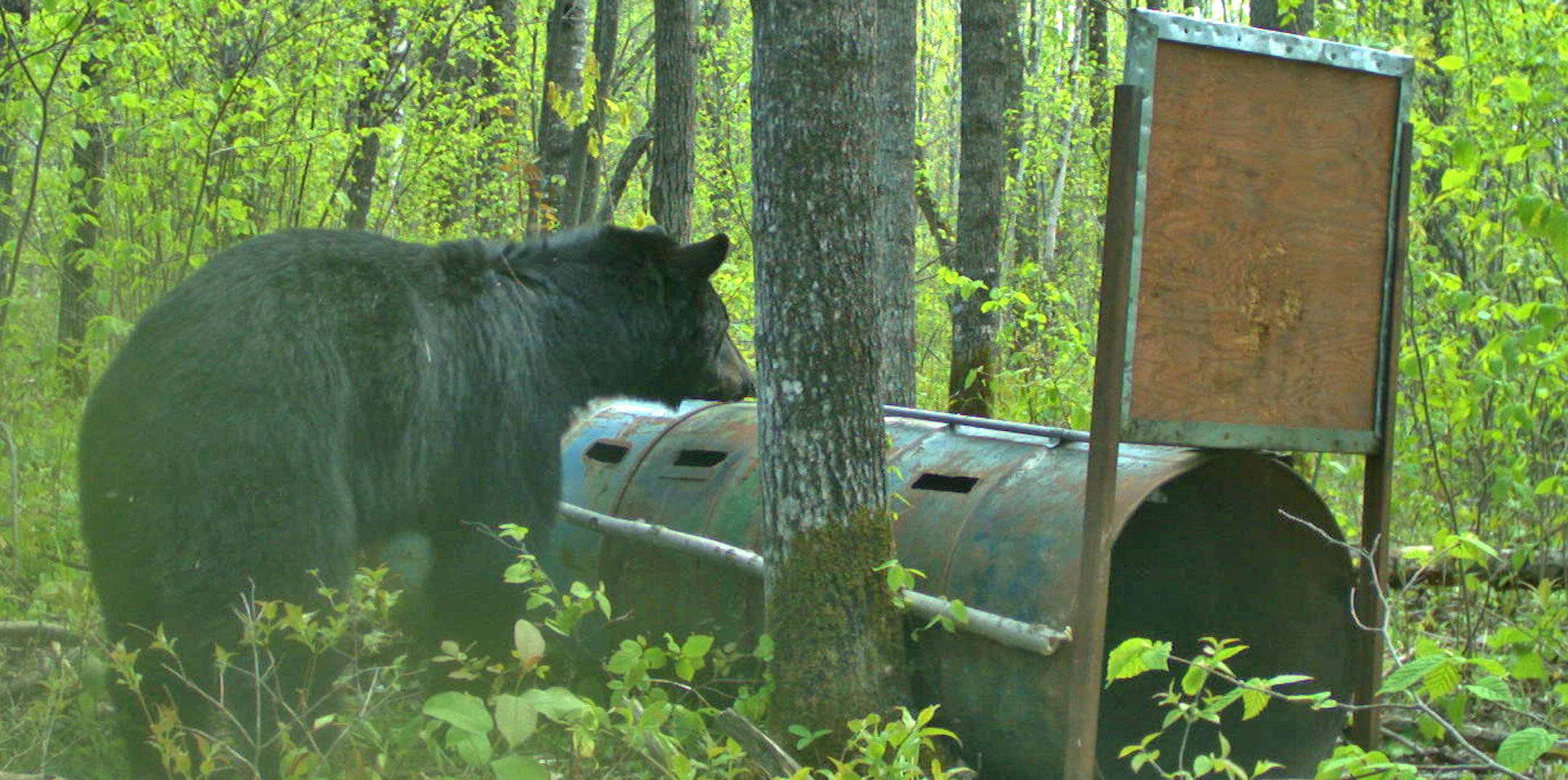
The Department of Natural Resources in recent years has been tightfisted with the number of bear-hunting permits it's given out, in an attempt to increase the size of Minnesota's black bear population.
Though the agency offered slightly more permits this year — 3,850 — it's still a fraction of the number available a decade ago. Still, when the bear-hunting season opens Sept. 1, state wildlife officials believe hunters will be targeting a growing bear population.
"At least judging by the nuisance complaints, there seems to be more bears out there," said Perry Loegering, the DNR's Grand Rapids-area wildlife manager.
But in a heavily studied area comprising the Chippewa National Forest north of Grand Rapids — thought to be representative of the state's bear range — a precipitous decline in the population has researchers trying to figure out what's going on. There, DNR bear researchers Dave Garshelis and Andrew Tri, along with U graduate student Spencer Rettler are working to determine why the bruin population is half or less what it was during the 1980s.
Foundational study
DNR researchers in 1981 began collaring black bears with VHF collars within the Chippewa National Forest. In addition to its proximity to the agency's forest wildlife research office, the study area also was "dead center of the bear range," Garshelis said. Researchers aimed to learn about bear movement and habitat use, as well as mortality and reproduction. At the time, it had been only a few years since bears were considered varmints and bounties were given for them.
Throughout the 1980s, researchers trapped bears, fitted them with collars and ear tags, and collected data related to their body condition. They also visited bear dens when they were hibernating and fitted cubs with collars and ear tags. Researchers collared more than 300 bears, and tracked 290 until the animals died.
It became evident early on bears aren't exactly homebodies, making annual late-summer or fall migrations. Males, for example, would head 50 miles south from their summer range and then turn around and walk 100 miles to the north, where they'd spend the winter. Female bears made similar movements but covered shorter distances. "They definitely move consistently southward, and they go to places where there is better food — richer soils, more oaks, and also more agriculture," Garshelis said.
Researchers also learned that many females had three-cub litters — rather than two, as commonly had been believed — and that they tended to have more male than female cubs. However, male cubs died at a faster rate than female cubs, so the male-to-female ratio largely evened out by the end of the cubs' first year.


