
As Trump, GOP begin to work together, someone is going to have to budge

Republican leaders are excited about control in Washington, but their priorities and plans differ.

Bloomberg News
November 15, 2016 at 2:45AM
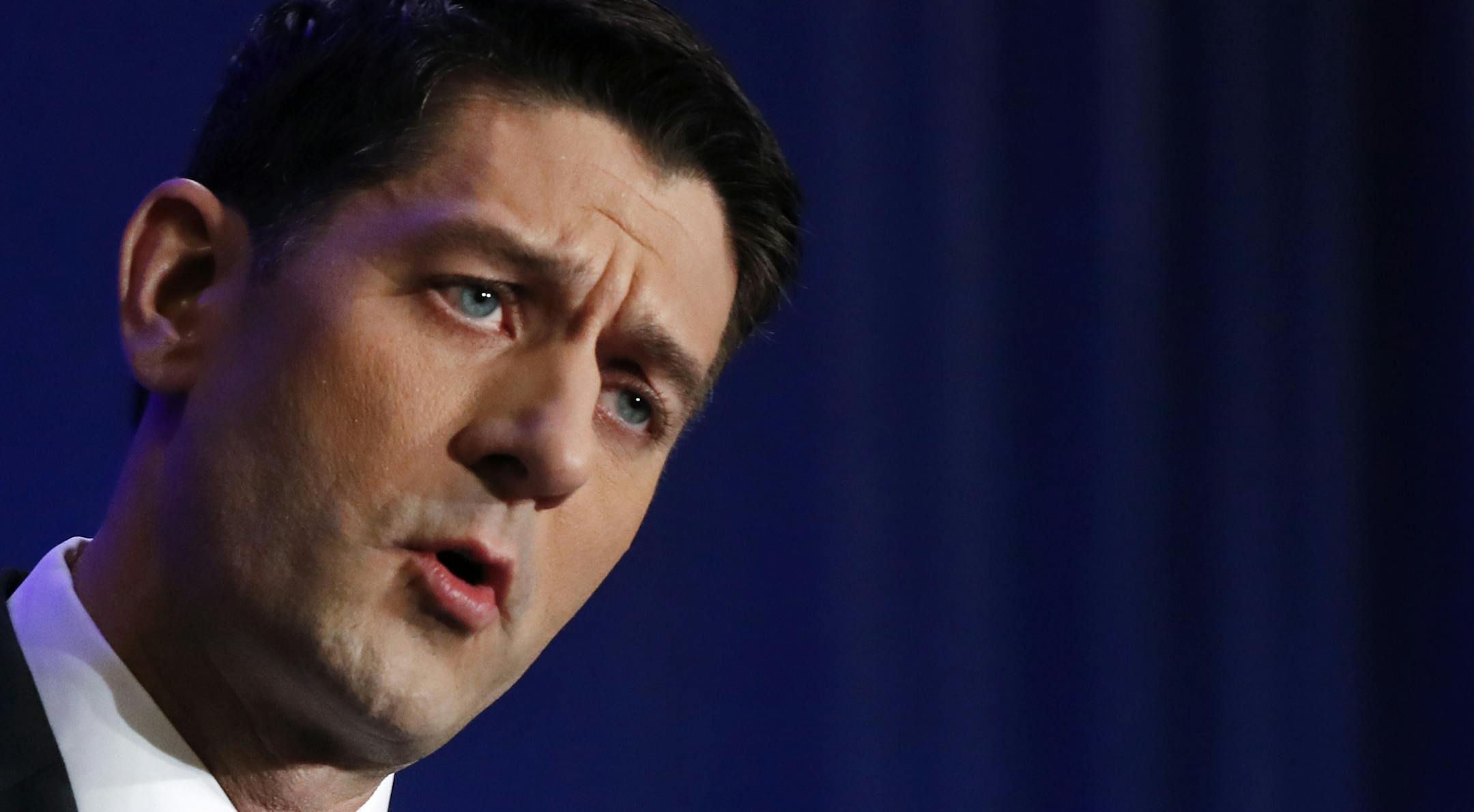
House Speaker Paul Ryan of Wis. speaks during a news conference in Janesville, Wis., Wednesday, Nov. 9, 2016. (AP Photo/Paul Sancya)
House Speaker Paul Ryan of Wis. speaks during a news conference in Janesville, Wis., Wednesday, Nov. 9, 2016. (AP Photo/Paul Sancya) (The Minnesota Star Tribune)

WASHINGTON - In the afterglow of Donald Trump's unexpected triumph, Republicans exulted over what they could accomplish with control of both chambers of Congress and the White House.

But behind the public show of unity, a stark difference looms. House Speaker Paul Ryan is a fiscal hawk who wants to couple tax cuts with deep spending cuts. Trump catapulted himself into the presidency talking about tax cuts, too, but he also is proposing a multibillion-dollar infrastructure plan and has vowed to protect entitlement ­programs like Social Security and Medicare.

Such gaps went unmentioned when Trump met with Ryan and Senate Majority Leader Mitch McConnell last week. But ultimately, one side will have to bend, whether Trump ends up moderating his spending and tax-cut plans, or congressional fiscal hawks relent on their opposition to new spending.

The signs of a looming clash are already there. One day after meeting with Trump, McConnell poured cold water on Trump's spending plans, telling reporters that a government stimulus wasn't going to help the economy.

"A government spending program is not likely to solve the fundamental problem of growth," he said Friday.

But Trump mentioned only one policy proposal during his victory speech last week: his infrastructure plan.

"We are going to fix our inner cities and rebuild our highways, bridges, tunnels, airports, schools, hospitals. We're going to rebuild our infrastructure, which will become, by the way, second to none," he said. "And we will put millions of our people to work as we rebuild it."

Anthony Scaramucci, an economic adviser named to Trump's 16-member transition executive committee, cited the president-elect's $1 trillion infrastructure plan, saying it would be financed by "historically cheap debt" and private-public partnerships.
"We can close the wealth gap in America by replacing emergency-level interest rates with fiscal stimulus," Scaramucci, the founder of the investment firm SkyBridge Capital, wrote in an Op-Ed in the Financial Times last week.

Such a plan may be too much for congressional Republicans to swallow. Ryan and House Republicans have spent the past six years enforcing strict budget caps aimed at holding down the federal debt. Republicans even took the government to the brink of default in a battle over raising the debt limit.

"As we move from campaigning to governing, something will have to give since cutting taxes without major spending cuts will make our already unsustainable debt situation even worse," said Maya MacGuineas, president of the nonpartisan Committee for a Responsible Federal Budget in Washington.

These differences may take some time to emerge. Republican leaders last week talked up the many areas where they are broadly in sync with Trump, including repealing and replacing Obamacare and dismantling President Obama's financial and environmental regulations. And the appointment of Republican National Committee Chairman Reince Priebus, a close Ryan ally, as Trump's chief of staff will reassure congressional Republicans that there is a path to enact a broad GOP agenda.

Still, Trump campaigned on a series of plans that, taken together, would increase the deficit dramatically. Those include the infrastructure plan, as well as building a wall along the U.S.-Mexico border, changing immigration and trade policies, and boosting military spending — all while slashing corporate and personal taxes.

Rep. David Brat of Virginia, a member of the ultraconservative House Freedom Caucus, said Friday that members are on board with much of Trump's agenda, but he wasn't willing to predict where they'd end up on his spending plans.

Trump "has been thrown into a $20 trillion debt bomb scenario," said Brat, who also noted the debate over whether the proposed tax cuts would add too much debt in the short term. But, Brat noted, the markets are saying "if you don't get the economy moving again, and particularly business capital investment, then the debt problem will become catastrophic in 10 years."

Mark Zandi, chief economist at Moody's Analytics, expects Trump will be the one who has to compromise. "The Trump administration will have to significantly scale back his policy proposals for both political and economic realities," he said.


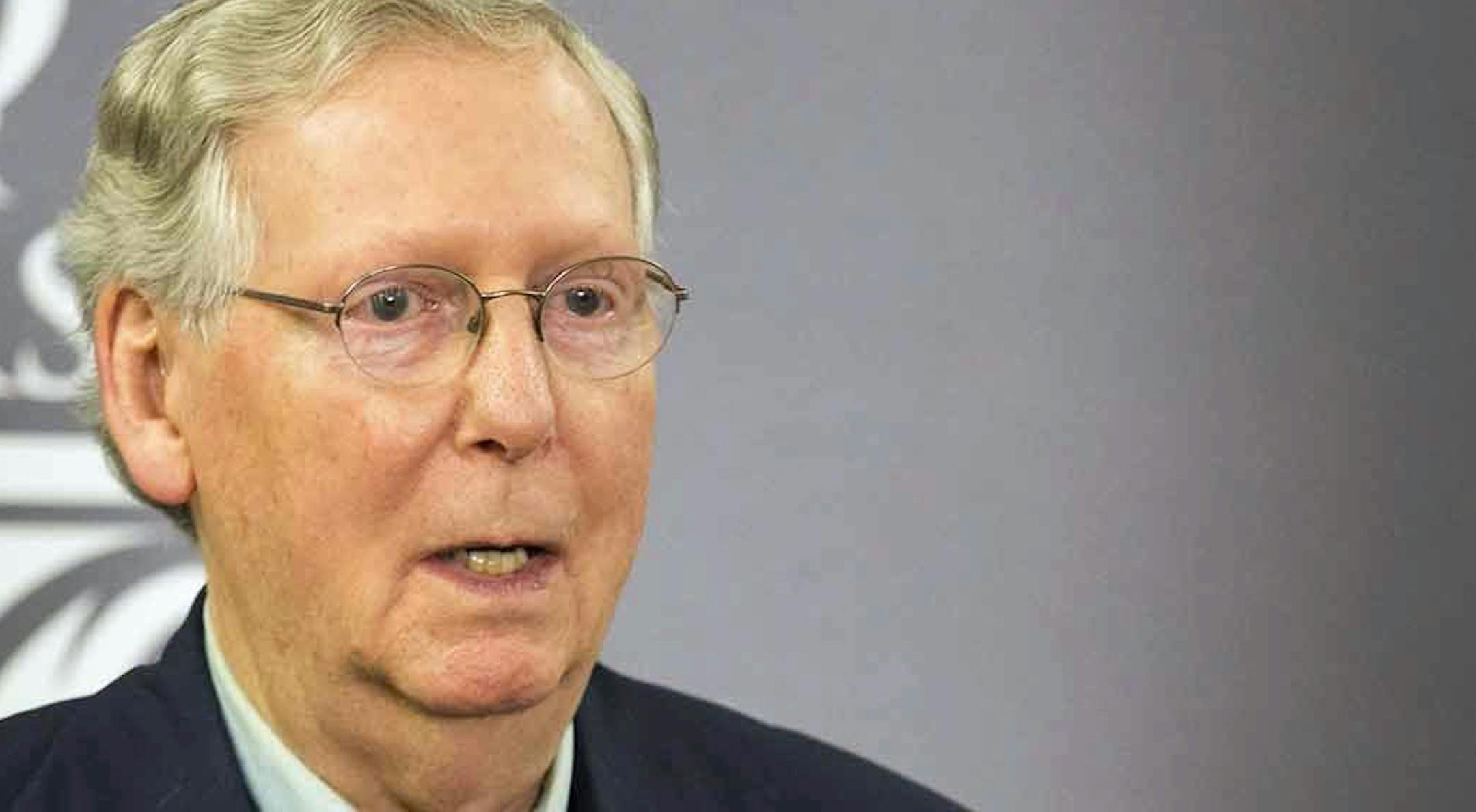
Senate Majority Leader Mitch McConnell, R-Ky., speaks at University of Louisville, Friday, Nov. 11, 2016, in Louisville, Ky. McConnell told reporters on Friday that he asked President-elect Donald Trump to move swiftly in approving construction of the Keystone XL pipeline. (Alton Strupp/The Courier-Journal via AP)
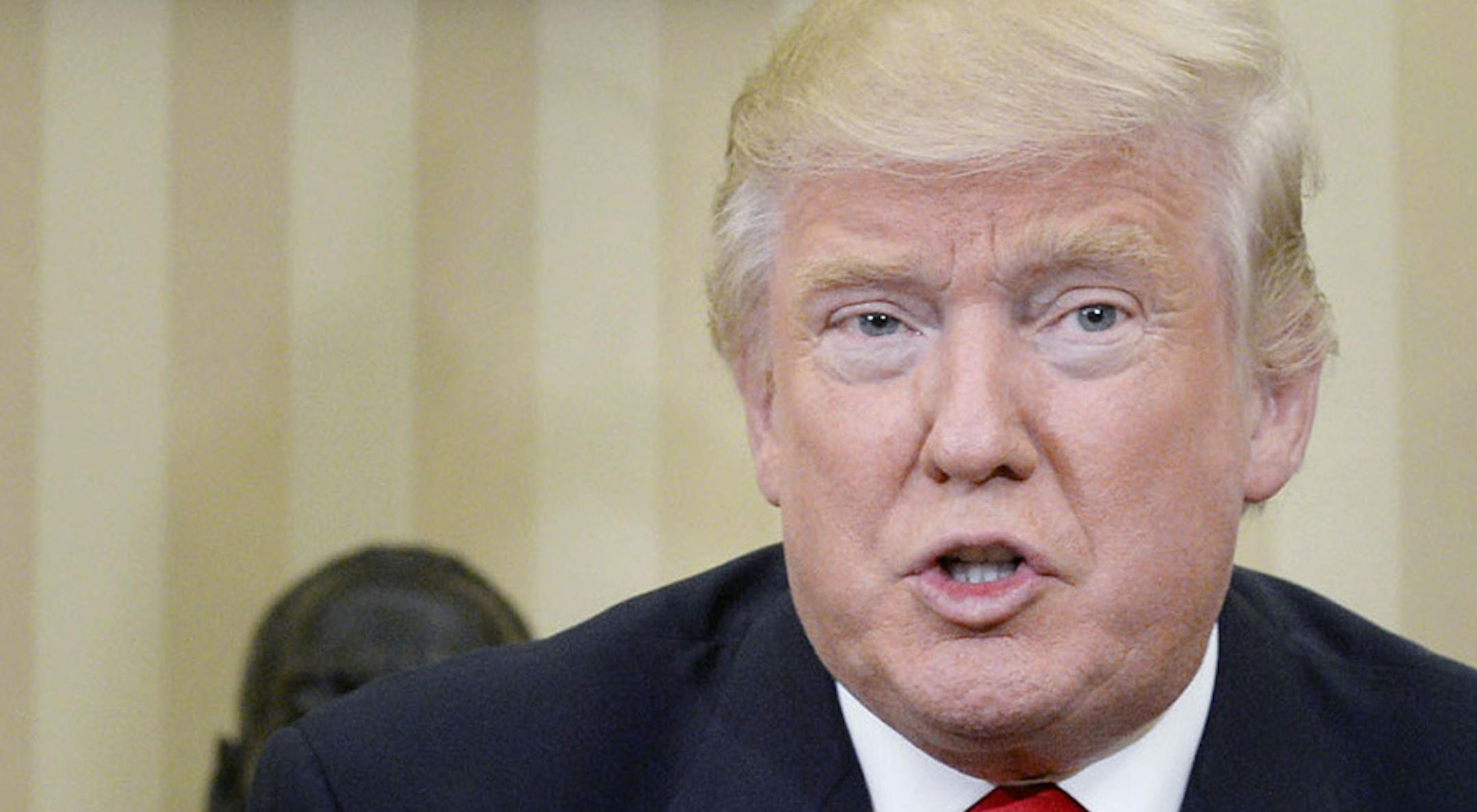
New trio in town: From top, House Speaker Paul Ryan, President-elect Donald Trump and Senate Majority Leader Mitch McConnell have said they’re ready to work together, but clashes over their differing plans could emerge. (The Minnesota Star Tribune)
President-elect Donald Trump looks on in the Oval Office of the White House on Thursday, Nov. 10, 2016 during a meeting with U.S. President Barack Obama in their first public step toward a transition of power in Washington, D.C. (Olivier Douliery/Abaca Press/TNS)
President-elect Donald Trump looks on in the Oval Office of the White House on Thursday, Nov. 10, 2016 during a meeting with U.S. President Barack Obama in their first public step toward a transition of power in Washington, D.C. (Olivier Douliery/Abaca Press/TNS) (The Minnesota Star Tribune)
about the writer

about the writer

Billy House

More from No Section

See More
FILE -- A rent deposit slot at an apartment complex in Tucker, Ga., on July 21, 2020. As an eviction crisis has seemed increasingly likely this summer, everyone in the housing market has made the same plea to Washington: Send money — lots of it — that would keep renters in their homes and landlords afloat. (Melissa Golden/The New York Times) ORG XMIT: XNYT58
Melissa Golden/The New York Times

It’s too soon to tell how much the immigration crackdown is to blame.