
As more hospitals offer hernia screenings, experts urge caution

Some experts say it may be prompting people to have unneeded surgeries.

August 15, 2019 at 6:32PM
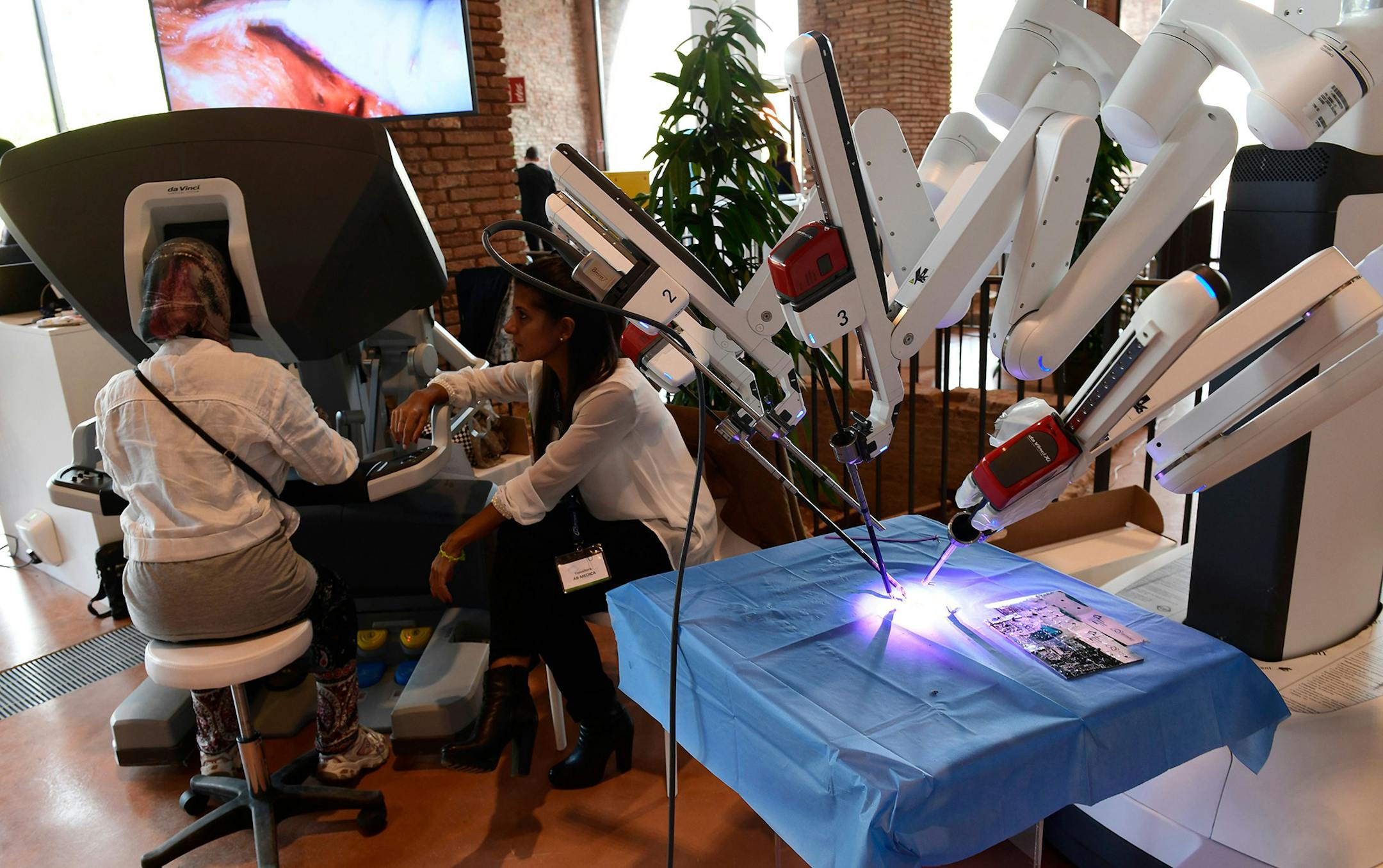
This photograph taken during the International Robotics Festival 2017 in Pisa on September 12, 2017, shows a person manipulating a 'Da Vinci' robot for medical use. (Miguel Meina/AFP/Getty Images/TNS) **FOR USE WITH THIS STORY ONLY** ORG XMIT: 1373321
Hospital often showcase ‘da Vinci robots in hernia screenings, but experts say there’s no firm evidence that it provides better outcomes for hernia repair. (The Minnesota Star Tribune)

Some hospitals are trying a new tactic to attract patients: free hernia screenings.

One Illinois hospital raffled off tickets for a smart speaker to entice people to get their abdomens checked by a surgeon, while an Indiana hospital offered a chance to win dinner at a chophouse.

Announcements for screenings in Colorado and Maryland warned about "life-threatening" complications if hernias are left untreated. And hospitals in Georgia and California included a chance to "test-drive" a surgical robot.

Hospitals say such screenings provide valuable education about treatment options for the common medical condition, in which part of the intestine protrudes through a weak spot in the abdominal wall.

But no research has been done on hernia screenings, and some experts worry that these outreach efforts could lead people to get operations they don't need. University of Michigan Medical School associate professor Dr. Dana Telem said, "Even with the best intent, it makes me worry about the unintended consequences down the line."

An estimated 1.6 million groin hernias are diagnosed and 500,000 are surgically repaired annually in the U.S., according to the Centers for Disease Control and Prevention. Some 27% of men and 3% of women are expected to have a groin hernia — the most common type — during their lifetimes.

Hernias can cause pain and bulges, and many patients opt to get them fixed with surgery. Surgery can also prevent a rare but serious condition called strangulation, in which a hernia can entrap the intestine and cut off blood flow, requiring emergency surgery.

However, groin hernia repairs leave as many as 12% of patients with chronic pain that can be debilitating, a 2016 study said.

There's also good evidence that people who have few symptoms can safely opt for watchful waiting rather than go under the knife, according to a 2018 article in JAMA. But such cautionary information is often missing in hospital screening announcements.

Some xperts say there's no data to back the use of such hernia screenings. "A screening for hernia? That makes no sense to me," said Dr. Michael Rosen, director of the Cleveland Clinic's Hernia Center.

Some hospitals say hernia warnings are appropriate, and the events educate the public and serve people who otherwise can't or won't see a doctor. "Unfortunately, you can get people in the door for their own protection with the word 'free,' " said Victoria Montei, system director of surgical services at MidMichigan Health system.

Yet some hospitals seem to be rethinking their strategies. Dr. Sari Nabulsi, the chief medical officer of Medical Center Hospital in Odessa, Texas, which hosted a hernia screening in 2018, said the hospital "does not promote screening for hernia as there is no clinical value to such tests." Its 2018 event was for "awareness" and the hospital "does not anticipate repeating the event."

about the writer

about the writer

Mary Chris Jaklevic, Kaiser Health News

More from No Section

See More
FILE -- A rent deposit slot at an apartment complex in Tucker, Ga., on July 21, 2020. As an eviction crisis has seemed increasingly likely this summer, everyone in the housing market has made the same plea to Washington: Send money — lots of it — that would keep renters in their homes and landlords afloat. (Melissa Golden/The New York Times) ORG XMIT: XNYT58
Melissa Golden/The New York Times

It’s too soon to tell how much the immigration crackdown is to blame.