
Apparel maker brings clients' visions to life

For 40 years, Fashions Unlimited has created clothing that runs from trendy to tech-savvy.

October 4, 2015 at 7:00PM
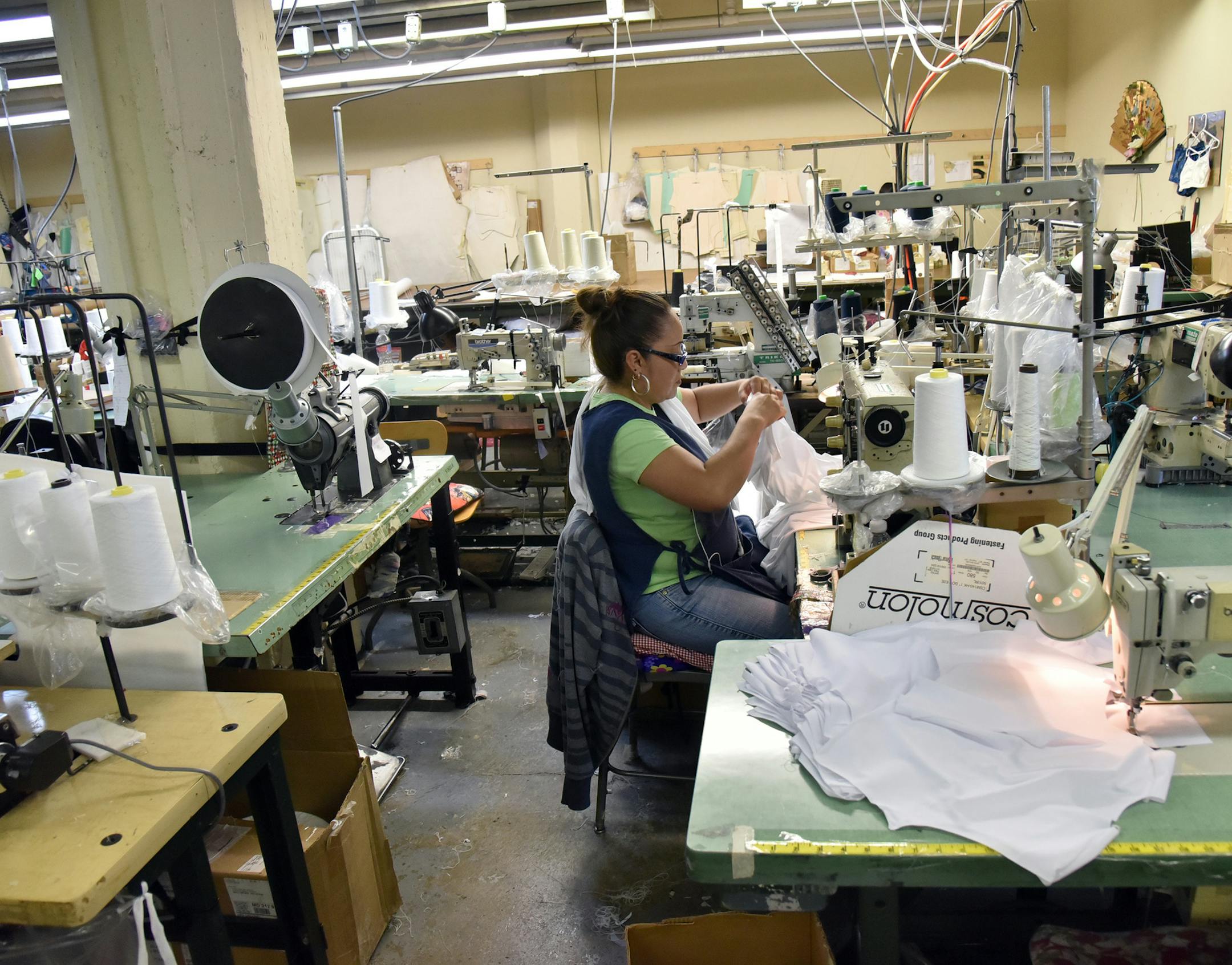
Mariana Caltempa, sewing machine operator, works on a transgender top at Fashions Unlimited, a nearly 40-year-old contract apparel manufacturer started and based in Baltimore, on Sept. 2, 2015. (Kim Hairston/Baltimore Sun/TNS) ORG XMIT: 1173776
Sewing machine operator Mariana Caltempa worked on a top at Fashions Unlimited in Baltimore. (The Minnesota Star Tribune)

BALTIMORE – In the nearly four decades that Fashions Unlimited Inc. has made swimwear, lingerie, athletic wear and other apparel for brands such as Hanes, Adidas, Liz Claiborne and Diane von Furstenburg, most domestic sewing work moved offshore and Baltimore's garment district all but disappeared.

But Fashions Unlimited, started in 1976, persevered. At times, it has more work than it can handle.

On the fifth floor of an industrial building, sewers piece together garments at multi-needle machines and cut fabric spread over large tables. Patterns and garment samples hang on racks in an adjoining room, where company president and founder Philip Spector displays some of Fashion's creations: a designer swimsuit, a sports bra, a jacket with specialty insulation created for a Mount Everest climb.

Known for work with stretchy and woven fabrics, the company brings its clients' visions to life. In the headquarters, where new apparel lines are developed, the staff creates patterns and prototypes, selects fabrics and sews garments, leaving larger scale production to its bigger factory in Hellam, Pa.

Spector said the company has shifted with the times, working to maintain client ties and taking on almost any kind of project.

Besides trendy swimsuits featured in the pages of Elle, O and Seventeen magazines, Fashions makes specialty undergarments for breast cancer patients, transgender tops, even costumes. In one of its most recent projects, Spector and a staff of managers, patternmakers and materials-sourcing experts worked with Adidas to create wearable technology shirts for professional soccer players and, soon, for consumers.

"In our industry, we're known for development — people can come to us with new ideas," Spector said. "I do some different things, and we do high-quality work and are honest with our customers. I've been doing it for a long time."

Kim Scheffler, director of garment development for Adidas' digital sports business, says she has worked with Spector for more than a decade, approaching him with ideas and telling him, "I want to try this — I know it's nothing that's ever been done. Could you help me think it through?"

The ideas keep coming, from new and established companies alike, Spector said. But finding enough skilled labor to do all the work is a challenge. Spector is forced to turn down up to 80 percent of new requests but believes he could double his capacity with more skilled sewers. He declined to disclose sales figures.

Fashions Unlimited has worked with Adidas since 2008, continuing a previous relationship with Textronics, a "smart" apparel start-up acquired by the German sports brand. Adidas shifted the company's focus to developing sports-related wearable technology, specifically for soccer and its professional athletes, said Scheffler, who had worked for Textronics.

After three years, she said, "we came up with a system that could track and help coaches with the biometrics of professional soccer players on the field" and incorporated the system into a garment. The miCoach Elite smart shirt, launched in 2013, is worn in practice by all 20 MLS soccer teams and Adidas sponsored teams such as Chelsea, AC Milan and the German national team. It allows trainers and coaches to track speed, acceleration, position, heartbeat and intensity of play.

Fashions Unlimited now employs 29 people in Baltimore and locations in Pennsylvania and North Carolina. Spector has found that contracts that lasted for years now tend to be shorter term, sometimes just one fashion season. Regardless, he still prefers to conduct business as he always has, in person.

When a new client comes on board, "we make everyone come here, every client visits," Spector said. "We want to see them, and they have to meet everybody. I have to look somebody in the eye."


about the writer

about the writer

Lorraine Mirabella, Baltimore Sun

More from Business

See More
card image
card image
