

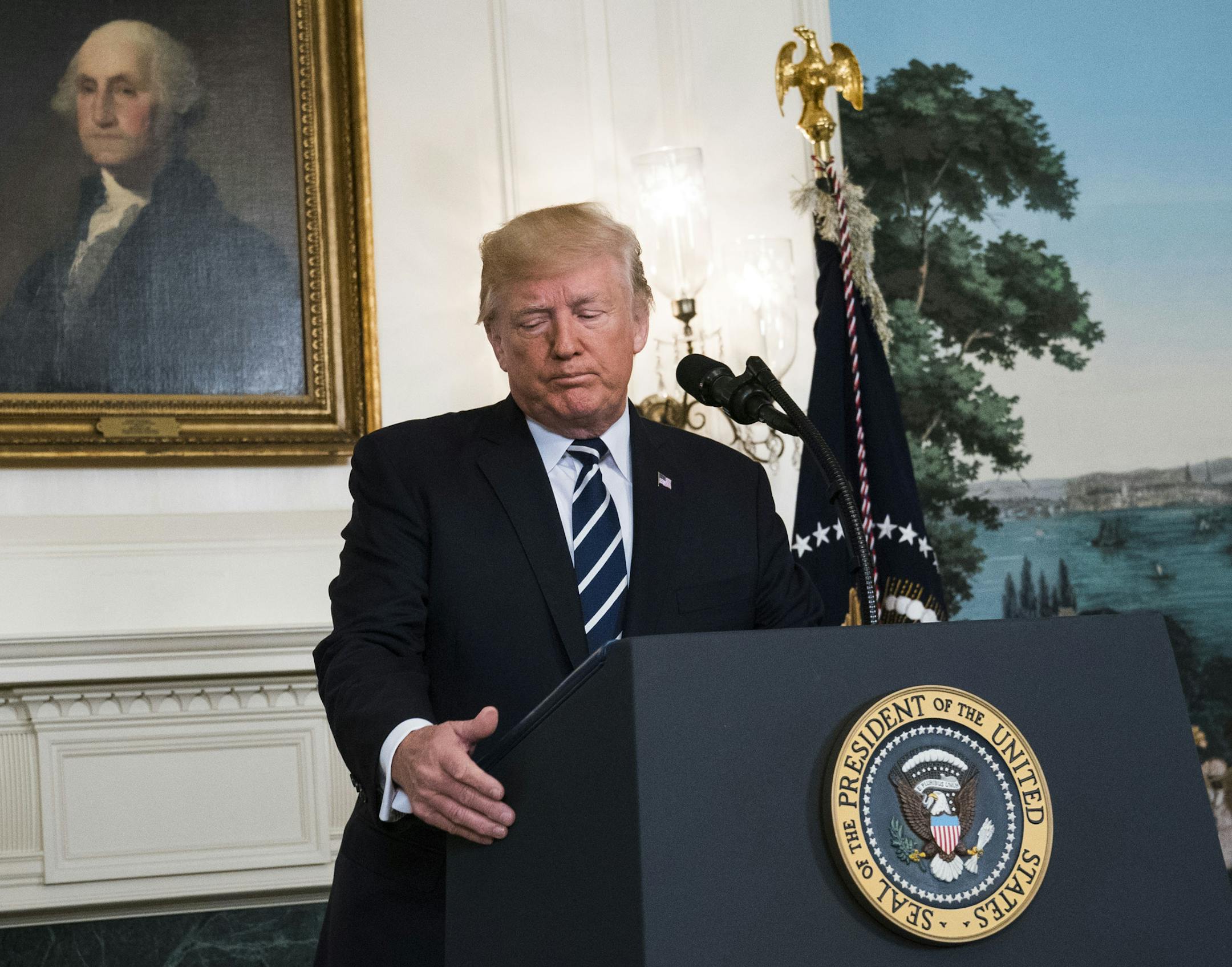
WASHINGTON – The pro-gun community had reason to be suspicious of Donald Trump.
He wrote in favor of an assault weapons ban and a "slightly longer" waiting period before gun purchases in a 2000 book and accused Republicans of walking "the NRA line." And even as he rebranded himself a "Second Amendment maven" in 2013, he sounded conflicted, suggesting he favored expanded background checks.
No one on either side of the debate seems to know when or why Trump shifted. But they agree that he has become one of the most forceful pro-gun presidents in decades.
Now, after the worst mass shooting in modern U.S. history, Trump faces a gut-check moment. He could not have imagined that within his first year as president he would come under pressure, even from within his typically pro-gun party, to support legislation restricting gun use, however limited — in this case, a ban on so-called bump-fire stocks like the Las Vegas shooter used, which turn semi-automatic weapons into virtual machine guns.
White House officials, both privately and publicly, insist he is not likely to endorse fundamental change, that is, broader gun controls. Meanwhile, the gun lobby is watching.
"When a crisis happens, you can really tell who your friends are," said Dudley Brown, president of the National Association for Gun Rights, which advertises itself as more hard-line on gun rights than the National Rifle Association.
For decades, Trump tried to stake a position between what he called in 2000 "the extremes of the two existing major parties."
In his book that year, "The America We Deserve," Trump accused Democrats of trying to confiscate all guns and Republicans of refusing even limited restrictions because of the NRA's hold on the party.


