

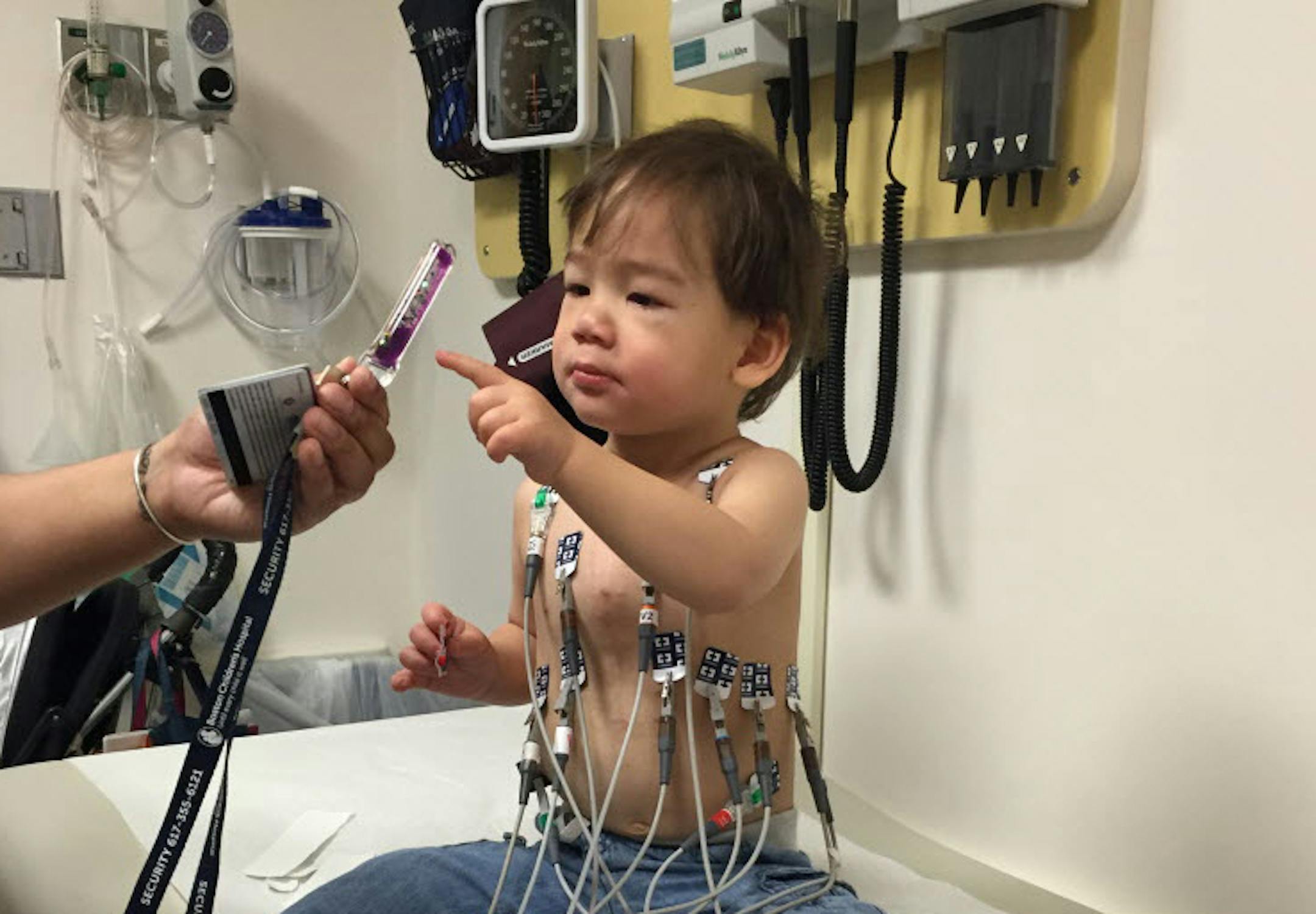
Stan and XuXia Smith learned from an ultrasound midway through the pregnancy that their son would be born with an often-fatal congenital heart defect. In the first week of the baby's life, they got more bad news: Some major organs were incorrectly formed and mislocated inside Travis' tiny body. They faced a long journey.
"I felt like I'd been hit by a tidal wave. I couldn't process the information I was being given fast enough, and I knew we'd need someone to help us translate and evaluate the enormous amount of information we were being bombarded with," Stan Smith said.
The Chicago couple hired Dan Polk, a patient advocate and retired neonatologist whose specialty is working with sick babies and their families. Polk helped the Smiths understand the complexity of their son's condition while building an experienced health care delivery team, and he has guided them through the intricacies of Travis' treatment. More than two years after his birth, he still has medical issues that require Polk's counsel.
"I was trained to take care of patients but found myself spending too much time away from the bedside," said Polk, who took up patient advocacy in 2013 after 35 years in practice. "Being an advocate for babies and parents has allowed me to do what I was trained to do: take care of patients."
There are 250 to 300 U.S. patient advocates for hire, one professional association estimates. Some advocates such as Polk have clinical backgrounds and know how to navigate the health care system. They may accompany patients to appointments and facilitate doctor-patient conversations in patient-friendly language. They may also handle tasks such as prepping for medical appointments, finding the right doctors and even deciphering medical bills and health insurance plans.
Advocates aren't cheap — their rates can start at $100 an hour — and insurance doesn't cover them.
Smith, 69, runs an economic and financial consulting firm. His wife, XuXia, 41, takes care of Travis and their 5-year-old daughter, Blake Sarai TeiTei Smith. They have the resources to pay for a top-notch advocate. Polk's standard hourly fee is $300, but his rates depend on the client and the situation. When he travels for out-of-town consultations and treatments, his daily rate is $1,500 plus expenses.
Smith said advocates can sometimes help a client avoid unnecessary expenses that they might incur by going it alone. "Without Dan, the doctors in Boston and Chicago never would have imagined that we'd be able to understand the level of complex information we asked for," he said. "But with Dan, we could not only travel at their speed and understand what was going on, we could collaborate in coming up with better solutions and pathways for care."


