

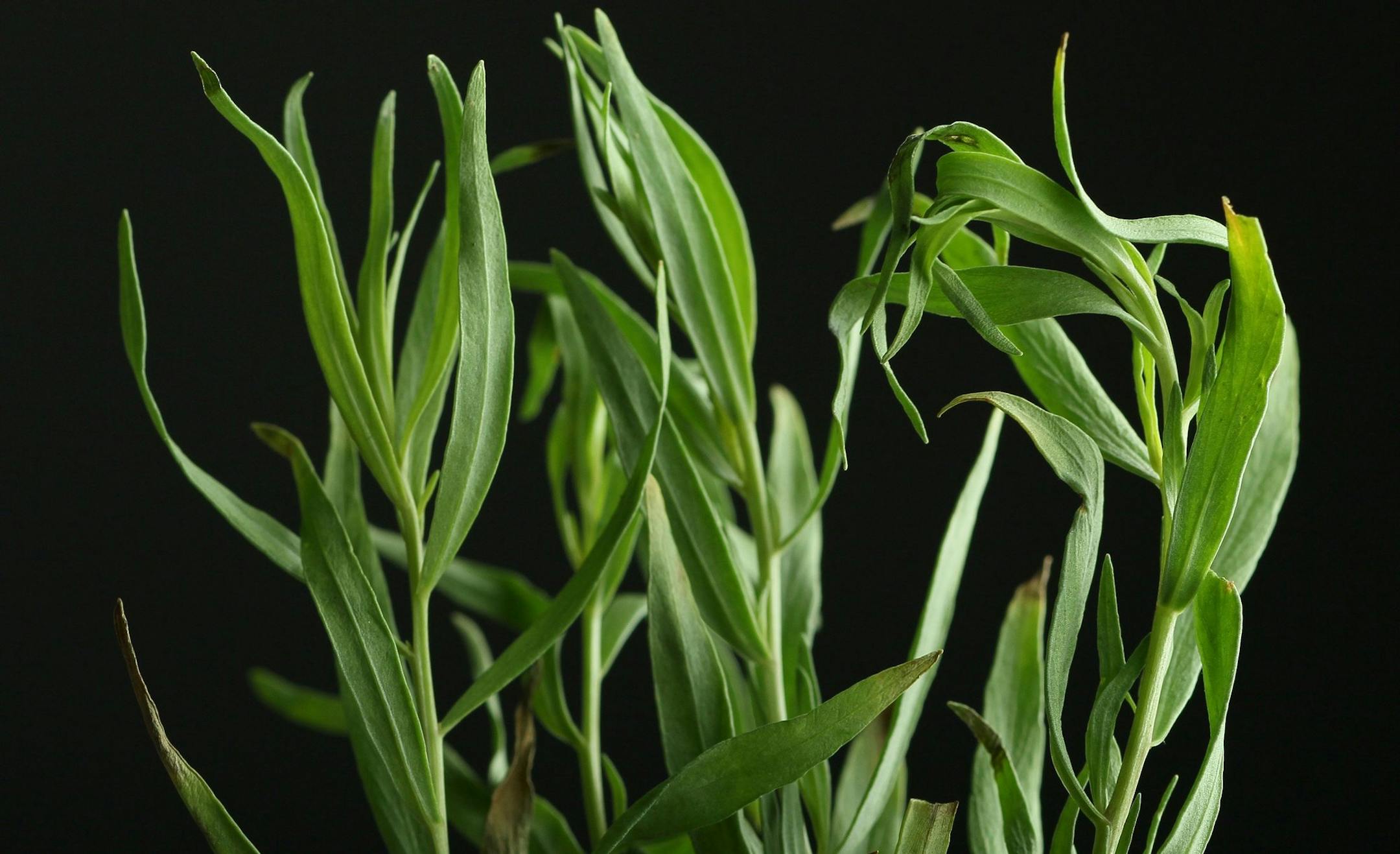
Most herbs defy easy description. Trying to discuss the flavor of thyme or oregano leads only to vague adjectives. Calling rosemary "woody" doesn't quite cut it.
But tarragon is easy. Tarragon tastes sort of like licorice.
It does not taste entirely like licorice; if it did, people would just put licorice in their food and that would be gross. But tarragon is certainly reminiscent of it, in a mild way.
This is not to say that tarragon itself is mild. It is quite strong; a little goes a long way. But when that little bit is applied to the right dishes, the result can be divine.
Most frequently, it is used as a bright punctuation to chicken, both in its later form (chicken) and its early one (eggs). Snip a few tarragon leaves over scrambled eggs and you have instantly elevated your breakfast. Mix a bit into chicken salad or egg salad and you have turned lunch from ordinary to grand.
Tarragon is also used frequently to bring out the best in seafood. A little tarragon added to shrimp, olive oil, shallots and garlic makes an outstanding topping for pasta. Most fin fish, too, benefit by being lightly blessed with tarragon.
And what about the other white meat? Pork is paired less frequently with tarragon, but the herb is an excellent complement to it. And you can even find respectable recipes for tarragon sauces to be served with big-flavored beef, though you won't find them here. What you will find here are two recipes for chicken, one for pork and one for salmon.
The recipes for chicken are not just among my favorite recipes for tarragon and not even just among my favorite recipes for chicken. They are among my favorite recipes, ever.


