

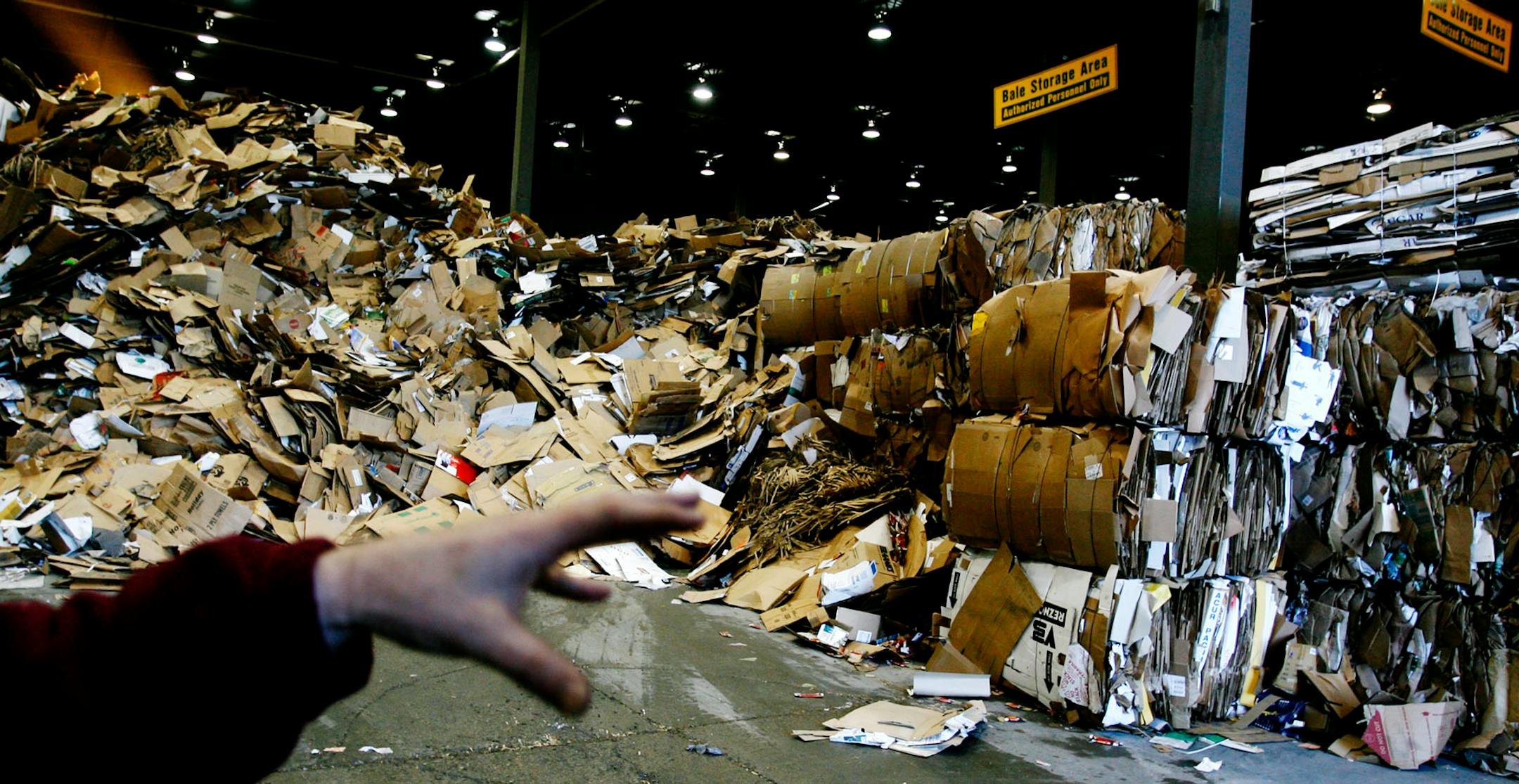
Aisles where forklifts once shuttled are packed tight with baled cardboard and paper. A mountain of cardboard 30 feet high sits in the middle of a concrete tipping floor. Mike Lunow, manager of Waste Management's recycling plant in northeast Minneapolis, is running out of storage space.
He has stockpiled 1,400 bales of paper -- all that he can handle without creating safety or fire hazards -- and has shipped more to a warehouse.
The scene is typical across the country, where the market has plunged for wastepaper, aluminum, plastic and other products, leaving them worth only a small fraction of what they sold for just two months ago.
"This is a big dramatic downturn," said Susan Young, director of solid waste and recycling services for the city of Minneapolis. "We all got used to China buying everything they could get their hands on."
China and India have virtually stopped buying scrap steel, copper, used paper and other products because of the recession. U.S. manufacturers that use recycled materials in car parts, packaging, insulation and other products also don't need as much because U.S. consumers are buying fewer vehicles, appliances and new homes.
The result is a huge backup in recycled materials nationally -- and much lower prices for the bales of paper and compacted cubes of plastic and aluminum that firms such as Waste Management, Minnesota's largest recycler, can process and sell.
"We continue to encourage people to recycle at high levels, and hopefully the market will come around," said Waste Management spokeswoman Julie Ketchum. "We're waiting it out with everyone else, with the national economy the way it is."
The company does not intend to increase recycling fees for residences, Ketchum said, but it has raised rates for some of its commercial accounts, which include grocery stores, shopping malls and other businesses.


