

I wrote speeches and did a little policy work, mostly on education, for then-Mayor Rudy Giuliani from 1997 to 2001. In those years, it was a fact I shared with some hesitation at parties. My friends, overwhelmingly liberal recent college grads, seemed to think I'd lost my bearings.
I typically responded that I agreed with about half of what the mayor was up to, and it tended to be the more important half: He was professionalizing policing in a city that still wrestled with major crime problems, weaning people off chronic welfare dependency, trying to replace an unresponsive public school bureaucracy with accountable leadership and more.
I had plenty of misgivings. There was his handling of race relations, especially the excruciating police killing of Patrick Dorismond; his withering attacks on his "jerky" enemies (since one of the things I wrote was his weekly radio address, I was in the room when, on live radio, he aimed his withering scorn at a passionate fan of ferrets); his strange obsessions like trying to force heroin addicts to quit cold turkey rather than relying on methadone; and his crazy crusade against the Brooklyn Museum for supposedly smearing Catholics, an especially tough one for me to defend as, um, the child of an art historian.
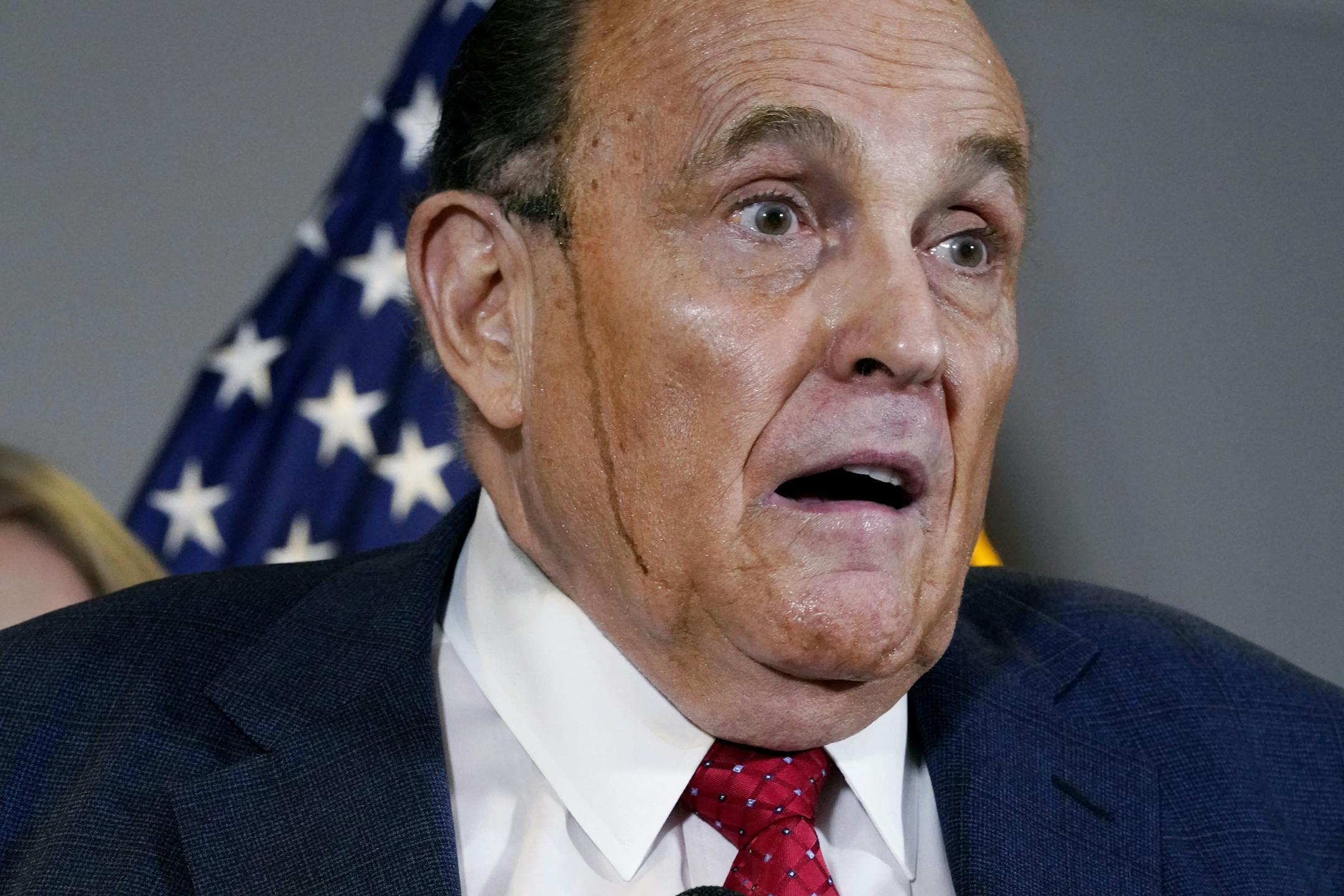
But I was a Giuliani staffer and, at times, proud of it. Which is why I'm among those especially depressed by Rudy's long Trump-era unraveling, which of late has gone from merely pathetic to bathetic. He has climbed up the ladder to the highest platform, dived into the deep end of a fetid pool of manufactured election conspiracy theories, and belly-flopped on the surface of the water for all to see.
I would repeat his inanities to mock them, but that would risk giving them more credence than they deserve. The years have been as cruel to Rudy as Rudy has been to them; he entered the Trump echo chamber some time ago and now appears physically incapable of sensing anything outside it.
Sure, there were signs of slippage in his mayoralty and post-mayoralty, but I honestly never expected him to fall this low, because among Giuliani's strengths were his unwillingness to suffer fools, his reliance on an inner compass, his rejection of easy answers from the right wing and left wing alike. At his core, he never seemed like anyone's lemming.
Sure, the mayor always had a tendency to inflate numbers — he had this tic of saying an almost true statistic, then following it for effect with two, three or four numbers that were even further from reality. But he also had a willingness to speak truths that others in this often reflexively liberal city shied away from, such as the fact that unclean streets and parks and seemingly low-level crimes could be major irritants to the general public, irritants that demanded an effective government response. Meantime, he championed strong gun laws and a humane approach to immigration, against the tide of the party with which he identified.
All along, he believed, with some justification, that the press and establishment pols of New York City were ideologically lazy and almost hard-wired to go against him, while the people were often with him. Culturally, that made him a mini-Trump, gleefully shredding the dominant dogma to the thrall of his supporters.


