

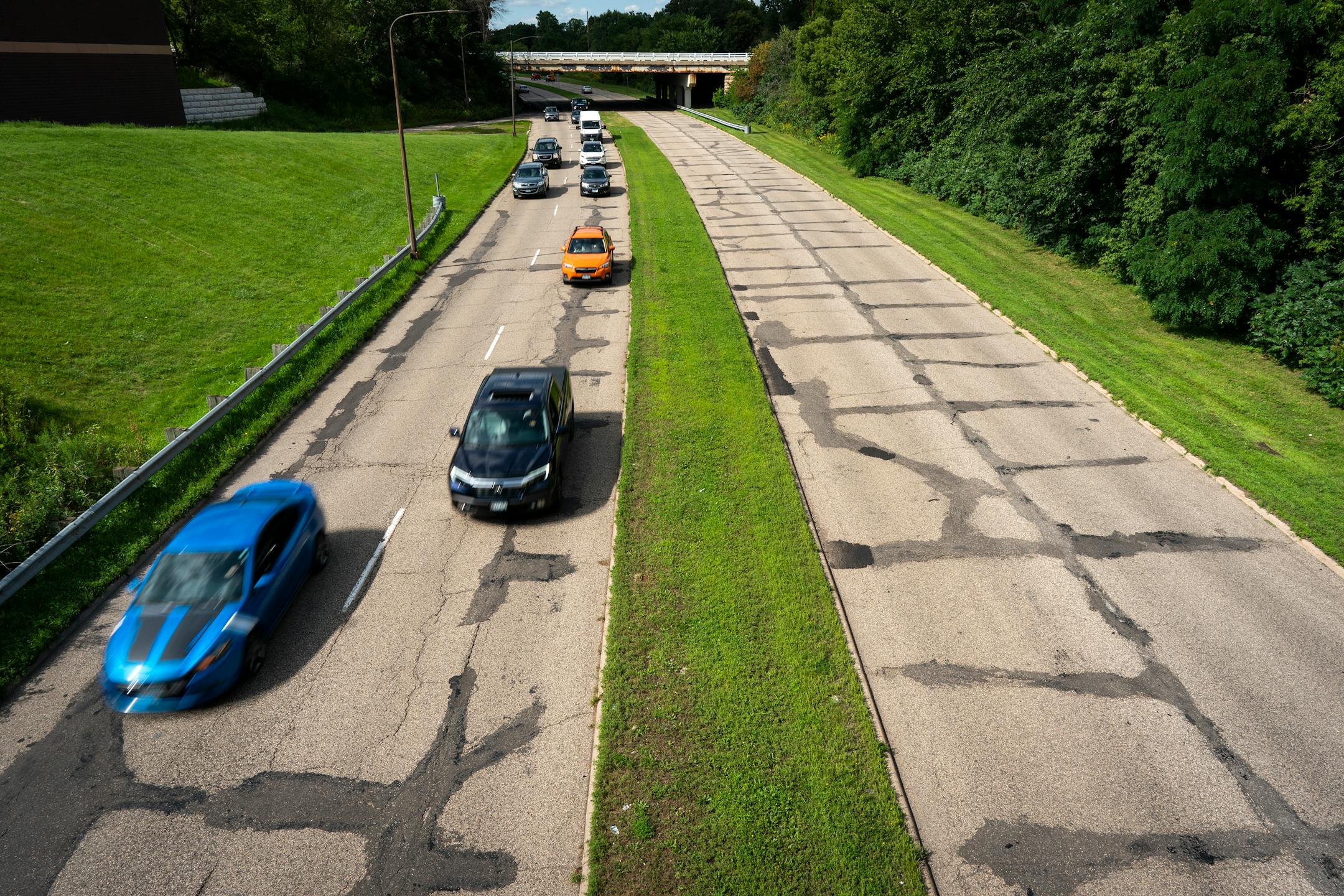
Sadly but predictably, the climate and infrastructure legislation in Congress has run into trouble over how to pay for it. It no longer seems viable to avert this question altogether and use deficit financing for the climate investments. Instead, we have a fresh debate over charging drivers a fee or tax based on vehicle miles traveled, something the Biden administration has rejected.
A vehicle-miles-traveled (VMT) fee could raise significant revenue over the next decade, well into the hundreds of billions of dollars. And, outside the White House, it has politically diversified support, from Sen. John Cornyn and Rep. Garret Graves on the right to Rep. Peter DeFazio and Transportation Secretary Pete Buttigieg on the left.
Yet a VMT tax is more complicated than it might sound. One question involves the effect it might have on the adoption of electric cars and trucks. Unlike the existing gas tax, a VMT would apply not only to combustion-engine vehicles, and many environmental groups oppose it for this reason.
A 2020 analysis by Lucas Davis and James Sallee of the University of California, Berkeley helps clarify the trade-offs. Two different principles are in play. One of these holds that driving a car or truck on roads and bridges imposes a cost through wear and tear. And as electric vehicles become more popular, the gas tax will do an increasingly poor job of discouraging excessive use and financing needed repairs and construction. More than a million electric vehicles have already been sold in the U.S., and rapid growth is expected — further eroding the base of the gas tax.
The countervailing principle is the need to discourage carbon emissions. A new tax that applies to electric vehicles could slow their growth in sales, thereby making the transition to net-zero emissions harder. Davis and Sallee correctly note that the best approach for addressing both principles would be to combine a purchase subsidy with a usage tax. "For example," they say, "the U.S. federal $7,500 income tax credit for electric vehicles could be combined with a mileage tax" that applies to all vehicles. Since the federal purchase credit already exists, offsetting the marginal effect of a VMT fee would require increasing the electric vehicle credit. (While we're considering ideal but politically impractical policies, an even better combination would be a one-time tax credit for electric vehicle purchases, a VMT tax and a carbon tax.)
Another important question involves distributional equity. Some people fear that a VMT fee would be more burdensome for low-income households. However, a RAND analysis found that a VMT tax "would be no more or less regressive than fuel taxes, now or in the future." What's more, as Davis and Sallee note, the gas tax revenue lost because electric vehicles are not covered is "highly concentrated in a handful of states and is highly regressive, as most electric vehicles are driven by high-income households." Distributional concerns could also be addressed by allowing the VMT tax to vary depending on the characteristics of the vehicle, so that a higher rate would be charged for luxury vehicles.
Another challenge involves compliance, especially if a VMT fee it is to vary by location and time (or vehicle luxury). Joseph Kile of the Congressional Budget Office recently noted:
"Such a framework would require that an electronic device that was either acquired by taxpayers or built into vehicles by manufacturers be used to track miles. Furthermore, the information logged by the device would need to be securely and accurately transmitted to the Internal Revenue Service. … If the IRS did not have an effective and automated way to … verify that the miles reported were accurate, some taxpayers might underreport their mileage or fail to report any mileage at all. If effective electronic data matching was not implemented, discrepancies would only be caught by auditing, which requires significant resources."


