

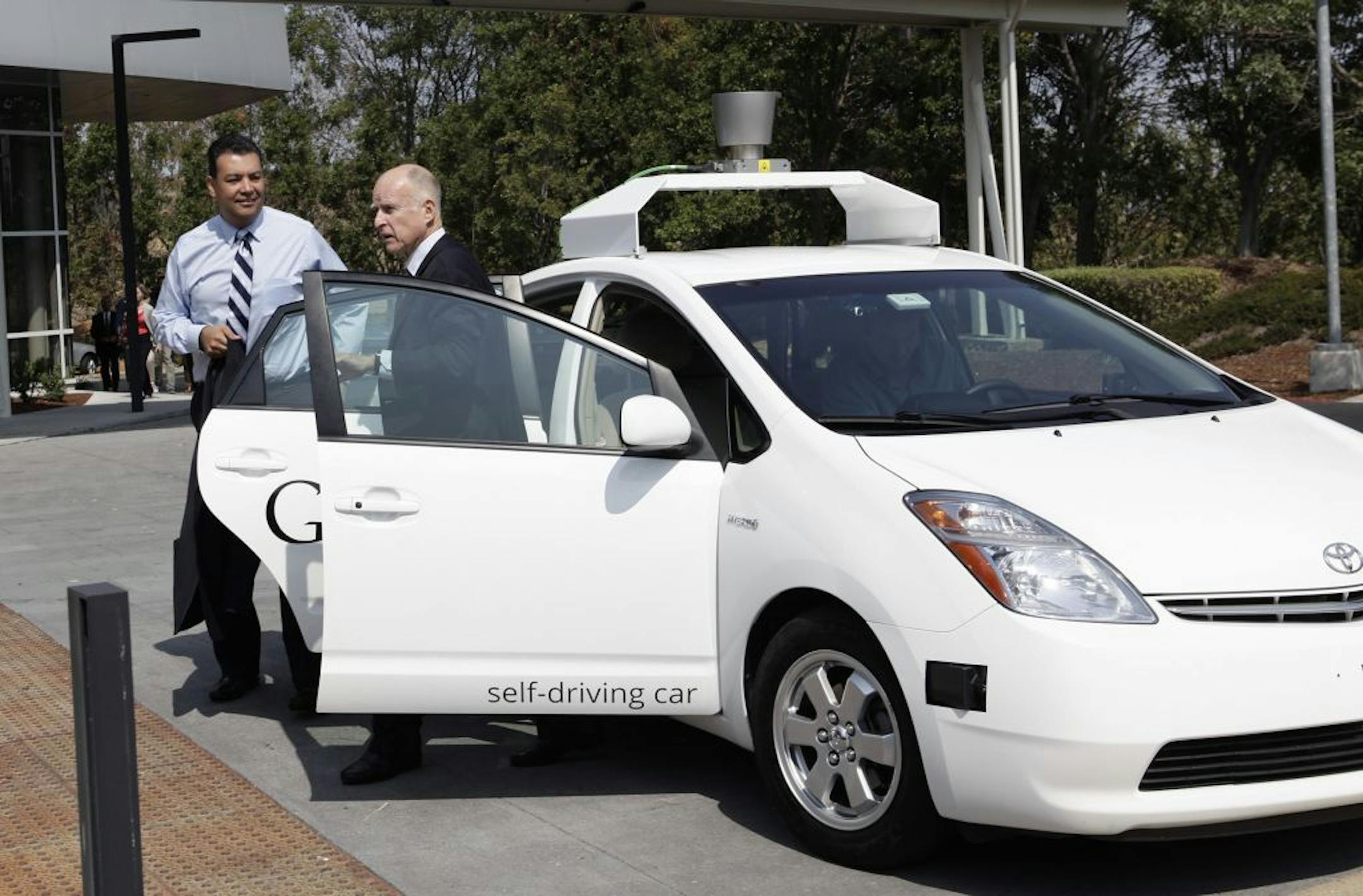
A futuristic law allowing companies to test driverless cars on California roads is being heralded by tech aficionados and some safety advocates as a breakthrough moment.But it has the auto insurance industry saying: Wait, what? If no one is driving, and the car gets in a crash, who is at fault? The car occupant, who may be sitting with his head down doing a Sudoku puzzle? The car manufacturer? The other car?
And, if driverless cars really are safer, does that mean anyone who buys one should get a safe (non)-driver discount rate?
Driverless cars, which run on finely tuned global positioning and route mapping technology, are billed as potentially safer because they eliminate the human error factor.
For now, though, someone must be in the driver's seat in test cars to grab the wheel, just in case.
But will those cars really be safer if they are scooting around on streets alongside cars still driven by people?
Or is it possible we will all someday be banned from actually driving our cars?
It's mind-boggling.
"I never thought in my lifetime I'd be talking about this," said Tully Lehman of the Insurance Information Network of California, which represents many of the state's top vehicle insurance companies.


