Don Spicer was out walking with his wife, Jackie, about two years ago when he suddenly came to an unplanned halt.
"My right leg was just like it was in a pool of cement," the Bloomington 71-year-old recalled. "I just couldn't move."
Spicer has "freezing-of-gait," an exasperating and mysterious condition that can be triggered by an abrupt turn, a long hallway, a narrow doorway or seemingly nothing in particular.
Liz Ogren, 51, of Edina, was on a mountain-biking trip in Canyonlands National Park in Utah when she was struck by a similar disorder called dystonia, which wracks the body with involuntary muscle contractions. She found herself locked in a rigid, horizontal position while rock climbing in a keyhole canyon. "I begged people to get me down," said Ogren, a retired fifth-grade teacher. "And I was a really good rock climber."
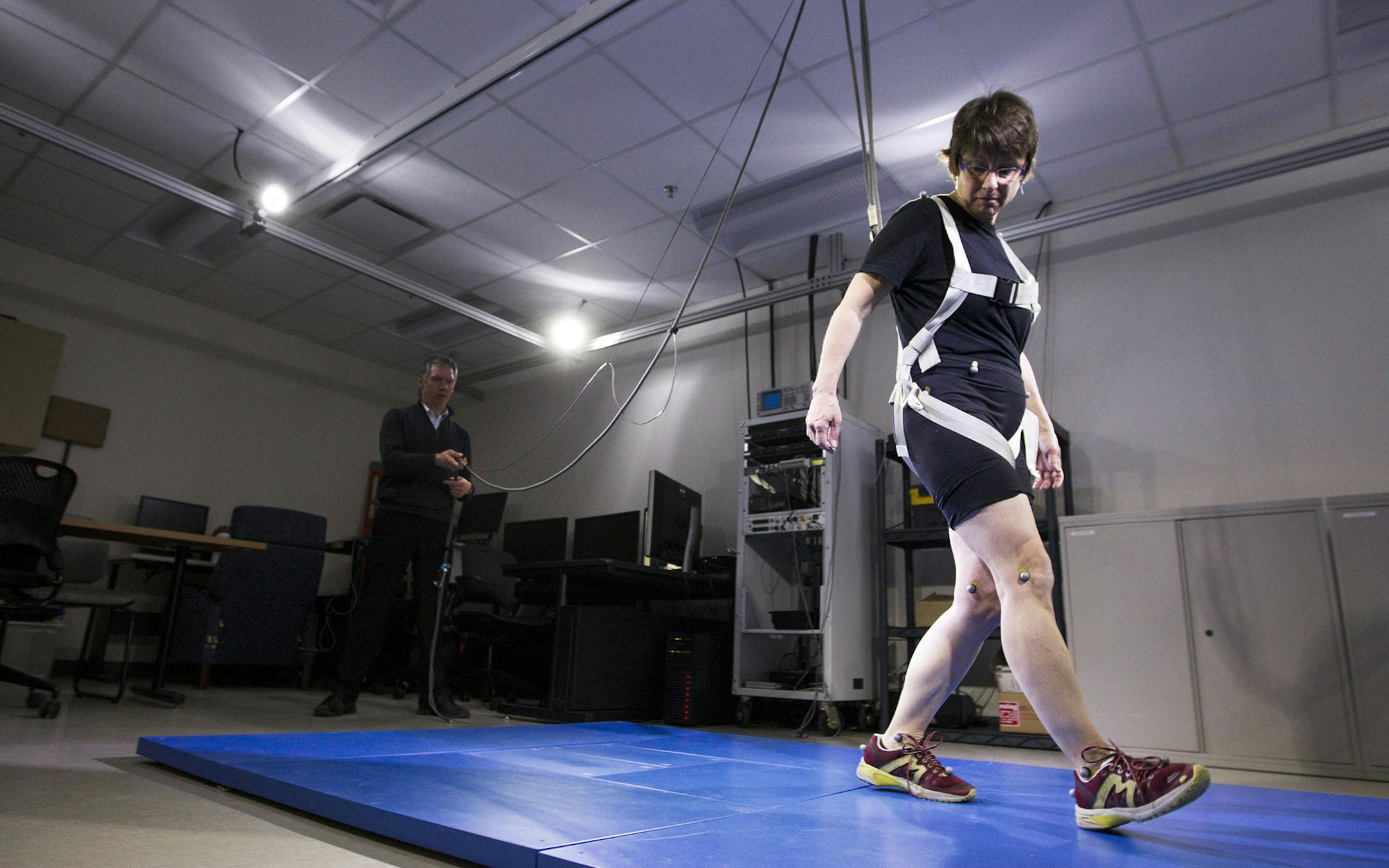
No one knows what causes freezing-of-gait or dystonia, but both can occur in individuals with Parkinson's disease. Spicer and Ogren both sought help at the University of Minnesota, where a large and growing team is working to unravel the mysteries of these movement disorders.
Under the leadership of Dr. Jerrold Vitek, a world-renowned researcher and neurologist, the university has been building an interdisciplinary team to study Parkinson's from the molecular level through clinical treatments.
Vitek, who grew up on Minnesota's Iron Range, hopes to build a Parkinson's research program of national stature and join the federally funded Morris K. Udall Centers of Excellence for Parkinson's Disease Research consortium, which provides up to $1.5 million a year in funding.
Parkinson's disease, now personified by the actor Michael J. Fox, afflicts about 1.5 million Americans, making it the most common movement disorder and second-most common neurodegenerative disorder after Alzheimer's disease. But in a sense, Minnesota is a natural site for such a research center. Nebraska, the Dakotas and Minnesota have the nation's highest statewide prevalence of Parkinson's, possibly because of high use of pesticides. More than 15,000 Minnesotans have the disorder, a number that is expected to double by 2040.