

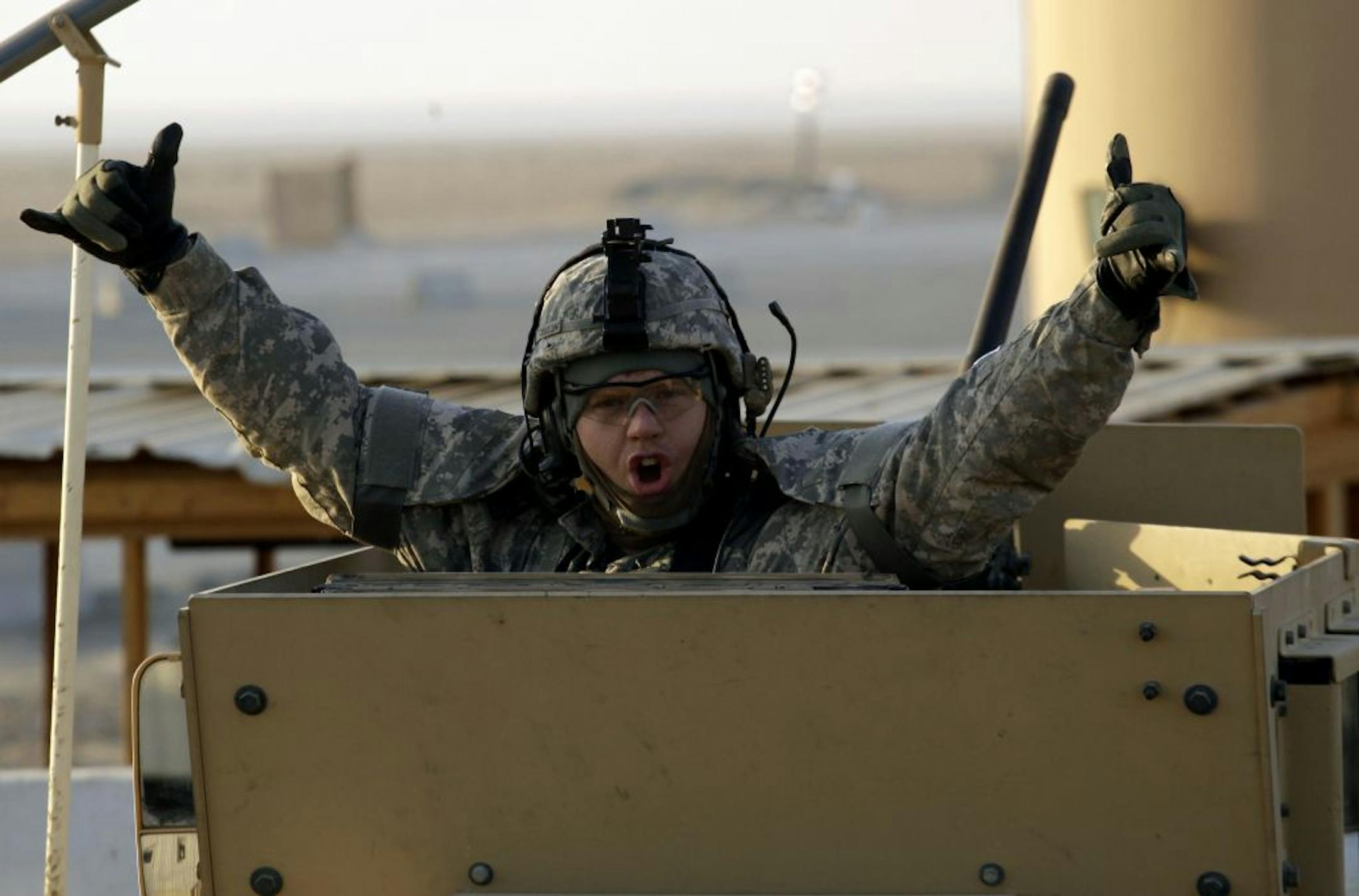
War's end is often captured by iconic images: a sailor kissing a nurse in Times Square on V-J Day; an evacuation helicopter on the rooftop of a Saigon apartment building; burning oil fields and charred remains of fleeing vehicles (and soldiers) at the end of the Gulf War.
The photo most identified with the end of the Iraq war -- President George W. Bush on an aircraft carrier under a "Mission Accomplished" banner -- came eight years early. So far, no photo defines the recent drawdown that actually ended the U.S. military role in the nearly nine-year war.
And if there were, would any one notice?
Maybe not, according to an Oct. 26 study from the Pew Research Center, which details how the Iraq war has fallen off the media's radar screen (and thus Americans' TV, computer and cellphone screens).
Since 2007's military "surge" led to more media coverage -- Iraq was the top story that year, comprising 15.4 percent of overall news -- coverage has declined to around 0.6 percent.
The media retreat raises profound questions for the press, politicians and the Pentagon, as well as participants in this month's Minnesota International Center "Great Decisions" dialogue on national security.
The drop in coverage comes despite a year of increasing international interest, according to a separate Pew report released this week. It said that five of the 10 biggest stories of the year were international and accounted for 21 percent of overall news coverage, compared with just 6 percent in 2010.
But most of these stories were about tsunamis and earthquakes, whether natural (Japan) or man-made (the Arab Spring). Conversely, coverage of the war in Afghanistan dropped from an already scant 4 percent in 2010 to 2 percent in 2011.


