Richard Muller, professor of physics at University of California Berkeley, recently declared himself a "converted skeptic" on the matter of climate change. This news caused me to reflect on what it takes to undertake a public about-face as Professor Muller recently did. Muller had been a vocal critic of the scientific research suggesting the Earth is warming and that it is human-caused. His announcement last week that his own research shows global warming is the result of carbon emissions required courage to leave conviction and ego behind. Conviction must give way to flexibility. The ability to blaze intellectual trails requires ample mental space. To understand the world better, we must set aside ideological convictions to consider new information, especially evidence that directly contradicts those beliefs. "The Earth is flat" is one of many ideas in history that proved wrong—a development made possible when leading minds allowed conviction to give way to scientific research and observation. Muller was not a zealot on the matter of climate change. Rather, his previous stance on global warming arose from his misgivings about the previous research supporting the occurrence of human-caused global warming. Yet, he didn't let his convictions that the science was flawed limit his thinking on the issue. In fact, he did the opposite: he conducted his own research focused on the flaws he spotted in existing climate change models, sought additional information, and tested his own models. His skepticism caused him to inquire further and dig deeper: "I embarked on this analysis to answer questions that, to my mind, had not been answered" writes Muller. Flexibility allows principled, set-in-stone thinking to be aside so innovative thinking can then flourish. It is the essence of intellectual curiosity and a requirement for advancing our understanding of the world. To "see the light" requires humility. Whether through physics, congressional hearings or focus groups, the study of new information must also be done with a degree of humility. Long-held beliefs may be proven wrong if we are open-minded enough to let them. The well-known story of Saul on the road to Damascus, used frequently to describe this phenomenon in secular contexts, underscores the point. "Armed with full powers and a commission from the chief priests" with the intention to bring back Christians from Damascus to Jerusalem for punishment, Saul came to "see the light." Saul was humbled, and thereafter became one of the most significant early Christian leaders as Paul the Apostle. Whether in the New York Times or in the board room, a changed position will nearly always attract a vocal cast of critics making charges of flip-flopping, indecisiveness and even deception. The rotten tomatoes come with the job, but can be deflected with clear, concise communications as to the basis for the change. New information evolves our thinking, and evolved thinking means we change our minds. Follow Stacy on Twitter -- @StacyBettison

Fall or spring, it's Rochester Mayo's year in prep tennis
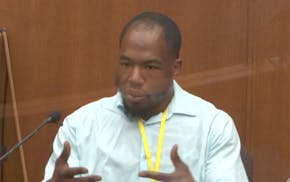
Minneapolis reaches $150k settlement with eyewitness of George Floyd's murder

Israel-Hamas war creates 'really fraught times' at Minn. colleges

Rare and fatal brain disease in two deer hunters heightens concerns about CWD