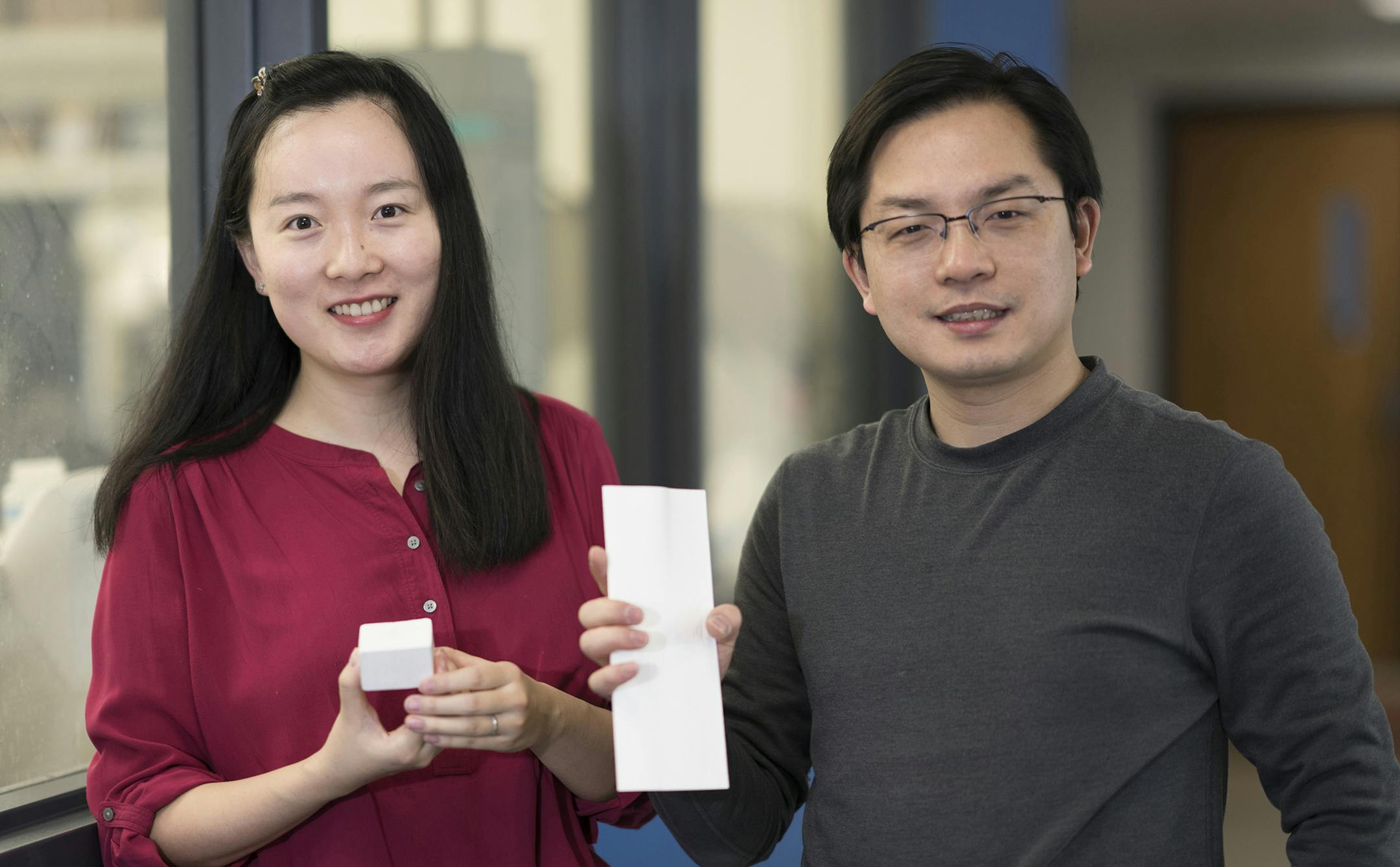
Scientists have designed a heat-insulating material made from wood that is both light and strong and made entirely from tiny, stripped-down wood fibers. The so-called nanowood, described in the journal Science Advances, could one day be used to make more energy-efficient buildings, to manufacture cars, even protect heat-sensitive electronics, whether on Earth or in space. It's cheap, readily available and biodegradable, too. The insulating materials in use are often very expensive to make. The secret to nanowood's insulating powers lies partly in its structure. Heat can travel up and down the fibers with ease, but can't easily cross them.
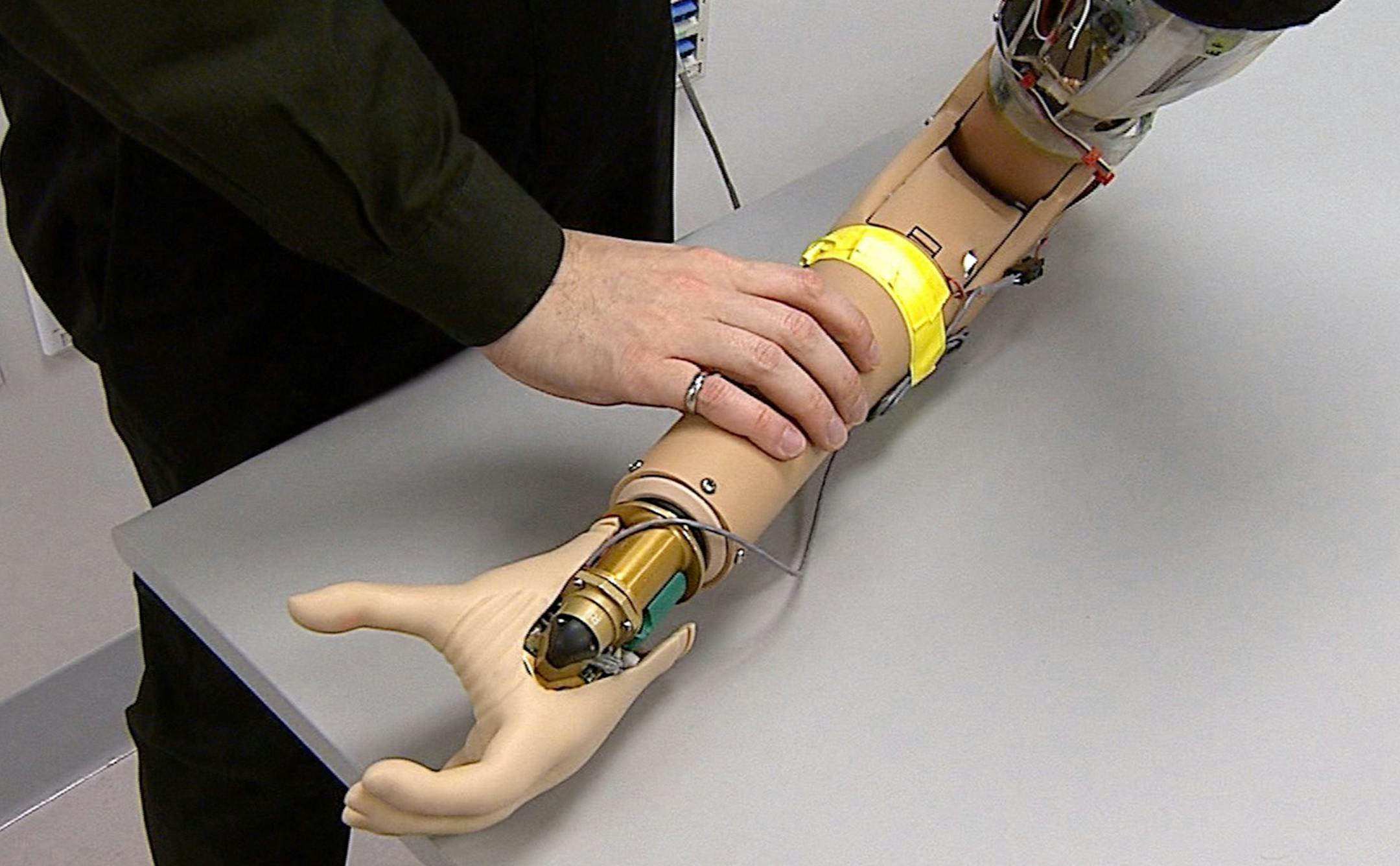
Building a better prosthetic hand
Researchers from the Cleveland Clinic's Lerner Research Institute devised a robotic system that, with every movement of an artificial hand, would deliver vibrations to the muscles in a user's arm that controlled that hand. The location and intensity of those vibrations created for amputees an illusory "kinesthetic" sense that they were moving their hand. Study subjects learned within minutes to use the vibratory feedback to more deftly move their mechanical hand. In the near future, the authors wrote, this approach could inspire wearable or other feedback systems that might allow amputees to guide and control their prosthetics intuitively, restoring the luxury of unconscious movement.
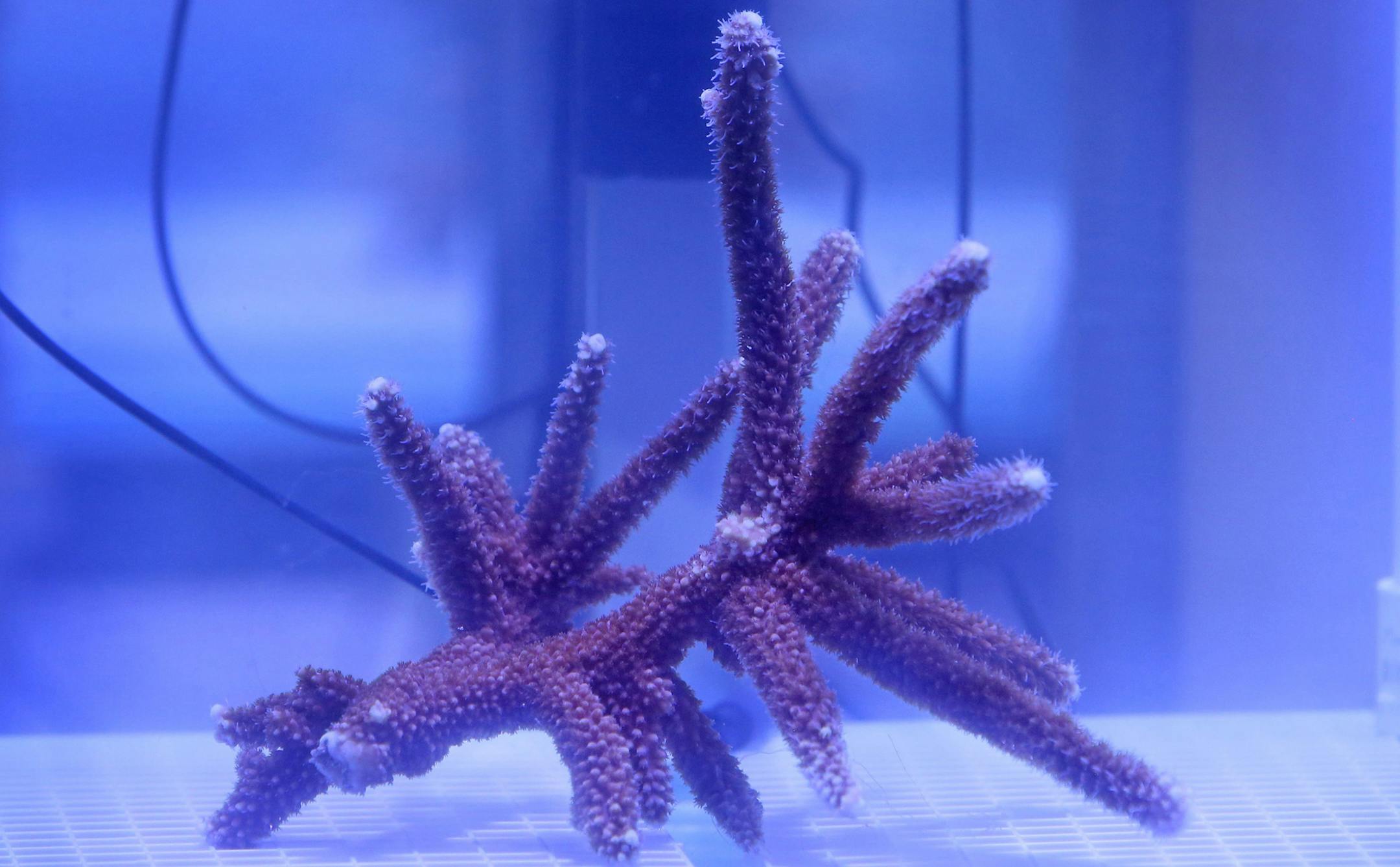
Breeding super coral to save reefs
At Miami's Frost Museum of Science, nine aquariums hold colonies of staghorn corals stressed to the edge of death. If all goes as planned, the corals will be revived with hardier algae able to survive the planet's warming oceans and replanted during a field trial — the first of its kind — to help save the reef. The hope is that the new breeds of what some have dubbed "super corals" will be more able to withstand devastating bleaching events now occurring globally at an unprecedented rate. If it works, scientists believe it could be a game changer in rebuilding reefs around the world.
News services