

CLINTON, MINN. – Each day after delivering to the roughly 250 small-town groceries in Minnesota, grocery trucks return to the warehouse empty.
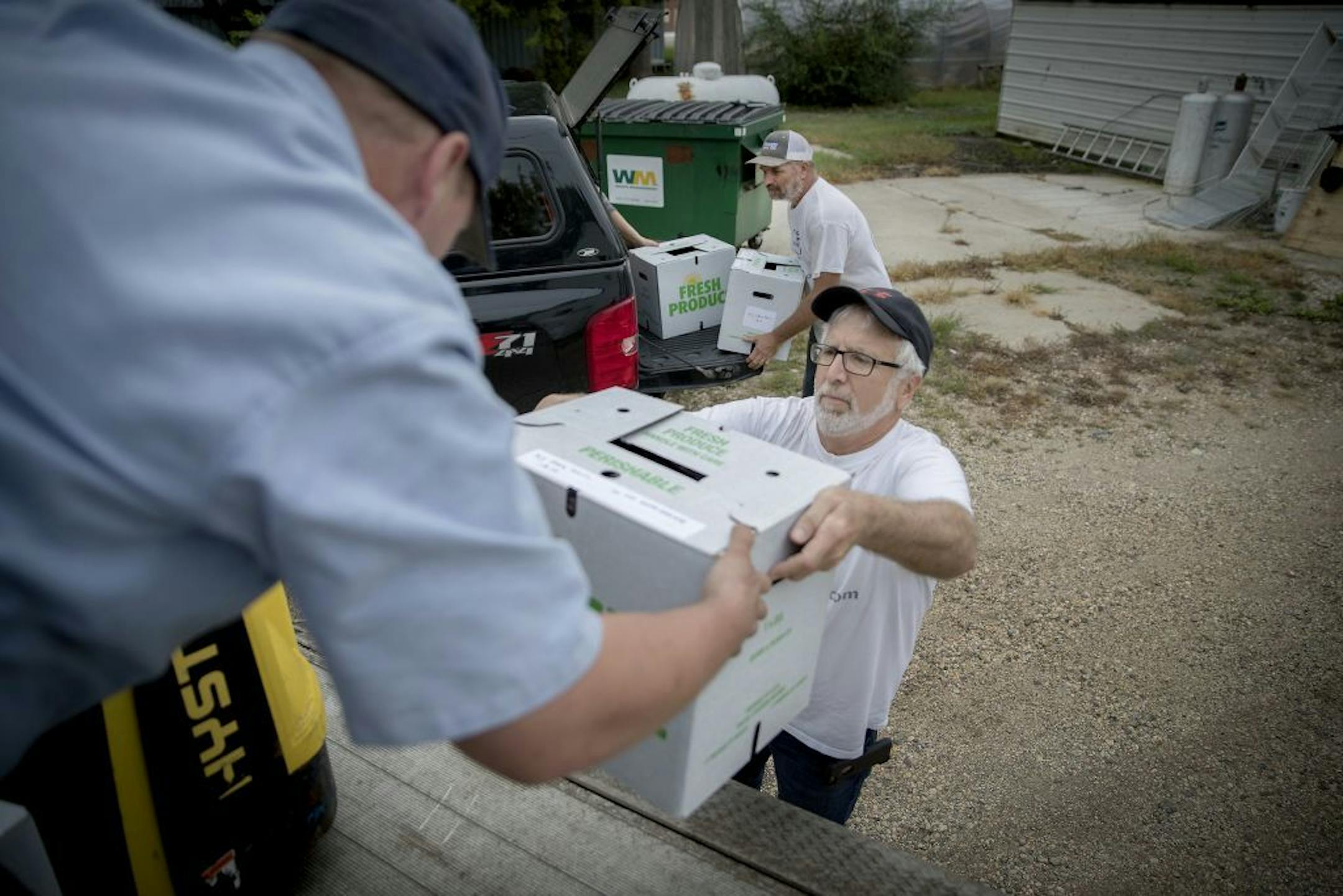
But not the one that left Bonnie's Hometown Grocery in Clinton on a Tuesday earlier this month. The truck carried 4,860 bulbs of Minnesota-grown garlic, loaded briskly that morning in the alley behind the store, back to Wadena to be sold to stores around the state.
The concept is called "backhauling" and it's been spearheaded by an alliance of the University of Minnesota, a garlic farm and grocery store in Big Stone County, and two grocery wholesalers as part of an experiment aimed at giving local farmers a way to get their produce onto grocery store shelves.
"After that last stop, that truck is empty and it's basically hauling air coming home," said Duke Harrison, head of transportation and warehousing for Mason Brothers, a grocery distributor in Wadena. "The idea of the project is, how do you utilize an existing freight network without having that high freight cost, because the transportation costs have been on the rise."
The garlic, which was grown and packed by Big Stone Garlic, ended up at Russ Davis Wholesale in Wadena, in a warehouse next door to Mason Brothers. Joe Ulrich, director of procurement for Russ Davis, said last week about 40 percent of the garlic had been sold to 25 grocery stores around the state.
The project is a boon to Big Stone Garlic, which is run by two families near Clinton. They've now sold out of this season's crop and will nearly double their planting next year. But more importantly, it's a test to see if more types of Minnesota produce can hitch a free ride to grocery distributors on the tail end of rural grocery routes.
Small-town grocery stores are "the end of the global food supply" chain and it's not always pretty, said Kathy Draeger, who lives a few miles east of Clinton and is director of Regional Sustainable Development Partnerships at the University of Minnesota. Grocery stores receive produce after many miles of travel and it's rarely in the best condition.
"What if it was the opposite?" Draeger said. "What if these grocery stores were the point of entry for fresh, healthy local food into the supply chain, rather than the end of the road?"
![Les Olson of "Big Stone Garlic" checked on his shipment of garlic outside Bonnie's Hometown Grocery as he waited for a semi for loading, Tuesday, September 4, 2018 in Clinton, MN. The garlic will then be taken to a warehouse in Wadena and sold to whichever grocery stores want it. ] ELIZABETH FLORES ï liz.flores@startribune.com](https://arc.stimg.co/startribunemedia/PHN2FAHEMOJFRRGCBTHFBK2WJU.jpg?&w=1080)


