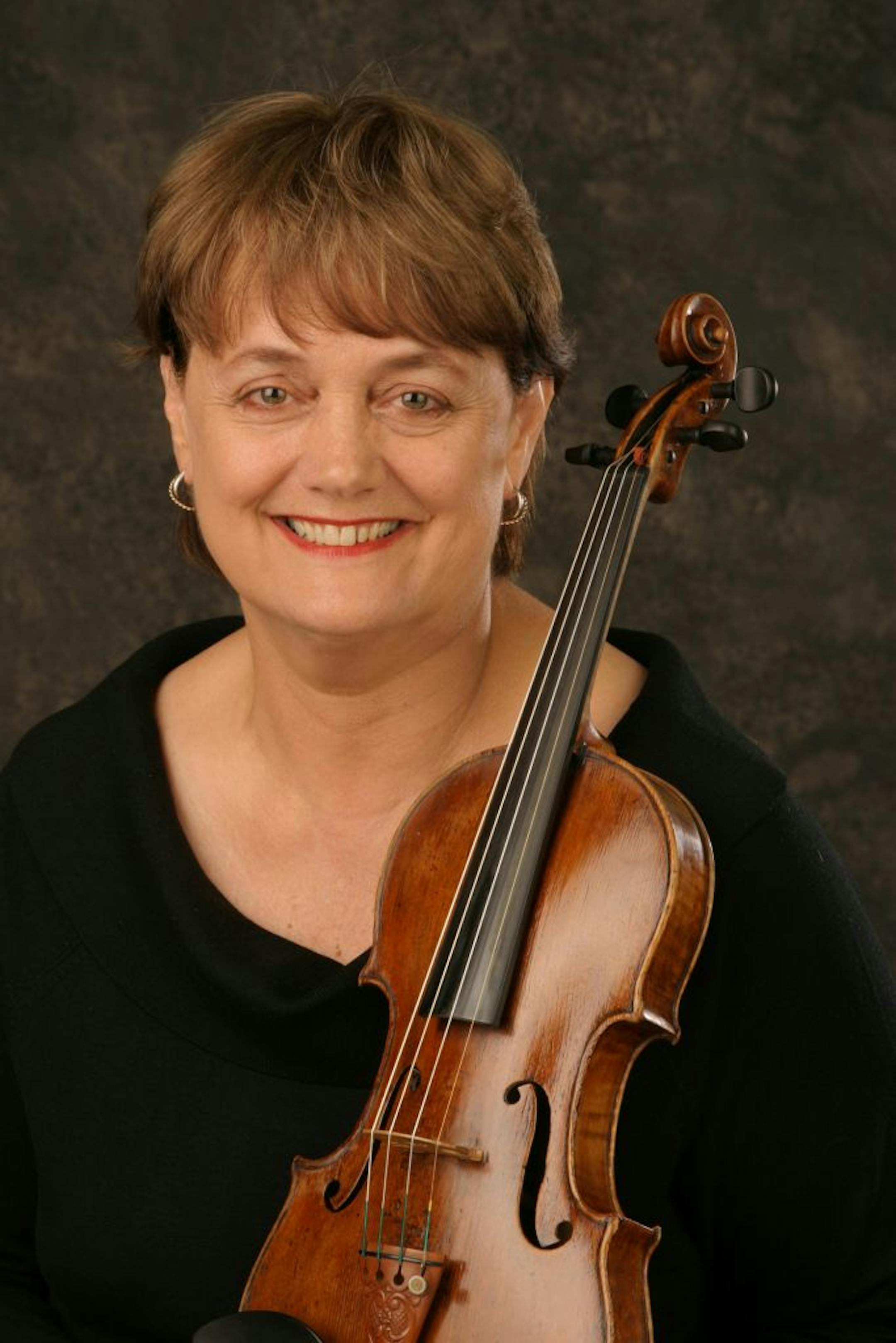
When Andrea Een first heard recordings of the Hardanger fiddle in graduate school, she became entranced with the nine-string instrument. Its four top strings are played like a traditional violin, but additional "sympathetic strings" or "understrings" resonate when the top strings are played to create an eerie, echoing sound.
"It gives it a really lovely, unusual quality," she said. "I fell in love with the music."
The hardingfele is only taught through oral tradition, so she started making pilgrimages to Norway, where she lived on her grandparents' farm and took a bus north to study under Lars Skjervheim, the fiddler she had seen in pictures of weddings on the Een farm.
"It's a really wonderful living tradition in Norway," she said. "It's something that never died."
At the 14th annual Bridge Chamber Music Festival in Northfield Thursday through Aug. 23, Een will play several original Hardanger fiddle songs.
The Hardanger fiddle dates back to the 1600s, and "they are works of art," Een said, usually decorated with intricate floral patterns in India ink, inlaid with mother of pearl, and sometimes accented with pieces of bone. In America, she said, people of Norwegian descent often have one in the attic that has been in the family for generations.
Een recently retired from St. Olaf, where she taught for 35 years and where she established a thriving Hardanger fiddle studio, the only one in the United States. In 2002, she received the St. Olav Medal from King Harald of Norway for her promotion of Norwegian culture abroad.
"I think there is a real growing interest in it," she said of the hardingfele.