

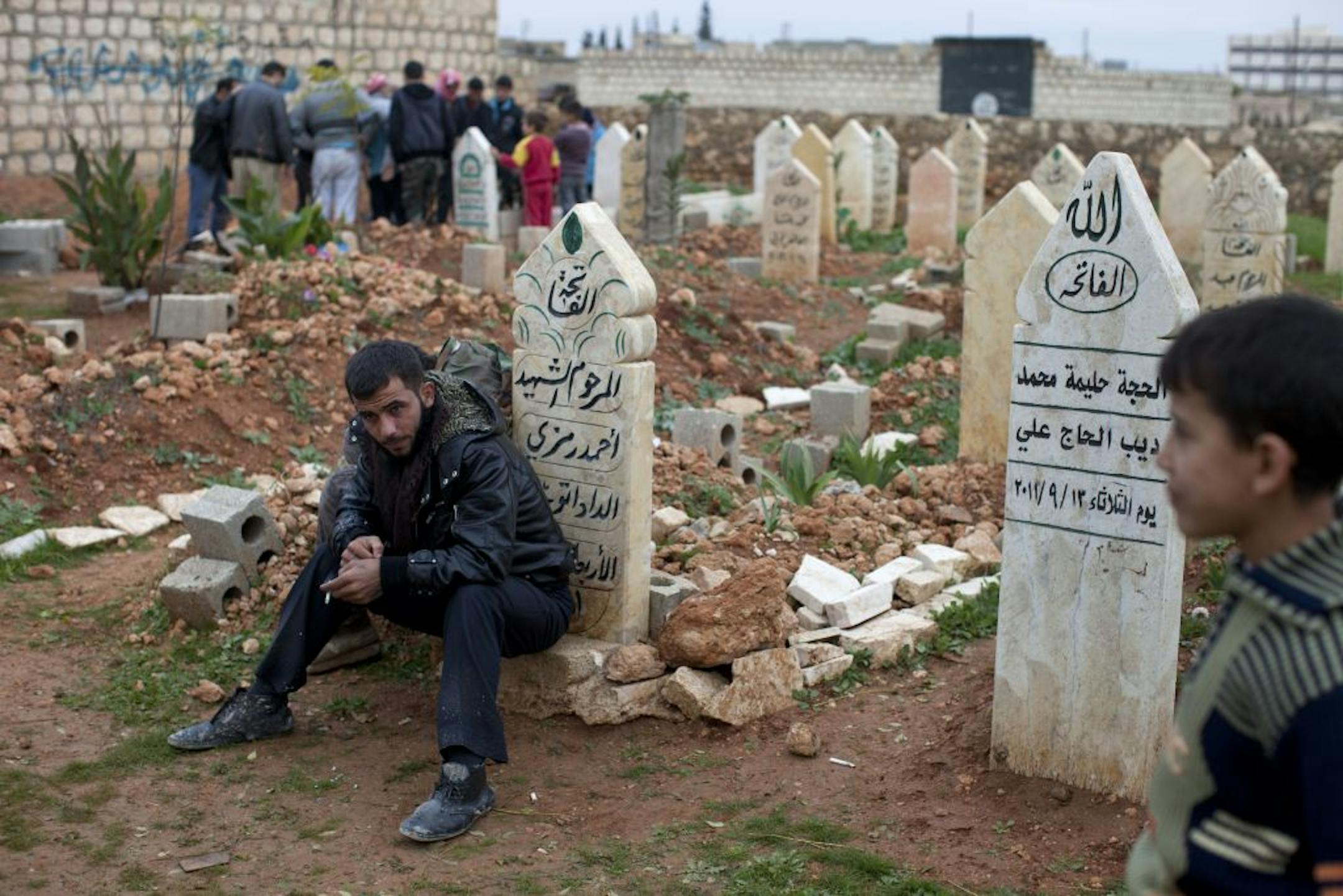
How bad are things in Syria? Even the United Nations is stunned.
"The number of casualties is much higher than we expected, and is truly shocking," Navi Pillay, the U.N.'s high commissioner for human rights, said in a news release.
Pillay was referring to a U.N. study released Wednesday that estimates that the death toll in Syria's vicious civil war could be higher than 60,000. Many, if not most, of the victims are noncombatants.
Things might get even worse in 2013, warned Lakhdar Brahimi, a special envoy empowered by both the U.N. and the Arab League to find a diplomatic solution. Syria, he said at a news conference on Dec. 30, is headed toward "Somaliazation -- warlords," and the country could be "transformed into hell," with 100,000 more casualties this year.
The international community should not require warnings from the U.N. or Brahimi to shock itself into action. The continuous carnage was anecdotally known before it was officially confirmed. And it has been apparent that, in Pillay's words, "increasing numbers have also been killed by anti-government armed groups, and there has been a proliferation of serious crimes including war crimes, and -- most probably -- crimes against humanity by both sides."
Indeed, these recent accounts should act as a "Srebrenica moment," a term used by Edward Djerejian, a former ambassador to Syria who is the founding director of Rice University's Baker Institute for Public Policy. Djerejian was referring to the Bosnian War-era massacre of Muslim men and boys that shocked a complacent international community to intervene.
To date, diplomatic attempts at some kind of negotiated settlement have failed. Brahimi is trying again, but the prospects look bleak. Russia has stubbornly stuck with Bashar Assad, Syria's homicidal dictator who is a longtime Russian ally. The immoral enabling of Assad's mass murder is most likely based on the cold calculus of not wanting to continue to set precedents of the international community galvanizing around regime change. Russia also probably fears Islamic radicalization, both in Syria and even potentially in Russia itself. China, while not as integral as Russia, has taken a similar stance, and like Russia has veto power as a permanent member of the U.N. Security Council.
Still, the stakes are so grave that the Obama administration should back Brahimi's diplomacy, however scant the chances are that Assad will cede power or the opposition will share power. And the United States should consider other alternatives to either rally global consensus or to push for a quicker victory by the opposition.


