

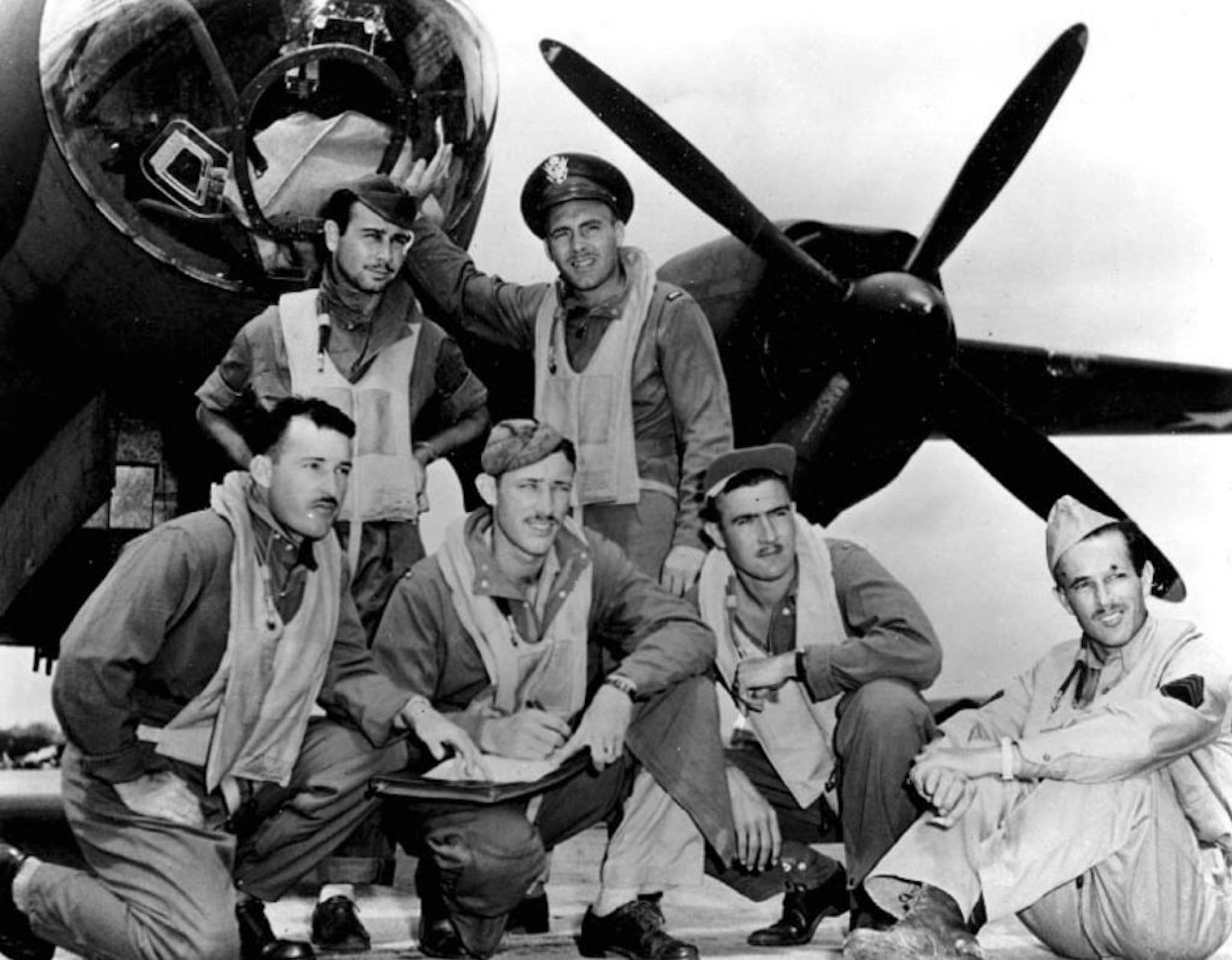
James Muri survived the first half of June 4, 1942, on the strength of his Army Air Forces pilot training. That was the day of his first combat mission, and the first day of the Battle of Midway. He piloted an unwieldy B-26 twin-engine bomber through heavy anti-aircraft fire, maneuvered it close to a Japanese aircraft carrier, dropped a torpedo and pulled away into a sky filled with enemy shells just as it detonated.
He survived the second half of the day -- getting back to base with three wounded crewmen on board -- on the strength of a hunch.
Muri, who died Feb. 3 in Laurel, Mont., at 94, first had to evade the hail of anti-aircraft fire still coming from the carrier he had just attacked. His inspiration, which saved his life and the lives of his crew, was to swing around, go in low and fly straight over the carrier's deck to avoid its guns.
"The guns were all pointing out. That was the safest place to be," he said, explaining his reasoning in a 2002 interview. "I always said we could have touched down if we had lowered the gear."
Muri's return to his base on Midway Island was dogged by Zero fighter planes. After his two gunners were wounded, he sent his co-pilot to man the plane's anti-aircraft cannons during the long flight back.
He and his crewmen were among 42 members of the Army Air Forces awarded the Distinguished Service Cross for valor in the Battle of Midway, which was considered the decisive Pacific battle in World War II.
Muri stayed in the Army Air Forces after the war, when it became the Air Force. He trained other pilots and served in several command posts around the world, including Japan, before retiring in 1959. He later became a real estate investor. But his combat mission in the Battle of Midway was his first and last. "I don't think he minded one bit not flying another mission," said Muri's son, James. "It always surprised him a little that people even wanted to talk about it at all. I don't think he realized it was as big a deal as it turned out to be."
Zhuang Zedong, three-time world table tennis champion and a key figure in the groundbreaking "pingpong diplomacy" between China and the United States, died Sunday, China's official Xinhua News Agency reported. He was 72 and had struggled with cancer since 2008.


