

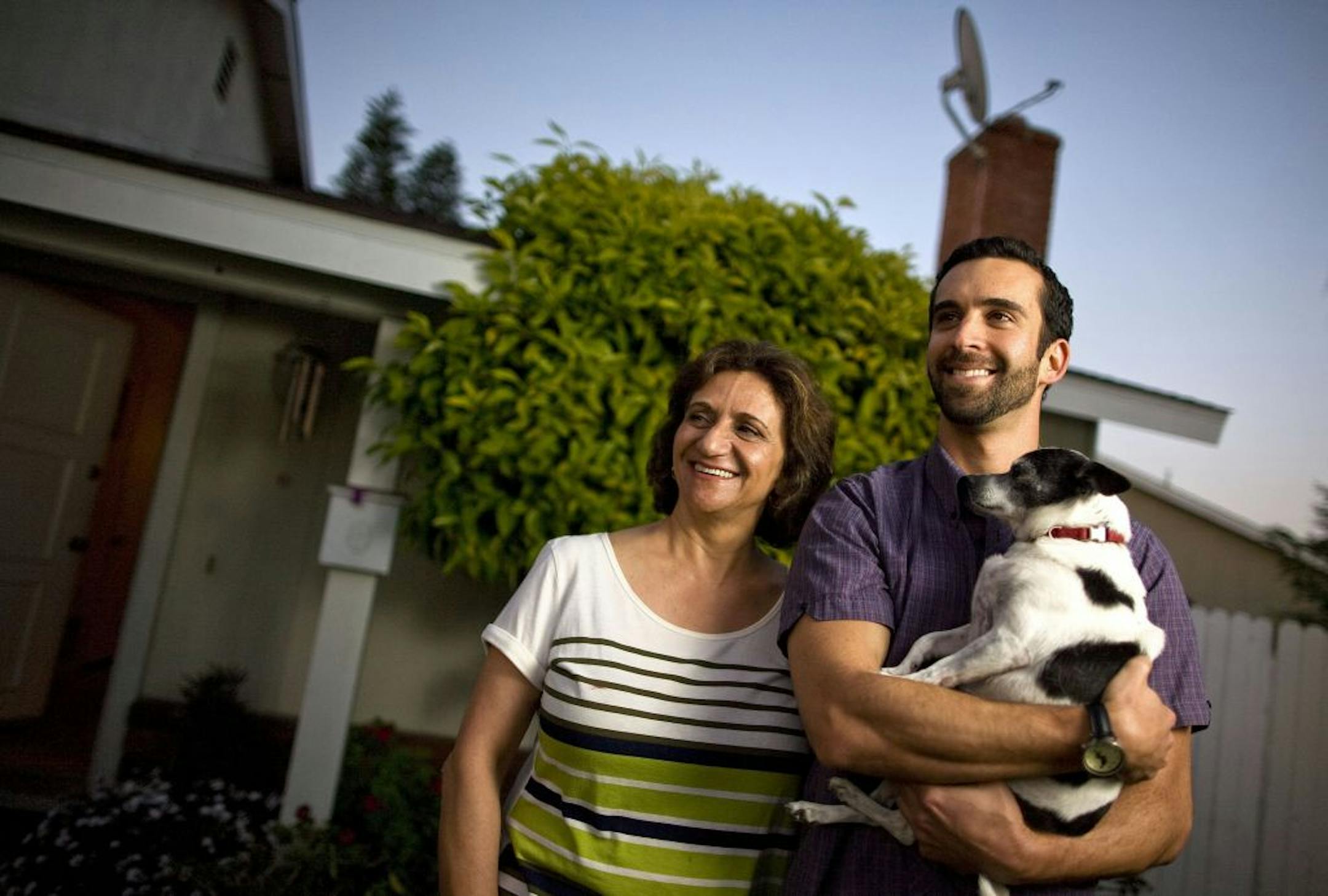
Burdened by $85,000 in college debt, attorney Bobby Waltman lives with his mom and grandmother in a three-bedroom house in Huntington Beach, Calif.
Past frugality led the 29-year-old to live in a van parked at the beach, a one-room casita and a tent in Alaska. Now, he's counting the days until his finances are sound enough to afford a home of his own.
"I've had this plan to move out for a while, and it just keeps getting postponed," said Waltman, who works for a Newport Beach, Calif., personal injury firm. "I'm working at a really good firm and I'm still living at home, and I figure it's time I move on. [But] it's hard to take on a mortgage with law school debt."
Waltman may be symptomatic of a problem that's still plaguing the housing market — and, to some extent, the economy as a whole. The recession forced millions to move in with parents and relatives, or delay leaving, and to double up with roommates.
That means they put off buying a home or renting, and the impact has rippled through the economy in the form of reduced demand for furnishings, appliances and supplies.
Although job growth has returned and the housing market has improved, some economists worry that not enough young people are leaving the nest.
Whether it's because of student loans, credit card debt, a foreclosure hangover or a need to save for a mortgage, "household formation" has yet to get anywhere near prerecession levels.
The slow pace of household formation means fewer first-time buyers taking up that slack, which could limit the housing market going forward.


