

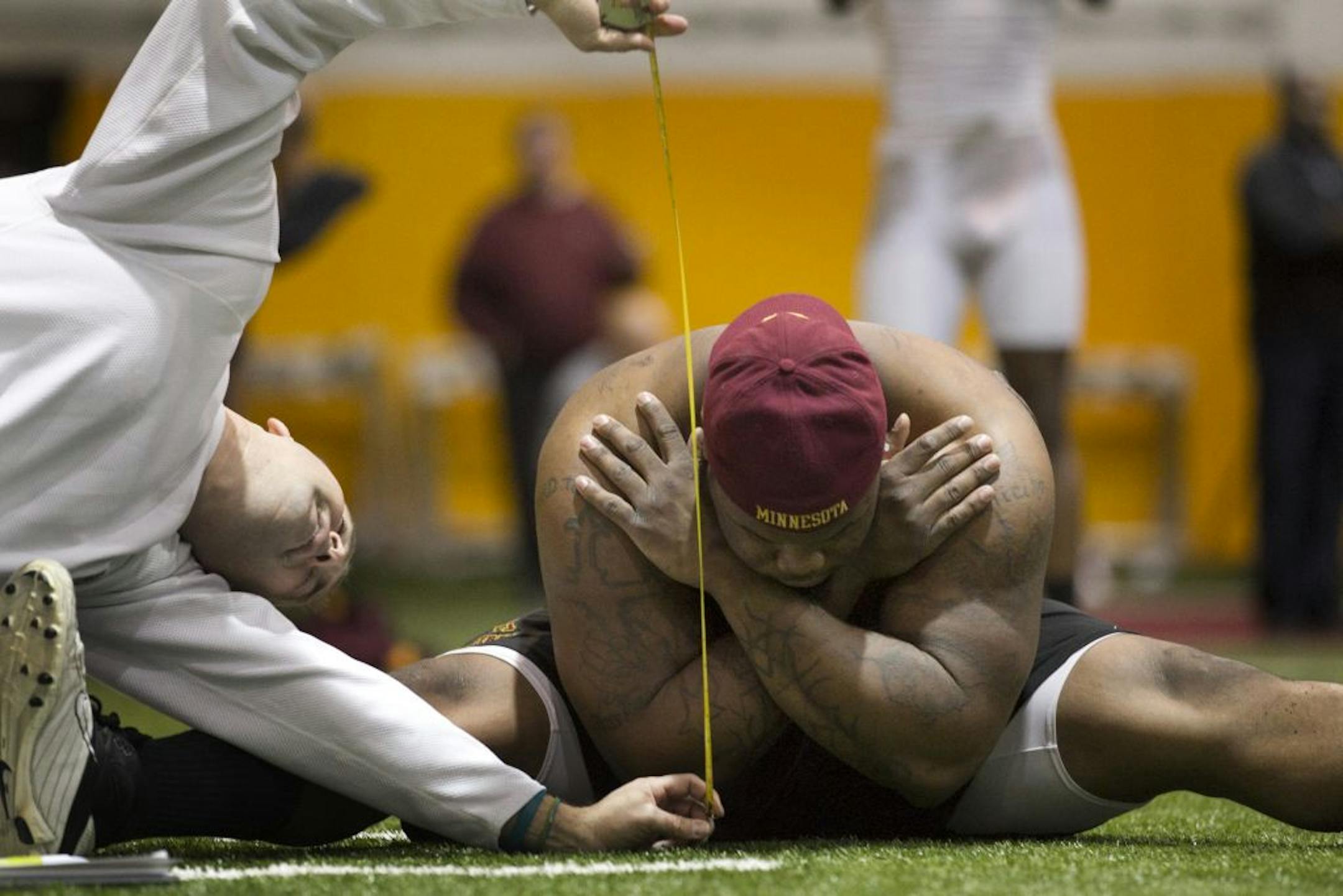
There's no getting around the fact that the NFL combine -- and its local cousin, the pro day held Monday at the University of Minnesota -- bears an uncomfortably close resemblance to a livestock auction. Draft-eligible players from the U and other area schools came to the Gophers football complex to perform for NFL talent evaluators, who sized them up like buyers appraising a prize 4-H steer.
Men with clipboards and stopwatches weighed them, measured them, timed them in the 40-yard dash. They analyzed their flexibility and recorded how high they could jump and how much weight they could hoist. It's the NFL's way of identifying the fastest and fittest, to decide which players are granted the golden ticket to pursue a career that lasts an average of 3 1/2 years.
The analogy should end there. We all know the steer gets a date at the slaughterhouse, where it will be turned into prime rib and rump roasts. While we'd like to think the players would not be turned into hamburger -- not deliberately, at least -- last weekend's revelations about the New Orleans Saints' bounty program call that into question.
It was hard not to get caught up in the players' enthusiasm Monday as they auditioned for their shot at a long-held dream. It was just as hard not to worry about what awaits them if the NFL does not bring down its maximum wrath on the Saints, drawing a very bright line between the game's innate violence and the checkbook barbarism practiced in New Orleans.
Former Saints defensive coordinator Gregg Williams has admitted players were paid for injuring opponents severely enough to force them out of games. Players from two other teams Williams coached, Washington and Buffalo, described similar programs; even more have confirmed the practice exists, particularly during the playoffs.
This is not merely poor sportsmanship, nor is it a logical extension of football's raw physicality. Encouraging players to inflict serious injury dishonors the game. It strips opponents of their humanity, reducing them to little more than tackling dummies. It is criminal.
The players who paraded their skills before the scouts Monday understand the risk they take every time they step on the field. They have constructed mental barriers against fear and hesitation, because they know their success and safety depend upon it.
But absorbing a high-speed collision or a hard, legal tackle is not the same as being targeted by a hit man in pads. For all its brutality, football still has rules and ethics. Players don't expect to be exposed to malice, and they shouldn't, despite Williams' flippant response to the fine assessed to one of his players who tackled an opponent by the helmet.


