

After ATF ruling, bottom falls out for St. Cloud firearms maker
Maxim Defense Industries' business is anchored in pistol braces, which federal regulators say often turn handguns into tightly controlled short-barreled rifles.
Immigrant workers sue Minnesota vegetable farm for shorted pay, 'deplorable' conditions

Workers claim Svihel Vegetable Farm violated federal human trafficking law; the farm calls the suit "baseless."
Minneapolis to set up Lake Street Community Safety Center, and wants residents' help to define it
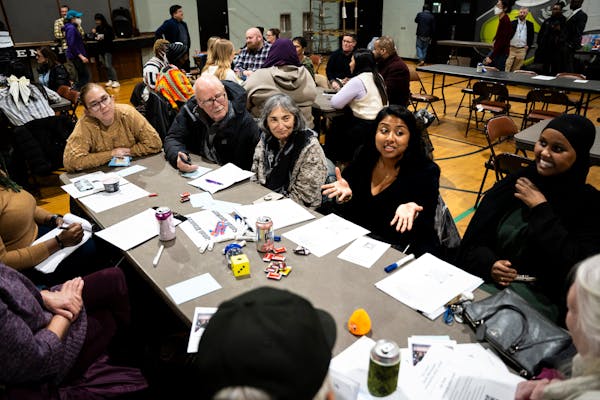
A temporary community safety center on the immigrant business corridor, followed by a permanent one coming to 2633 Minnehaha Av., aim to reinvigorate public safety in south Minneapolis.
Business

G/O Media sells satirical news site the Onion to group of digital media veterans
New owner Global Tetrahedron is named after a sinister fictional company in the book "Our Dumb Century."
Business

UCare saw $82.1M operating loss last year as patients returned for care
Red ink occurred after unusually profitable 2022 for HMOs in Medicaid and other public health insurance programs.
Business
Minnesota DFL wants faster clean energy permits, but some are wary of shortcutting public input
Lawmakers promise an effort to cut red tape for clean power won't result in meaningfully less oversight or public involvement.
Business

AG Ellison calls on UnitedHealth to provide more help in cyberattack
Attorneys general in 22 states signed a letter calling the response thus far "inadequate" and questioning if company-owned clinics have received more assistance than others.
Minneapolis

Minneapolis approves $15 minimum for cigarette packs, highest in U.S.
The city's tobacco crackdown allows existing limited "sampling" inside cigar lounge.
Business
Is your company on the list of Minnesota's 2022 Top Workplaces?
Worker expectations change at Minnesota firms as pandemic retreats.
Business

Sleep Number sales slump as company plans to close 30 stores.
The mattress industry has been in decline for more than a year.
Business
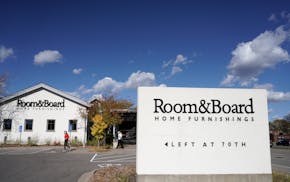
Room & Board transfers ownership to employees with stock plan
Furniture company starts employee stock ownership plan for staff, including retail salespeople.
Business

Xcel profits after job cuts, but Texas wildfire costs could be 'adverse'
The Minneapolis-based utility says it wasn't negligent in maintaining a wooden utility pole that was a source of the Smokehouse Creek Fire, but if it's found liable, costs could exceed $500 million in insurance coverage.
Business

After hiring bonanza, tech workers now grapple with layoffs and disillusionment
Companies went on a tech hiring spree in the pandemic, but many of those jobs have since been cut, leaving workers full of regret and disillusionment over the industry's unkept promises.
Business

Flexible schedules for manufacturing employees are paying off for Land O'Lakes
More manufacturers are chopping up and rotating shifts to attract and retain workers.
Business

East Grand Forks sugar beet factory fined $350K for air quality violations
The American Crystal Sugar plant emitted high levels of particulate matter and hydrogen sulfide over several years.
Business
With $324.2 billion in revenue, UnitedHealth again tops list of Minnesota public companies
The top 50 companies as a whole posted revenue of $750.7 billion, up 7% from the year before. However, growth was slower than in 2021.
Business

St. Cloud warehouse lays off hundreds of workers as Publishers Clearing House downsizes
Fulfillment Distribution Center will cut 350 employees and close up operations when its only customer discontinues its commercial business.
Politics

Minnesota TikTokers react to app's ban in the U.S.
On Wednesday, President Joe Biden signed into law the foreign aid bill that includes TikTok legislation.
Business
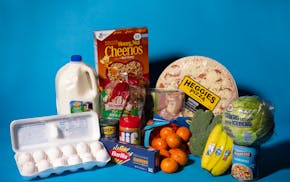
8 Twin Cities area grocery stores, ranked by affordability
We shopped at eight local grocery stores, some locally owned and some not, in search of the cheapest eats.
Business
Longtime downtown Fargo staple Zandbroz Variety closing in June
The iconic bookstore and gift shop helped rejuvenate the main shopping and entertainment district when it opened in 1991.
Business

Fairview sees financial upturn despite $189M operating loss last year
Fifth year of red ink reported as health system CEO cites progress on deal to return teaching hospital to U of M.
Business

UnitedHealth Group's CEO made $25 million in 2023
A cybersecurity attack may cost UnitedHealth Group billions, but their CEO made $25 million before the attack.

We've created a new destination for everything agriculture in Minnesota and around the country.
Local

'He was about community': Scores memorialize north Minneapolis entrepreneur Sammy McDowell
Sammy McDowell, whose namesake eatery served as a hub for racial justice activists, died Sunday.
Local
Two stalled Duluth housing projects move ahead
Together, the projects will add more than 250 apartments to city's inventory.
Business

Ramstad: Health care is a tough arena for AI to make a difference
AI models are meeting their match with the complexity of how people take care of themselves.
Browse Business Sections
Latest Columns



Elsewhere in Business
- Temporary farmworkers get more protections against retaliation, other abuses under new rule
- Stock market today: Alphabet and Microsoft help Wall Street clinch its best week in nearly 6 months
- 140,000 people did their taxes with the free IRS direct file pilot. But program's future is unclear
- Rooting for Trump to fail has made his stock shorters millions
- Mississippi legislative leaders swap proposals on possible Medicaid expansion
- A California bill aiming to ban confidentiality agreements when negotiating legislation fails
- Alphabet, Snap rise; Intel, Boyd Gaming fall, Friday, 4/26/2024
- Southwest Airlines is considering changes to its quirky boarding and seating practices
- How major US stock indexes fared Friday, 4/26/2024
- JPMorgan's Dimon hopes for soft landing for US economy but says stagflation is a possible scenario
Most Read
- After ATF ruling, bottom falls out for St. Cloud firearms maker
- UCare saw $82.1M operating loss last year as patients returned for care
- After hiring bonanza, tech workers now grapple with layoffs and disillusionment
- Immigrant workers sue Minnesota vegetable farm for shorted pay, 'deplorable' conditions
- These are the countries where TikTok is already banned
Business
Complete coverage of business news in the Twin Cities, Minnesota and elsewhere, including Fortune 500 Minnesota companies: UnitedHealth Group, Target, Best Buy, 3M, CHS, U.S. Bancorp, General Mills, C.H. Robinson, Land O’Lakes, Ecolab, Ameriprise Financial, Xcel Energy, Hormel Foods, Thrivent Financial, Polaris, Securian Financial Group, Fastenal and Patterson Cos.
