
Australian farmers plant smallest cotton area since 1979 after driest year ever

Bloomberg News
February 29, 2020 at 1:20AM
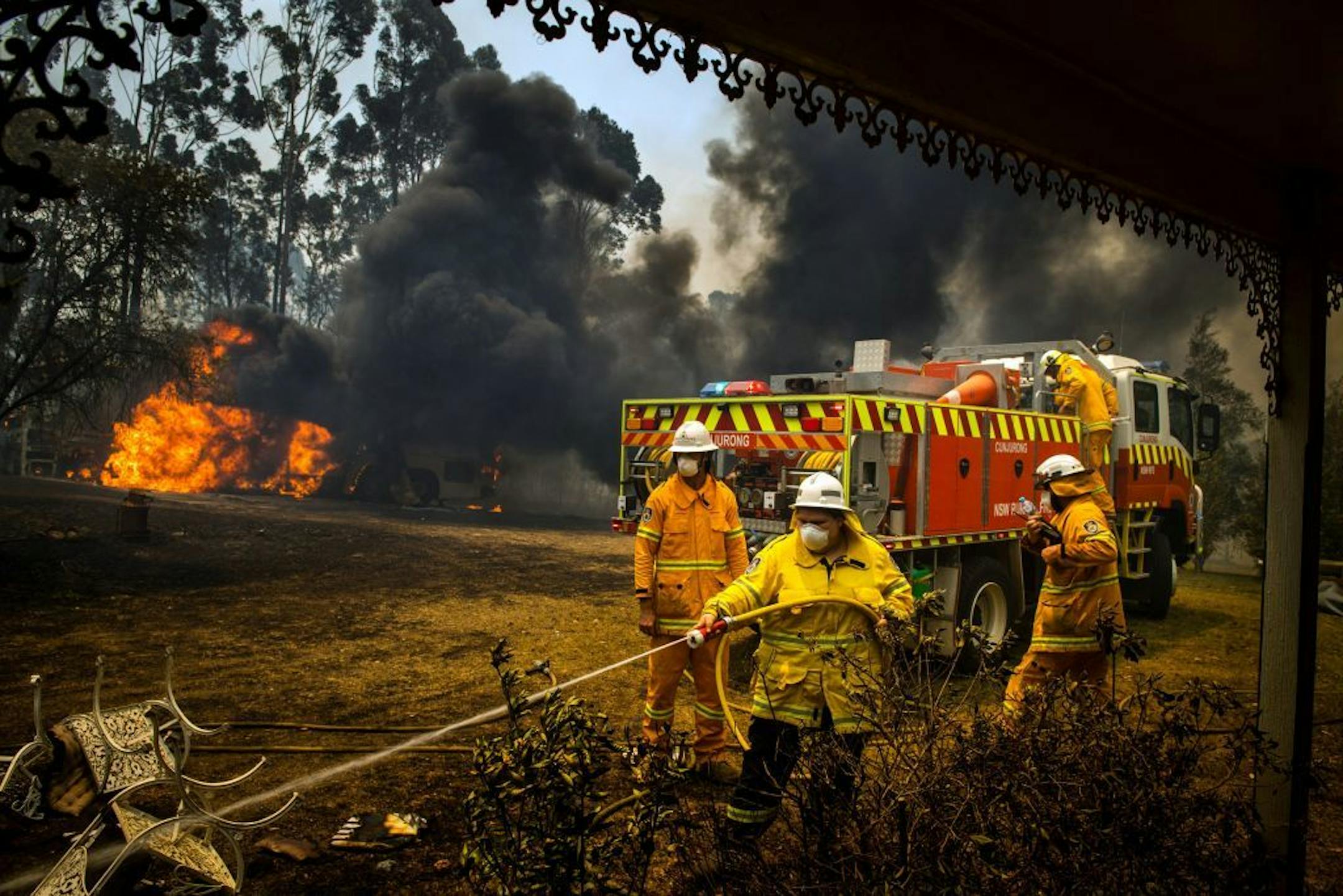
Firefighters protect a house in Conjola, Australia, on Tuesday, Dec. 31, 2019. The country's east coast is dotted with apocalyptic scenes on the last day of the warmest decade on record in Australia.
In this file photo, firefighters protected a house in Conjola, Australia, on Dec. 31, 2019. Fires and drought adversely affected crops and livestock during the Australian summer. (New York Times/The Minnesota Star Tribune)

After minimal rainfall last year, the McVeigh family in Queensland, Australia, planted just one paddock of cotton on their parched property this summer, about 5% of the usual amount.

"It's been one of the worst summers in history for us," said Matt McVeigh, whose family has grown cotton and other crops in the Darling Downs area in the south of the state for about 120 years. "A lot of people are very happy to see 2019 behind us," he said in an interview.

Australia's devastating drought is expected to slash the country's cotton output in 2020 as farmers plant the smallest area in more than 40 years.

Cotton is just one of the nation's landmark primary industries being scarred by drought, after the country experienced the warmest and driest year on record in 2019. The sheep flock is now the smallest in more than 100 years, according to Meat & Livestock Australia, while this year's wine grape crush could drop by as much as 15%, Australian Grape & Wine forecasts.

The cotton area is expected to slump by 82% to 61,000 hectares in the 2019-2020 season, according to the Australian Bureau of Agricultural and Resource Economics and Sciences on low supplies of irrigation water and soil moisture. That would be the lowest since 1978-1979 when 50,000 hectares were planted.

"It's directly related to water," said Cotton Australia Chief Executive Adam Kay. "When there's no water for irrigation, our growers don't plant cotton." Most of the cotton planted this year will be watered by underground supplies, which are less variable than surface water, he said.

Australia was the world's third largest cotton exporter in 2018-2019, behind the U.S. and Brazil, according to data from the U.S. Department of Agriculture. The value of exports is expected to slump to A$890 million ($588 million) in 2019-2020, well below the A$2.56 billion in 2018-2019, Abares forecast in December.

Empty dams and dry soil aren't the only challenges. The coronavirus outbreak is delaying transportation in the key Chinese market and concern is mounting that factory closures there will weigh on demand.

There's definitely a big slowdown in the factories and mills in China. That is a concern," Kay said. "China is a massive customer for Australian cotton so we want this situation to resolve itself as quickly as possible."

Australian cotton exports to China have not been significantly affected so far, because the first quarter of the year is typically slow for shipments, according to the Australian Cotton Shippers Association.That could change if the supply chain is not back to normal by the end of March.

Still, back in the Darling Downs, things are looking up. The McVeighs received more rain in January than in the whole of 2019, and the once brown hills are looking green. But the downpour came too late for most summer crops, so the benefits will only flow through producers in 12 to 18 months. And more rain is needed to improve soil moisture before winter planting, McVeigh said.

"You don't get one rainfall event and things change overnight," he said, adding that increasingly negative sentiment surrounding the cotton industry and its use of water for irrigation had also been mentally tough on producers. "There's a lot of people struggling.

about the writer

about the writer

Ainslie Chandler

More from Agriculture

See More
A logo sign outside of a facility occupied by Cargill Animal Nutrition in Little Chute, Wis., on June 24, 2018.
Kristoffer Tripplaar/Tribune News Service

The Minnetonka-based agriculture giant is shuttering a ground-meat processing facility in Milwaukee to “better align” its portfolio.

card image
card image