

Bridge Toll Fees No
Longer Will Delay
Firemen on Calls
Railroad Officials Order South
St. Paul Fighters Passed
Free in Future.
South St. Paul firemen stand ready to do their duty at all hours of the night, but they define fire fighting strictly within its narrow channels and do not consider standing scantily clad on a cold night making up a pot of $1.40 to cross a toll bridge as an inconvenience that must come in the night's work. They told Rock Island railroad officials so last week, and now are allowed to cross the railroad bridge on a fire call without paying toll. It all happened when the firemen answered an alarm across the river a few nights ago and in their hurry neglected to leave their toll with the bridge tender. On the return trip the men were halted and told to pay double toll. The firemen dressed hurriedly. Most of them had left their pocketbooks behind. But the bridge tender was firm, so with chattering teeth the firemen stood on the bridge and gathered up enough stray nickels and dimes to total $1.40. Most of them caught bad colds, too – hence the letter Chief H.L. Ketcham wrote to the Rock Island officials.
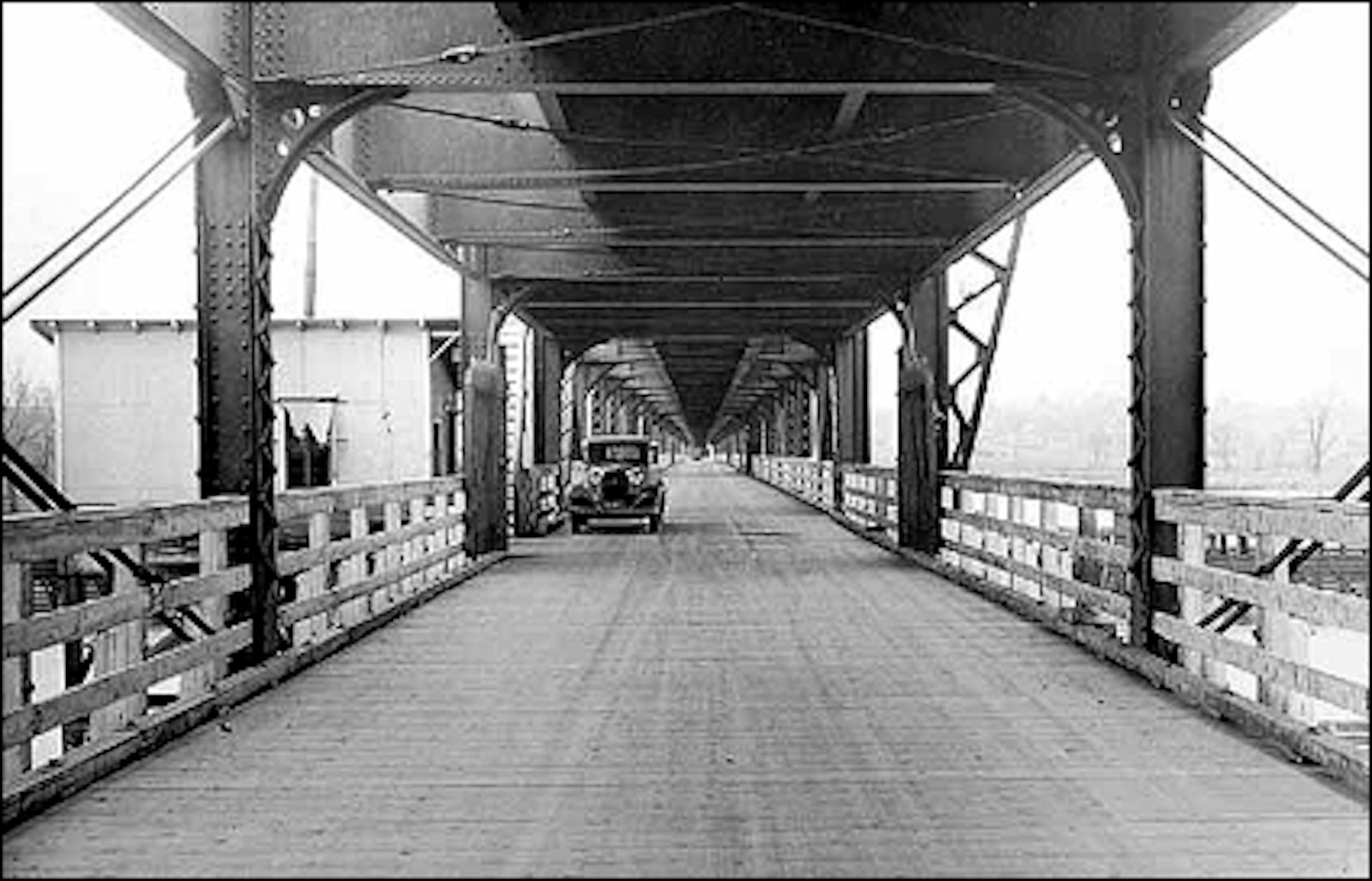
The toll bridge, shown here in about 1934, had an unusual design, even for a double-decker swing bridge: The trains ran on the top deck, the cars below. (Photo courtesy mnhs.org)
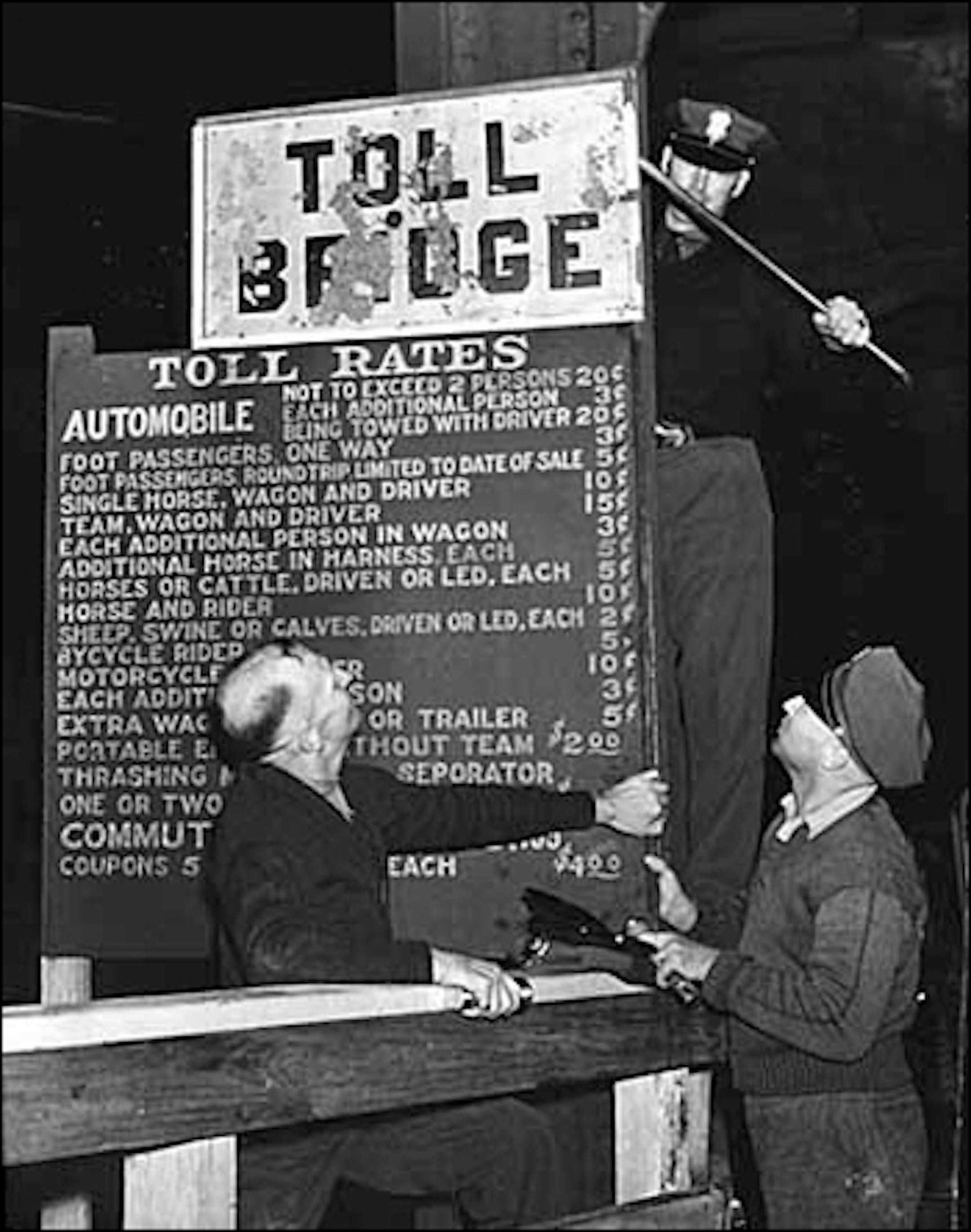
The 1938 toll rates: 20 cents per automobile, a dime per motorcycle, a nickel per pedestrian, 2 cents per sheep, pig or calf. (Photo courtesy mnhs.org)


