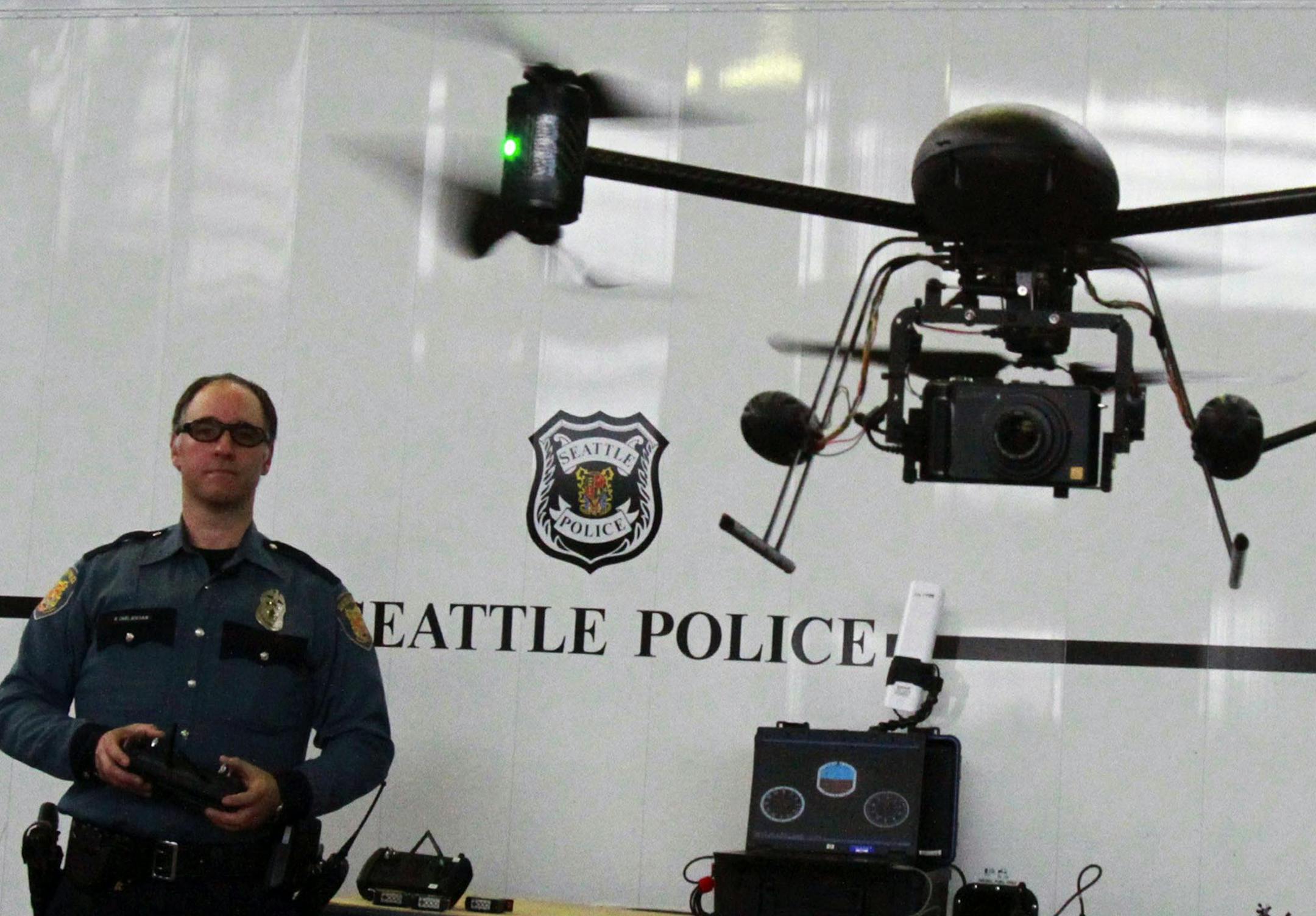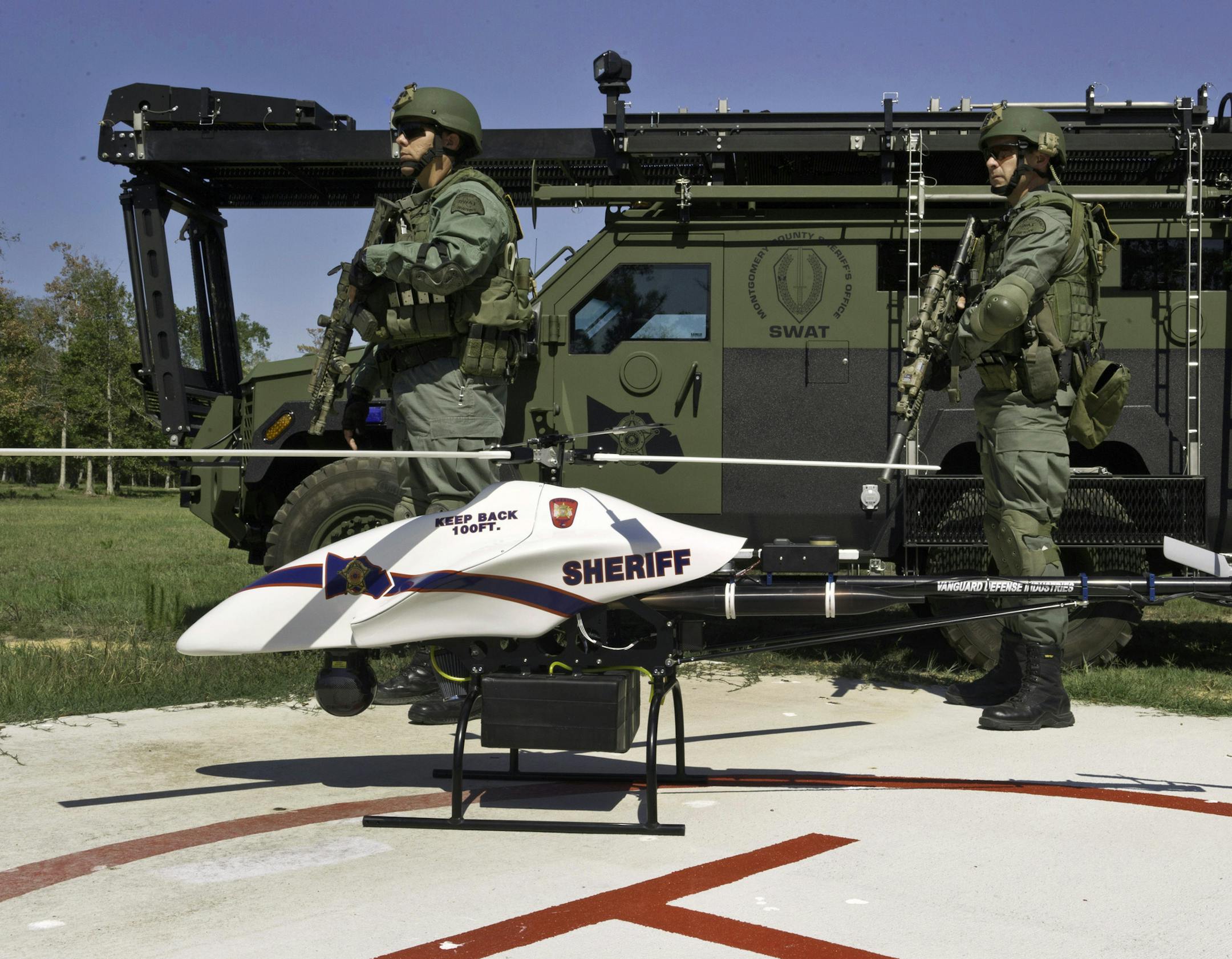
Whenever a hiker gets lost in Mesa County, a rugged area in western Colorado, Benjamin Miller of the local police force does not bother to join the search on foot. His department is a trailblazer in the use of unmanned aircraft, so instead he launches a drone equipped with an infrared camera to search from the skies. No wayward ramblers have been rescued in this way yet, but he hopes to find one soon.
Drones are best known for their role in the Afghan war, where they both monitor and strike at enemy forces. Now the Federal Aviation Administration (FAA) has been ordered to find a way to integrate them into American airspace by 2015.
The attraction of drones for domestic users is their ability to carry sensors, such as cameras and spectrometers, rather than weapons. This suggests that they could be useful in commerce and research, as well as in policing.
Already scores of organizations have received special FAA approval to fly drones. Although there is no regularly updated master list in the public domain, organizations that have received permission range from universities in Michigan and North Dakota to the Departments of Agriculture and Energy. A number are police departments, and it is this development that is stirring up concerns about privacy and protests from local residents.
Their fears are centered on the prospect of surveillance. Since drones can be far cheaper to buy than helicopters, costing tens of thousands of dollars as compared to a few million, the worry is that cameras will be sent up into the sky far more frequently. Even if they are not on a deliberate spy mission, they may capture incidental footage that leads to an investigation, such as evidence of marijuana plantations.
Still, at least in Mesa County, the drones have been used for search-and-rescue efforts and photographing crime scenes, nothing more.
"We're not spying on everybody," Miller says. "We haven't done a single surveillance mission."
In any case, it may not be so easy for a police department to perform round-the-clock surveillance. Their drones are much less sophisticated than the military's Predators, which can remain aloft for 40 hours at a height of 25,000 feet.